

Crypto custody and payments firm BitGo announced that it has reduced its headcount by nearly 15% as part of an operational restructuring aimed at concentrating resources on strategic areas including AI, stablecoins, and payment infrastructure.
In a post on X on June 26, CEO Mike Belshe said BitGo had made a “difficult decision” to reduce its workforce by nearly 15%.
According to Belshe, the crypto market has changed significantly over the past few years, along with the way companies build financial services. To remain competitive and deliver better value to customers, BitGo needs to become leaner and more focused rather than spreading its resources too broadly.
The BitGo CEO said that following the restructuring, the company will prioritise investment in five core business areas: security, trading, stablecoins, payment and settlement infrastructure, and AI application infrastructure. Belshe also thanked the affected employees, saying the decision was not easy because these people had helped build BitGo over many years.
He reassured the remaining team that this was a one-time restructuring and that the company currently has no plans for further layoffs in the near future.
The layoffs came shortly after BitGo published its first-quarter financial results. In its latest report, the company’s revenue increased by 112.6% year-on-year to around USD 3.8 billion, following BitGo’s IPO in January.
However, profitability did not follow the same trend. Net losses increased from USD 25.7 million to USD 60.7 million. BitGo said the main reasons were a decline in the market value of its Bitcoin holdings under mark-to-market accounting, as well as higher stock-based compensation expenses during the IPO process.
AI Continues to Drive Restructuring Across Crypto
BitGo is not the only company reducing staff to shift toward AI. Over the past few months, several major crypto firms have carried out workforce reductions aimed at building more AI-driven operating models.
Last month, Coinbase announced plans to cut around 14% of its workforce as part of a transition toward an AI-native model, integrating AI into both exchange operations and product development workflows.
This month, blockchain analytics platform Dune reportedly laid off around 25% of its employees to accelerate AI integration across the company.
Earlier, Block — the fintech company founded by Twitter co-founder Jack Dorsey — also carried out workforce reductions with a similar strategic focus.
The trend suggests that crypto companies are entering a period of restructuring and resource optimisation, as AI is no longer viewed merely as a support tool but is increasingly becoming a core part of the industry’s operating infrastructure.
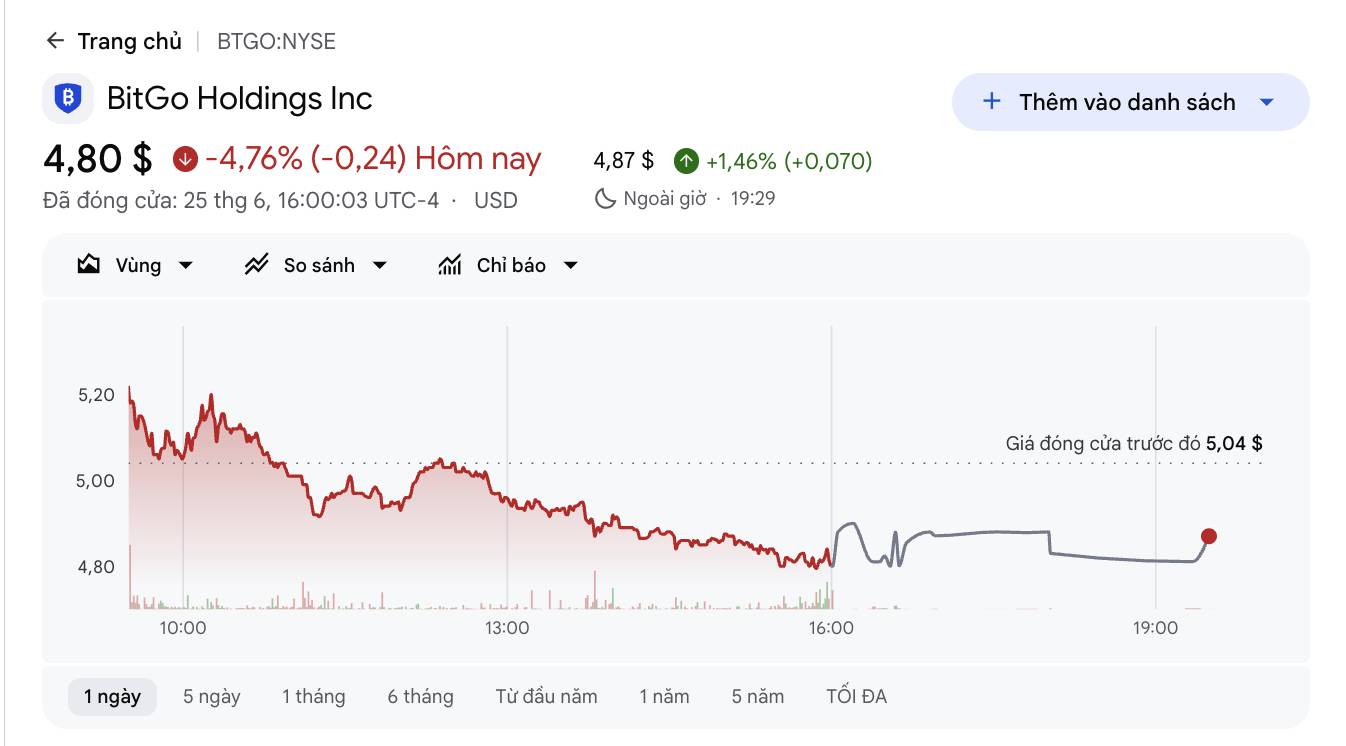
Following the workforce reduction announcement, BitGo’s BTGO shares declined by around 4.76% over the past day, closing at USD 4.80
Conclusion
BitGo’s restructuring shows that crypto companies are increasingly treating AI as core operating infrastructure rather than an auxiliary tool. The company’s focus on stablecoins, settlement, and AI may strengthen its long-term positioning, but rising losses and weaker BTGO shares underline the near-term pressure
BitGo’s shift toward stablecoins, settlement infrastructure, and AI highlights the importance of choosing a reliable service for storing and managing digital assets. To find a suitable option, see our review of the best cryptocurrency wallets, where you can compare hardware and software solutions, supported networks, security features, and ease of use.
