
Tokenomist valued the release at approximately $959 million based on TRUMP’s market price on July 14. The final dollar figure could still change sharply before the unlock, as the token remained highly volatile.
Official Trump launched with 200 million tokens in circulation, while total supply is expected to increase gradually to 1 billion over three years. According to the project’s official allocation structure, CIC Digital LLC and Fight Fight Fight LLC collectively control 80% of the supply through several vesting schedules.
The July event did not mean that all 90 million tokens would immediately appear on exchange order books. It only meant that the relevant allocation would no longer be restricted by the previous lock-up period. What happened next depended on the recipients: they could hold the tokens, move them between wallets, provide liquidity or sell part of the position.
Why the July Unlock Mattered
The scale of the release made TRUMP one of the largest token unlocks scheduled for the week. Adding an amount equal to almost half of the existing circulating supply had the potential to increase volatility, especially if a meaningful share was transferred to exchanges.
That risk was already attracting attention from traders. Arkham Intelligence identified a transfer of 1.391 million TRUMP, worth approximately $13.35 million at the time, from a wallet associated with MemeCore to Binance.
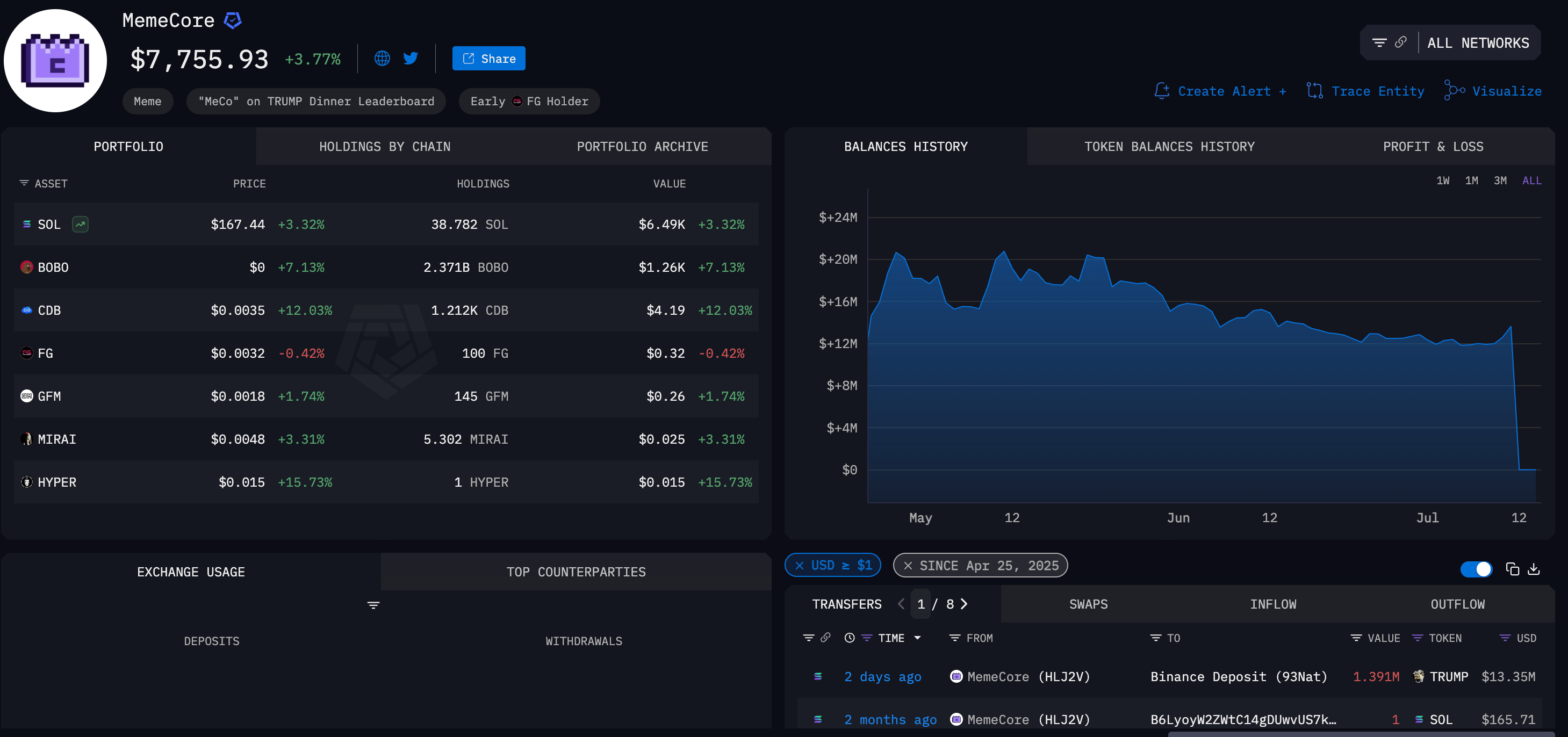
A transfer to Binance made the tokens easier to trade, but it did not prove that MemeCore had sold them. Exchange deposits can also be connected with custody arrangements, treasury management, liquidity provision or internal transfers.
Even so, the timing added to the nervous mood around TRUMP. The token was already trading far below its January peak, and some market participants expected the unlock to bring another wave of pressure.
Could TRUMP Absorb the New Supply?
Not every trader expected a collapse. Some argued that a broader crypto-market recovery, renewed political attention or stronger demand could help absorb at least part of the additional supply.
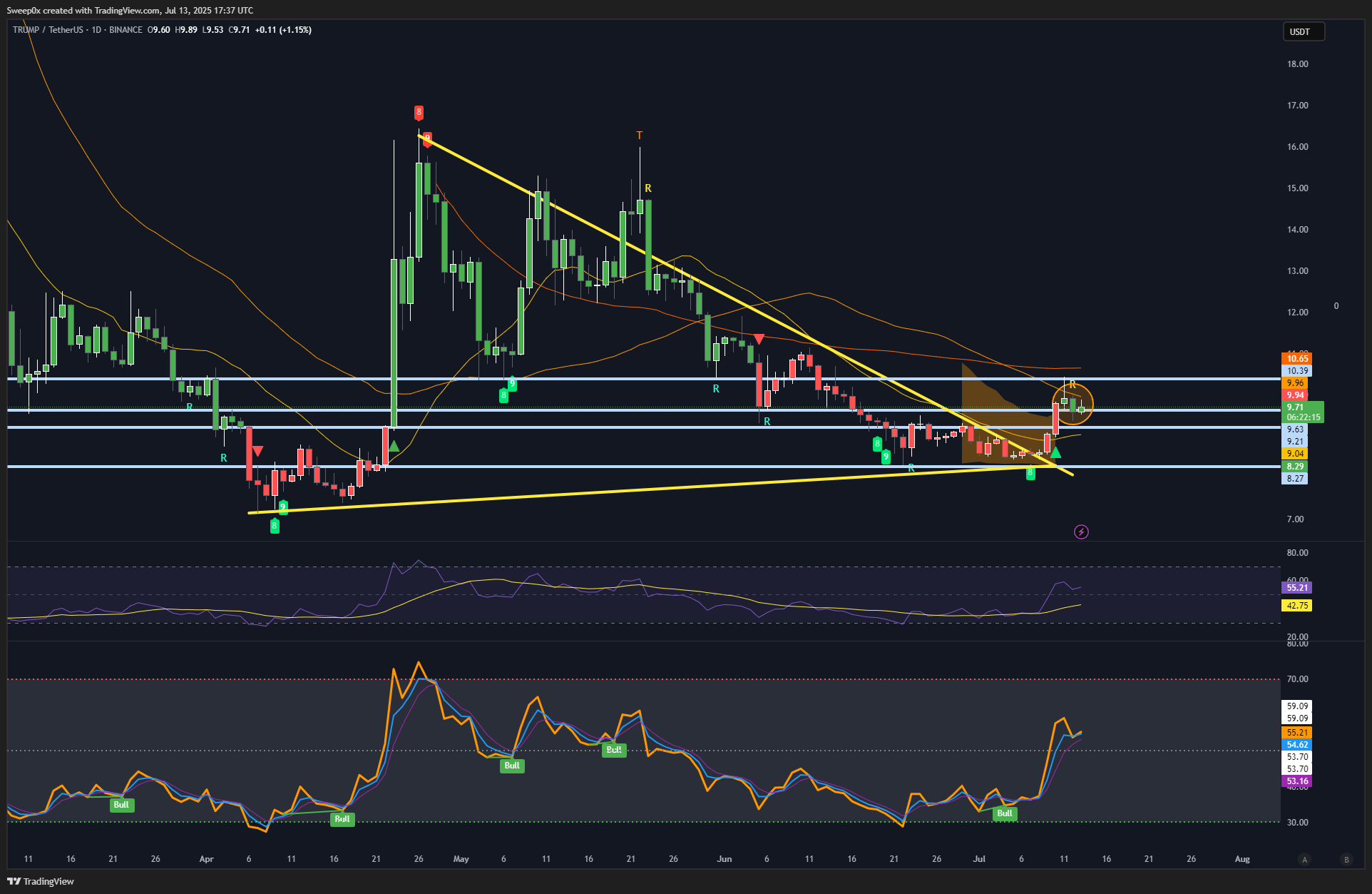
Technical trader Sweep outlined a bullish scenario in which TRUMP could recover toward $40. That level was based on chart analysis rather than a confirmed forecast and depended on the token breaking resistance while avoiding prolonged selling after the unlock.
Another potential catalyst came from TRON founder Justin Sun. On July 9, he said he was committed to buying $100 million worth of TRUMP. At the time this article was published, the statement represented a planned purchase rather than confirmation that the full investment had already been completed.
Sun’s announcement attracted attention because of his existing links to Trump-associated crypto projects. However, it reflected the position of one major industry figure and should not be treated as evidence of broad institutional demand. FORECK.INFO previously examined these connections in its report on TRON’s planned Nasdaq listing and Justin Sun’s relationship with Trump-linked ventures.
Market Capitalization and Main Risks
TRUMP’s market capitalization was around $1.9 billion on July 14, although the figure continued to change with the token’s price. Before the unlock, approximately 200 million TRUMP were reported as circulating, meaning the scheduled 90 million-token release was unusually large relative to the existing float.
That did not mean the market capitalization would automatically rise by 45%. Market cap depends on both circulating supply and price, and a sharp increase in available supply can be offset by falling demand or weaker quotations.
TRUMP remained a highly speculative meme token. Its price was influenced not only by crypto-market conditions, but also by political headlines, social-media activity and attention surrounding Donald Trump. These factors could generate new demand quickly, but they could disappear just as fast.
The July 18 unlock was therefore better viewed as a major test of liquidity than as a guaranteed crash. Heavy exchange inflows could strengthen selling pressure, while continued holding by recipients or fresh buying interest could soften the effect.
For investors, the most important distinction was between three separate stages: tokens becoming unlocked, tokens being transferred to an exchange and tokens actually being sold. Only the first event was scheduled in advance. The other two depended entirely on the decisions of the recipients.
