
Investors around the world are selling crypto to invest in artificial intelligence. But the key question is whether today’s AI superstars and IPO candidates can actually justify their trillion-dollar valuations. Bitcoin’s next major move may depend on that simple equation.
To understand whether Bitcoin and the broader crypto sector can rise strongly again in the coming months, one question matters most: will the AI investments and capital spending by companies such as Anthropic pay off within the next 24 months?
Right now, looking only at macro data is not enough. Inflation, central bank policy, and interest rates still have a major impact on Bitcoin, but this influence is currently being overshadowed by the hype around artificial intelligence. A large share of capital and investor attention is flowing into AI stocks and the expected mega-IPOs of SpaceX, Anthropic, and OpenAI.
This rotation into AI has caused a sustained outflow of capital from other sectors and asset classes. As long as this capital pull toward AI-related assets continues, it will be difficult for the crypto sector to enter a sustainable bull market. Without a shift in narrative or a weakening of the dominant AI investment thesis, meaningful capital flows into Bitcoin, Ether, and other crypto assets may remain limited.
What could reverse this rotation? If the macro environment is set aside for a moment, there are only a few possibilities. One would be the emergence of a new crypto narrative strong enough to regain investor attention. This could even be an AI-related crypto narrative, as already seen in some AI tokens. The more institutional themes of tokenization and stablecoins also remain promising, although they are currently being overshadowed by the AI investment boom.
The second possibility is disappointment among AI investors. That does not necessarily mean an AI bubble has to burst. Artificial intelligence creates real value, and that is exactly why the situation may be more complex. Unlike the dotcom or metaverse bubbles, this is less about a product bubble and more about a CAPEX bubble: massive investment spending has to generate real returns.
Sooner or later, investors will want to see results — in other words, a return on the capital deployed. This applies to the hundreds of billions of dollars that Nvidia, Google, and Microsoft are investing in AI, as well as to the valuations of future IPO candidates such as SpaceX, Anthropic, and OpenAI.
Current expectations suggest that these IPOs could launch at valuations above the trillion-dollar mark. SpaceX alone is reportedly aiming for a valuation of around 1.8 trillion dollars. Together, these still relatively low-profit companies could reach a combined valuation comparable to the economic output of one of the world’s largest economies.
The risk of investor disappointment looks high. This may also be where crypto finds its opportunity: if valuation and profit expectations in the AI sector fail to materialize quickly enough, capital may start looking for a new destination. Historically, markets have always experienced rotations from one sector or asset class to another. Even AI is unlikely to escape that cyclicality completely.
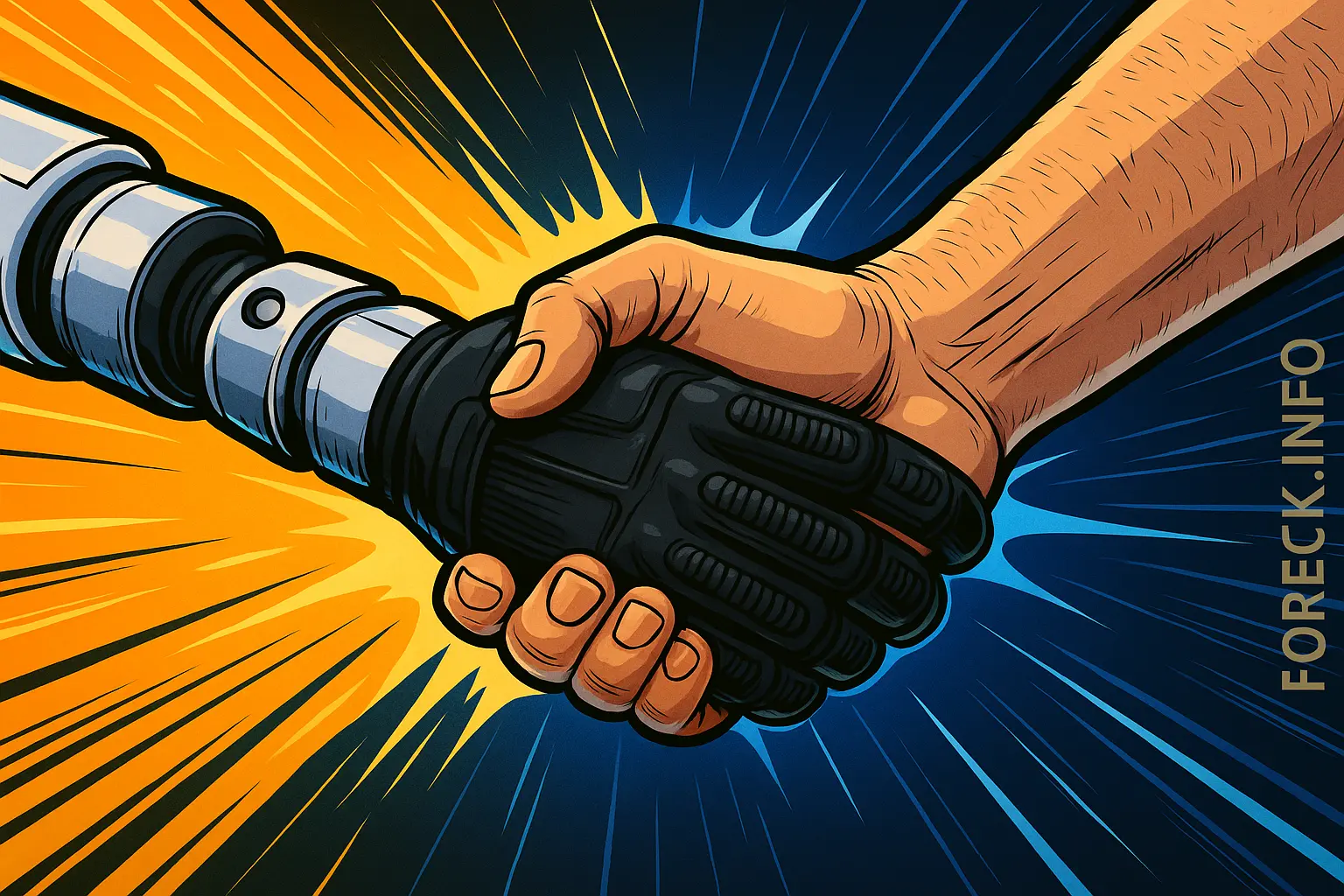
At the same time, it is wrong to frame this as “crypto versus AI.” In reality, crypto and AI can benefit from each other. Crypto does not need to defeat AI; it needs to become part of the infrastructure layer for the AI economy.
If AI adoption continues to expand, AI agents will need open interfaces to reach their full potential. Open Finance and blockchain protocols provide a logical foundation for digital value creation in the AI era. An AI agent will always prefer a globally compatible, programmable stablecoin over a traditional bank-issued credit card.
Today’s financial infrastructure is simply not built for the needs of AI-driven value creation, where information and capital must move freely according to a new logic of efficiency.
This decentralization thesis does not stop at payments. It also applies to computing power and digital identity. If government systems already struggle with basic digital bureaucracy, how are they supposed to provide globally functional identities for AI agents or humanoid robots?
If the answer is left to corporations, only major U.S. or Asian tech giants would be capable of taking on that role — a potentially dystopian scenario.
Unless one assumes that a single tech giant such as Google or Meta will absorb parts of the state and financial system and become the “ledger of last resort,” decentralized infrastructure appears to be the only viable alternative. In that context, Ethereum and other blockchain networks could become neutral infrastructure for identity, value transfer, and digital coordination.
For crypto investors, this is a strong long-term value proposition, but for now it remains too abstract to be fully reflected in crypto prices. Until this infrastructure thesis becomes more tangible, the more likely trigger for a crypto comeback is a financial-market setback in the AI capital accumulation cycle.
If expectations around AI valuations begin to cool and the macro environment also turns more supportive, a new bull cycle could push Bitcoin back toward its previous all-time highs within a matter of months.