
OpenAI is advising users to stop writing excessively long prompts for GPT-5.6 Sol, saying that shorter and more focused instructions can improve accuracy, reduce token usage and lower operating costs.
OpenAI Reveals a New, More Efficient Prompting Approach for GPT-5.6
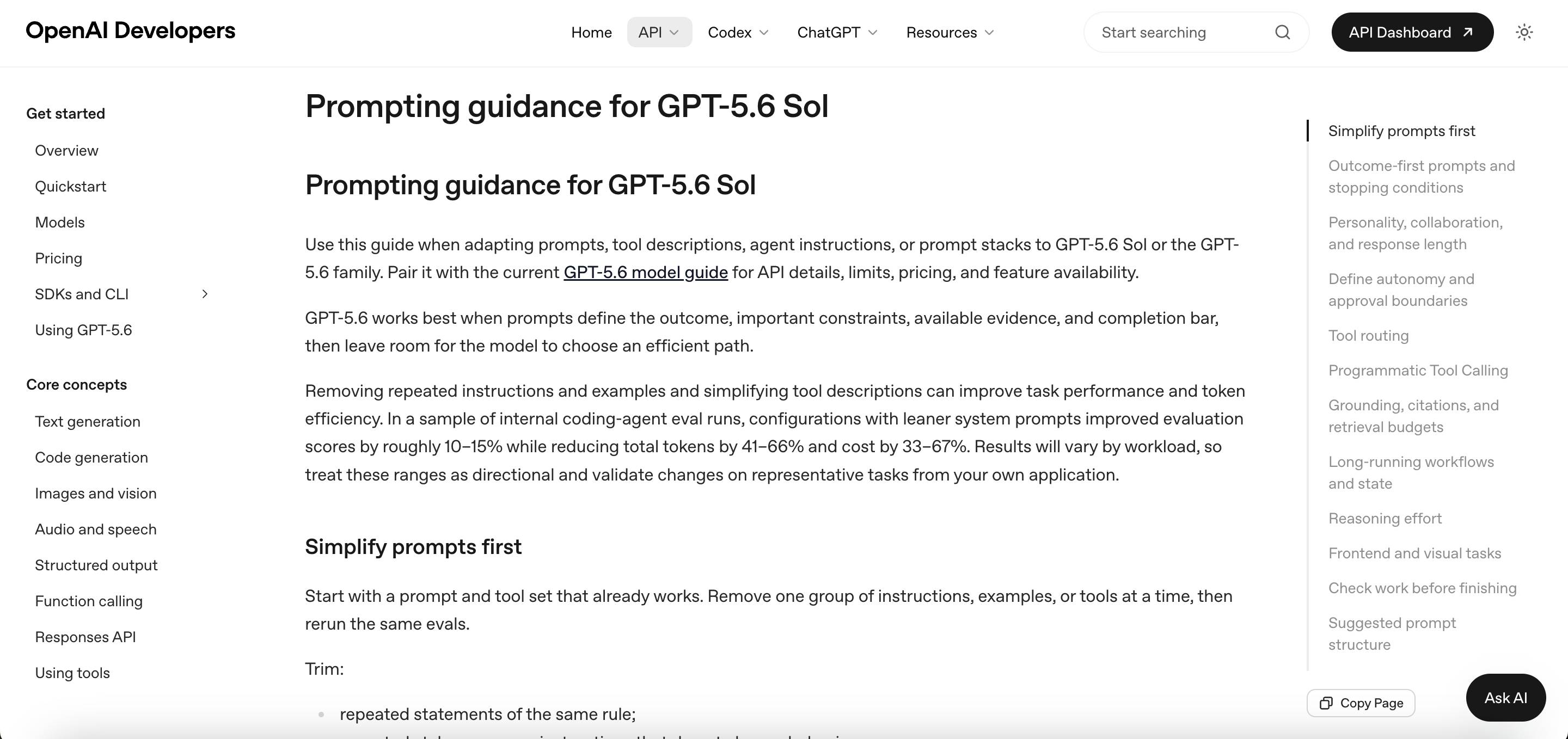
OpenAI has published a new set of prompting guidelines for GPT-5.6 Sol, which was released only a few days ago. The recommendations mark a significant shift in how users are expected to interact with the company’s latest AI model.
In the past, users were encouraged to write highly detailed prompts containing numerous rules, examples and step-by-step instructions. OpenAI is now offering almost the opposite advice, recommending that users avoid prompts that are unnecessarily long or complicated.
GPT-5.6 Changes the Prompting Philosophy
According to OpenAI, GPT-5.6 performs best when prompts focus on the desired goal, essential constraints, available data sources and clear completion criteria, rather than describing every step of the process in detail.
In documentation published on OpenAI Developers, the company said GPT-5.6 is significantly better than previous generations at selecting appropriate reasoning methods, conducting searches and using the right tools.
As a result, lengthy instructions that may have been useful for GPT-5 can become an unnecessary burden for GPT-5.6.
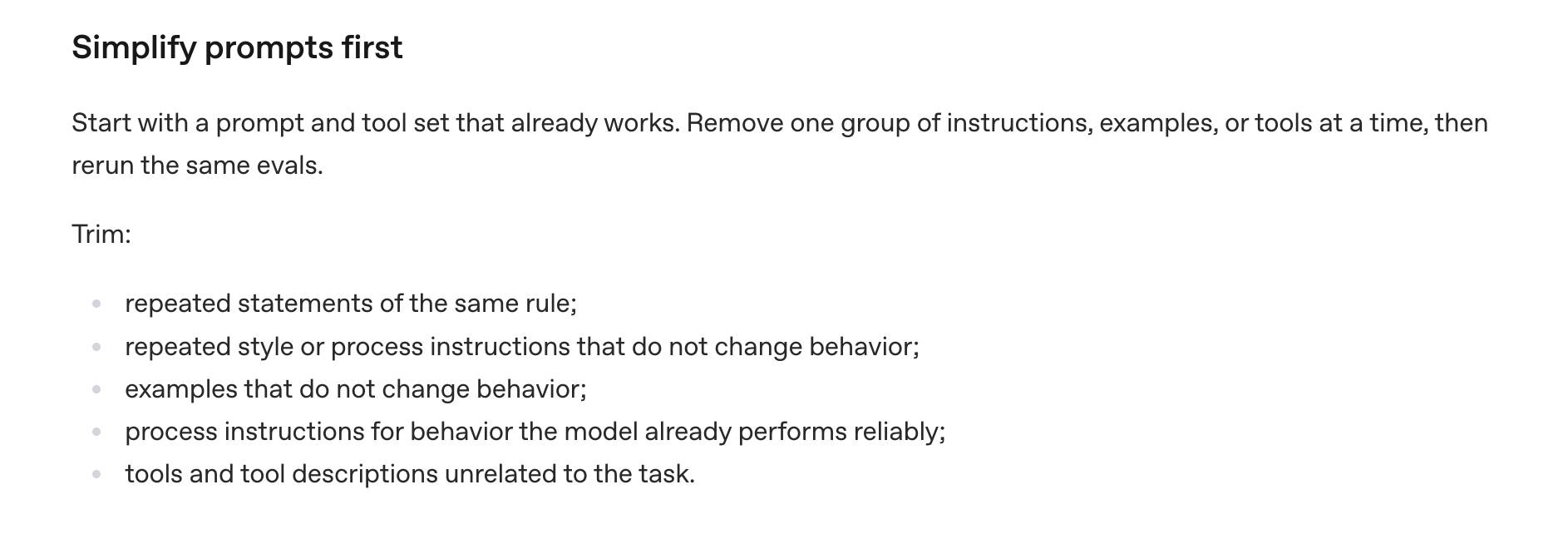
OpenAI therefore recommends removing common prompt elements such as:
-
Rules that are repeated several times.
-
Writing-style instructions that do not affect the final result.
-
Examples that do not meaningfully change the model’s behaviour.
-
Processing steps that GPT-5.6 already performs reliably.
-
Tools or tool descriptions that are not directly relevant to the task.
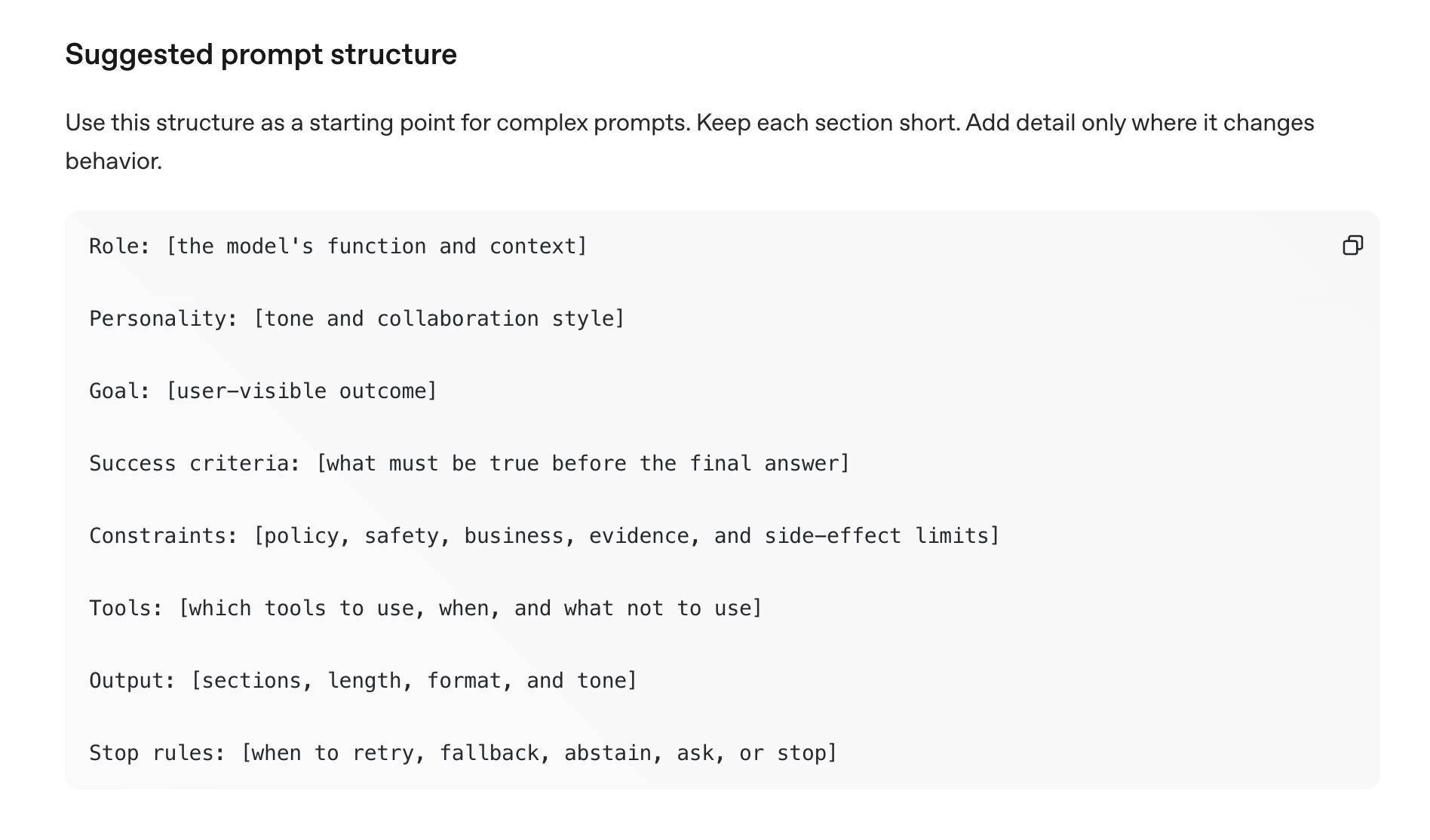
Instead, prompts should retain four essential components:
-
The goal that needs to be achieved.
-
The criteria for successful completion.
-
Mandatory constraints, including safety, policy or business requirements.
-
Clear stopping conditions.
This structure allows GPT-5.6 to choose the most effective way to complete a task instead of spending time processing excessive instructions.
OpenAI also said GPT-5.6 follows prompts much more strictly than earlier models.
When a prompt contains overlapping or contradictory rules, the model may not simply ignore one of them. Instead, it will attempt to satisfy all requirements simultaneously.
This can lead GPT-5.6 to consume more reasoning tokens, take longer to process the task, increase costs and potentially produce a lower-quality response.
OpenAI therefore recommends removing duplicate or conflicting instructions before adding any new requirements.
Shorter Prompts Can Improve AI Performance
To test the new approach, OpenAI conducted experiments using its internal coding agents.
The results reportedly showed that simplifying system prompts alone increased model evaluation scores by approximately 10–15%, while reducing token consumption by 41–66% and cutting operating costs by 33–67%.

In other words, GPT-5.6 Sol may work more efficiently and consume fewer resources when it has fewer unnecessary instructions to process.
However, OpenAI noted that these figures were recorded in internal tests and that real-world results may vary depending on the application.
Nevertheless, the findings point to a new prompting trend for GPT-5.6 models: prompts should be concise and focused while still clearly defining the goal, essential constraints and completion criteria.
As previously reported by FORECK.INFO, OpenAI launched the GPT-5.6 generation and its ChatGPT Work task assistant on July 10.
The GPT-5.6 family includes three versions — Sol, Terra and Luna — and is designed to deliver a significant improvement in performance.
The Sol version reportedly uses around 54% fewer tokens for programming tasks than the previous generation, potentially reducing operating costs while maintaining output quality.
The names Sol, Terra and Luna quickly attracted attention from the cryptocurrency community because of their similarity to Solana’s SOL token and the Terra/LUNA ecosystem.
However, OpenAI said the names were not connected to any blockchain or digital asset plans, while the cryptocurrency market showed almost no reaction to the coincidence.
Conclusion: OpenAI’s shift toward shorter prompts could strengthen GPT-5.6 Sol’s commercial appeal by reducing operating costs and improving efficiency. For investors and traders, this may support broader enterprise adoption of OpenAI’s models and increase competitive pressure across the AI sector.