
Reactor is a platform designed to bring 3D AI models out of research labs and into real-world applications. With a diverse model library covering 3D world generation, interactive video creation and real-time video editing, Reactor is building a computing infrastructure tailored for the AI era. In this article, Coin68 takes a closer look at the platform.
What Is Reactor?
Reactor is a computing infrastructure platform for developers of world models, or 3D AI models. It provides a unified SDK and API for deploying real-time AI video generation models at global scale.
The project officially launched publicly on May 28, 2026, after an extended period of stealth development.
World models are AI systems capable of generating 3D environments and interactive video in real time. Unlike large language models such as ChatGPT or Claude, which receive and return text, world models take images, prompts and user actions as input and produce a continuous video stream that responds instantly.
These models require infrastructure with extremely low latency and high bandwidth, which is precisely why Reactor was developed.
Key Features of Reactor
Low Latency
Reactor operates a proprietary network layer capable of delivering individual frames to user devices with latency below 50 milliseconds, significantly lower than the current AI inference industry average of around 400 milliseconds.
This allows applications powered by world models to respond in real time, enabling users to interact with generated environments and receive immediate feedback.
Optimized Specifically for NVIDIA GPUs
The Reactor team has developed custom kernels designed specifically for NVIDIA GPU architectures and other hardware architectures.
These optimizations allow world models to run significantly faster than on other inference platforms.
Unified API for the Entire Ecosystem
Instead of integrating every model separately through different APIs and protocols, developers only need to integrate with Reactor once.
The platform provides SDKs for TypeScript and Python, allowing developers to access its entire library of leading world models through a unified interface.
New models are added continuously without requiring developers to modify their code.
Products and Features
World Model SDK
The World Model SDK is Reactor’s core product and is available for TypeScript and Python.
Developers can connect to any world model available on the platform, submit prompts and receive real-time video streams with only a few lines of code.
The SDK manages the complete connection process, frame streaming and session management, allowing developers to focus on the application experience rather than the underlying infrastructure.
Model Library
Reactor brings together leading world models that are pre-deployed on the platform’s infrastructure:
- LingBot World 2: Generates high-resolution 3D environments with real-time interactive output controlled by human actions.
- LingBot: The predecessor to LingBot World 2, offering high-quality interactive environment generation.
- Helios: An interactive video generation model with unlimited streaming capabilities, allowing users to change prompts and receive newly generated video immediately.
- SANA-Streaming: A real-time video editing model.
- LongLive 2: A real-time multi-shot video generation model supporting smooth transitions and hard cuts.
Enterprise Infrastructure
For institutional customers, Reactor offers dedicated high-performance GPUs capable of supporting up to 10,000 simultaneous sessions.
The platform also provides isolated GPU environments to strengthen security and protect enterprise workloads.
How Reactor Works
Reactor operates as an intermediary layer between developers and world models. When a developer sends a request through the SDK, the platform performs three main steps:
- Model Routing: The system identifies the requested model and routes the request to the GPU cluster geographically closest to the end user. This helps ensure the lowest possible latency regardless of location.
- Optimized Inference: Reactor’s custom kernels run directly on NVIDIA GPUs and other architectures, optimizing calculations specific to world models.
- Streaming: Reactor encodes and delivers each video frame to the user’s device with latency below 50 milliseconds.
In terms of pricing, Reactor uses a usage-based model, with fees depending on the specific model selected by the developer.
Development Team
Reactor was co-founded by Alberto Taiuti, CEO, and Bryce Schmidtchen, CTO. Both previously held senior engineering roles within the Apple Vision Pro development team.
Before co-founding Reactor, Alberto Taiuti served as CTO and co-founder of Luma AI, where he built infrastructure for one of the world’s most widely used generative 3D and video platforms.
Investors
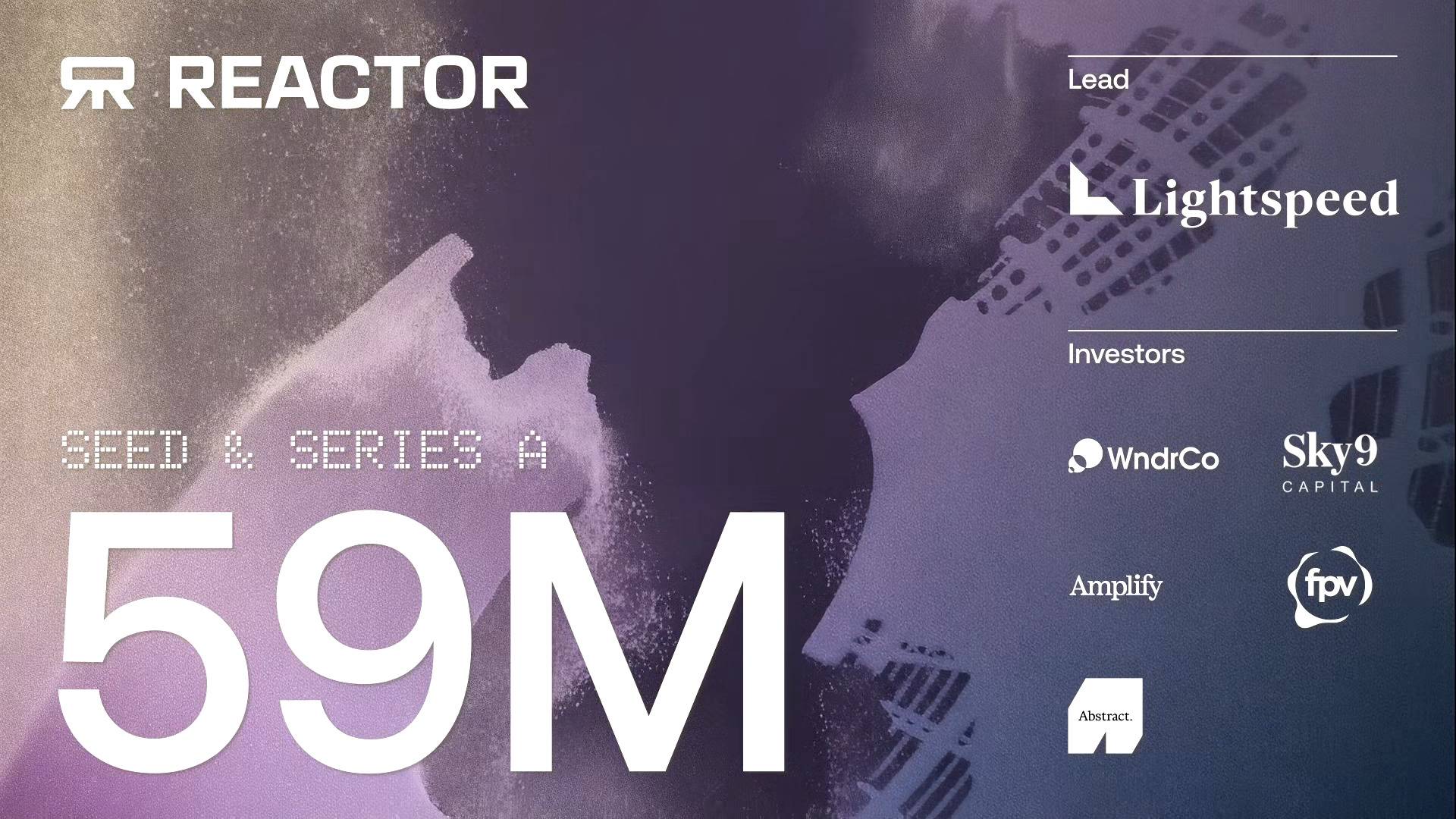
Reactor has raised a total of $59 million across Seed and Series A funding rounds led by Lightspeed Venture Partners.
Other participating investors include WndrCo, NVentures, NVIDIA’s venture capital arm, Amplify Partners, Sky9 Capital, FPV Ventures and Abstract Ventures.
Сonclusion: For investors, Reactor represents a high-risk, high-growth bet on the emerging world-model infrastructure market, with additional credibility provided by NVIDIA’s NVentures and Lightspeed Venture Partners. For traders, the company may serve as an indicator of rising demand for NVIDIA GPUs, AI inference infrastructure and real-time generative video technologies, although Reactor remains private and does not currently offer a publicly traded token or stock.