

Best Value

- Tight spreads & fast execution
- Multiple account types
- MT4/MT5 + copy-trading

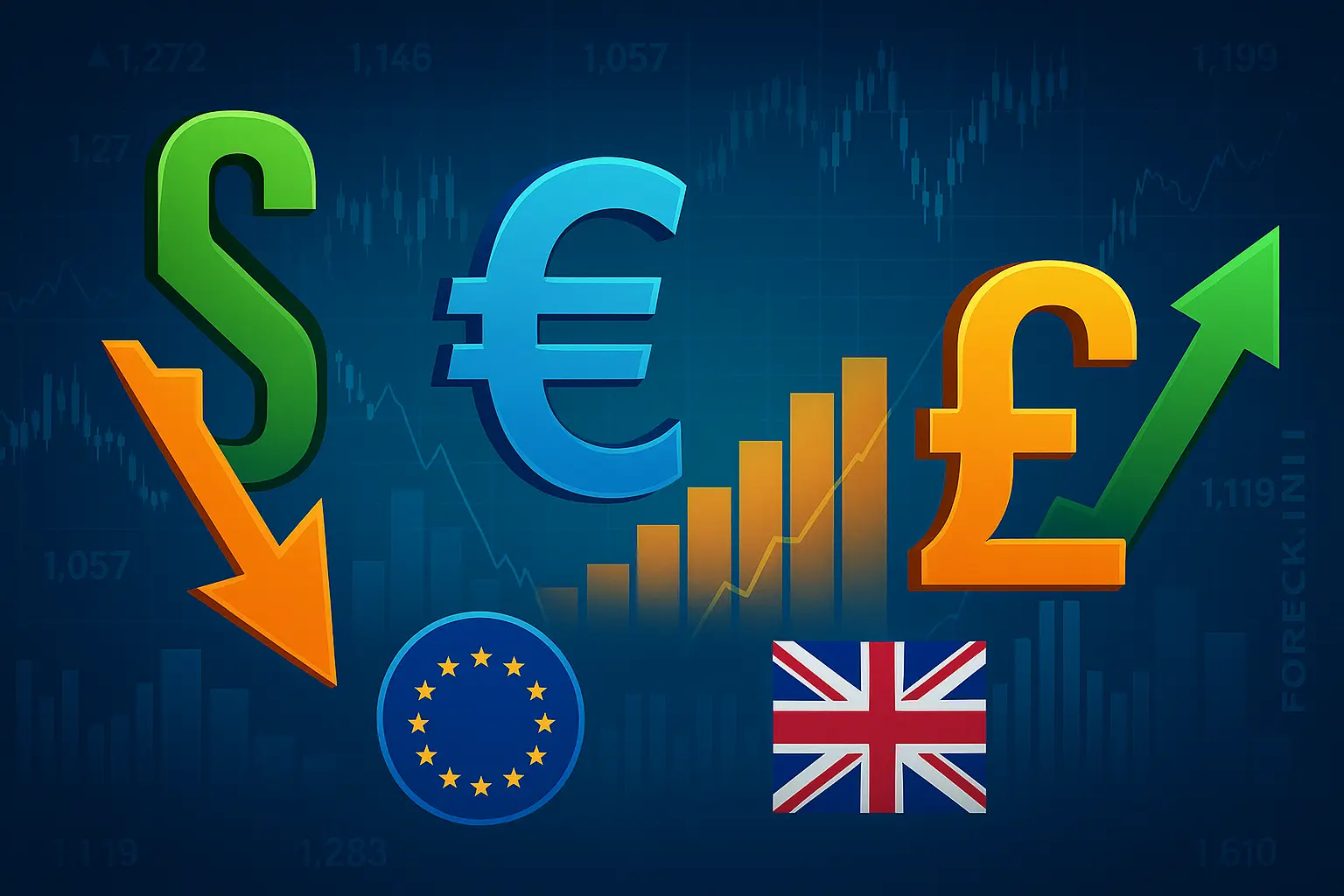
United States. The US dollar is strengthening against the Japanese yen today while posting moderate losses against the euro and the British pound.

 By Sagar Dua
 The GBP/USD pair is maintaining a bullish trajectory, rebounding from the key 1.3400 support and approaching the 1.3620 zone. This momentum is underpinned by stronger-than-expected UK inflation and solid labor market data, giving the pound a notable edge in recent sessions.
By Sagar Dua The GBP/USD pair resumed its upward trajectory after a three-week corrective decline and is currently trading near 1.3550 (Murray level [6/8]), supported by the imminent signing of a free trade agreement between the United Kingdom and India, scheduled for Thursday. Under the deal, 99.0% of Indian exports—including electric vehicles, textiles, and food products—will enter the UK tariff-free, while Britain will benefit from reduced tariffs on key exports, primarily alcohol and automobiles, down to 90.0%. The UK will also gain access to Indian public procurement contracts, which are valued at £38.0 billion annually. This diversification strategy aims to cushion the UK economy from the fallout of recently increased US tariffs and underscores the government's commitment to expanding export markets amid global trade turbulence.
 By Sagar Dua
 Macroeconomic and Forex Market Overview: Trump’s Trade Policy Remains the Key Driver for Global Investors
 By Sagar Dua
 The USD/JPY currency pair continues to trade within an upward correction, currently hovering around 146.80 amid ongoing volatility in the US dollar. According to a report by Mainichi, Japanese Prime Minister Shigeru Ishiba is likely to step down by the end of August, following his party's defeat in the recent upper house elections. The loss further eroded the coalition’s power after it lost the lower house majority in autumn 2024. Despite the setback, Ishiba had initially signaled his intent to remain in office until a bilateral trade agreement with the United States is finalized.
 By Sagar Dua
 The US dollar showed moderate weakness against the Japanese yen, while gaining ground against the British pound and displaying mixed performance versus the euro at the open of the trading week. Investors remain focused on the latest commentary from senior US officials, particularly Treasury Secretary Scott Bessent, who reiterated that the scheduled hike in import tariffs for key trade partners from August 1 is expected to pressure foreign governments into agreeing to more favorable deals for the United States. Bessent, however, did not rule out a potential delay by President Donald Trump. The Treasury Secretary also questioned the Federal Reserve’s decision to keep rates unchanged despite muted inflation, but expressed confidence in Chair Jerome Powell’s leadership, dismissing rumors of an imminent resignation. Meanwhile, Federal Reserve Vice Chair for Supervision Michelle Bowman emphasized the importance of the institution’s independence while noting the need for a broad range of views in policymaking.
By Sagar Dua The British pound is trading lower against the US dollar, consolidating near 1.3477 during the Asian session. Sterling remains under heavy pressure, driven by disappointing macroeconomic data—especially from the UK real estate sector, which has slipped back into decline after a stable start to the year.
 By Sagar Dua
 The EUR/USD pair is consolidating in a corrective trend, hovering around 1.1689 as the likelihood of a comprehensive EU–US trade agreement remains extremely low. Forex traders are closely monitoring the political gridlock, which continues to undermine euro sentiment even as the US dollar itself faces uncertainty over future Federal Reserve policy.
 By Sagar Dua
 The focus of global forex investors remains fixed on trade policy developments. Over the weekend, US Commerce Secretary Howard Lutnick delivered a comprehensive interview to CBS News, reaffirming the White House’s hardline stance on export tariffs. According to Lutnick, new tariffs will take effect from August 1 with no further postponements expected, although negotiations with international partners are set to continue.
 By Sagar Dua
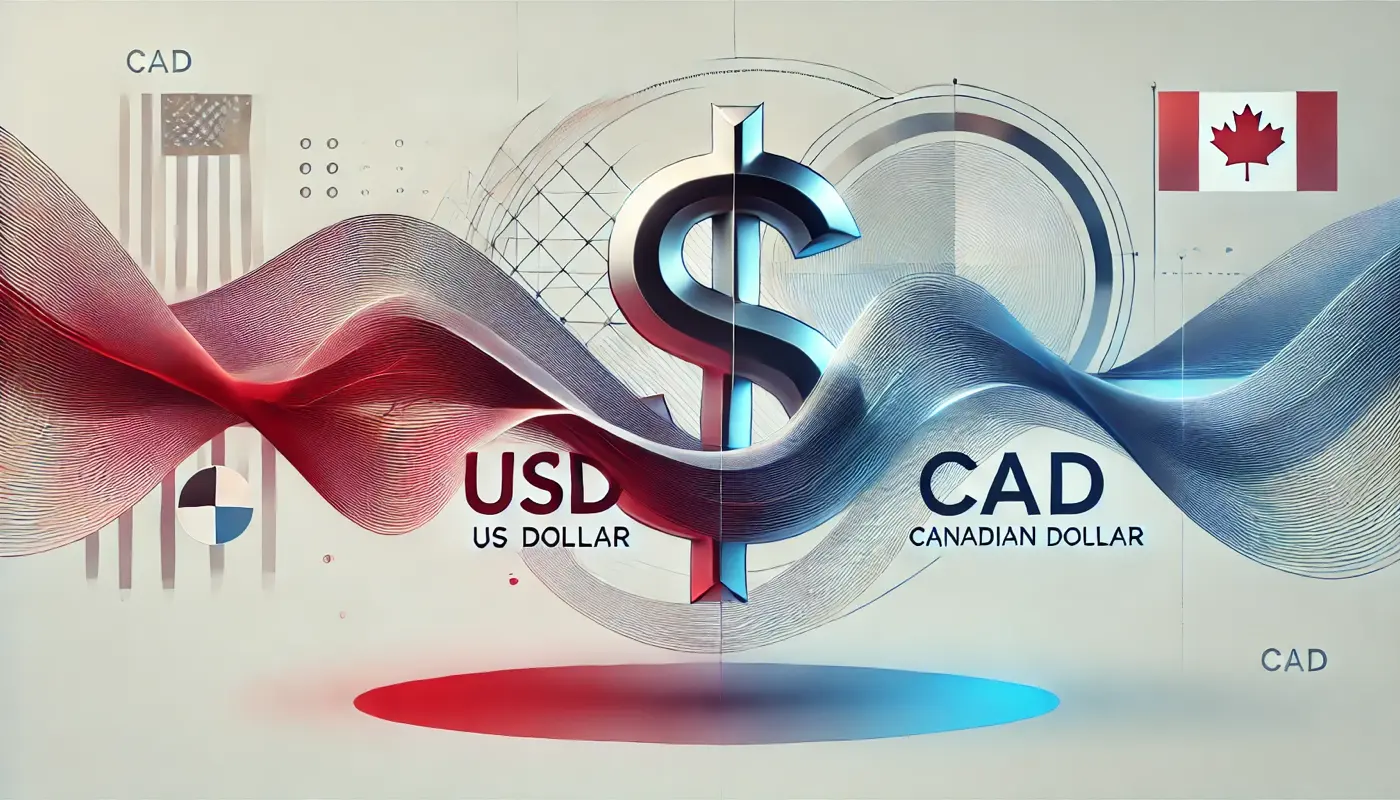
 The USD/CAD pair is poised for further downside as stable Canadian inflation and political uncertainty in the US weigh on the greenback. The pair is trending toward the monthly low of 1.3554, reflecting persistent bearish sentiment.
 By Sagar Dua
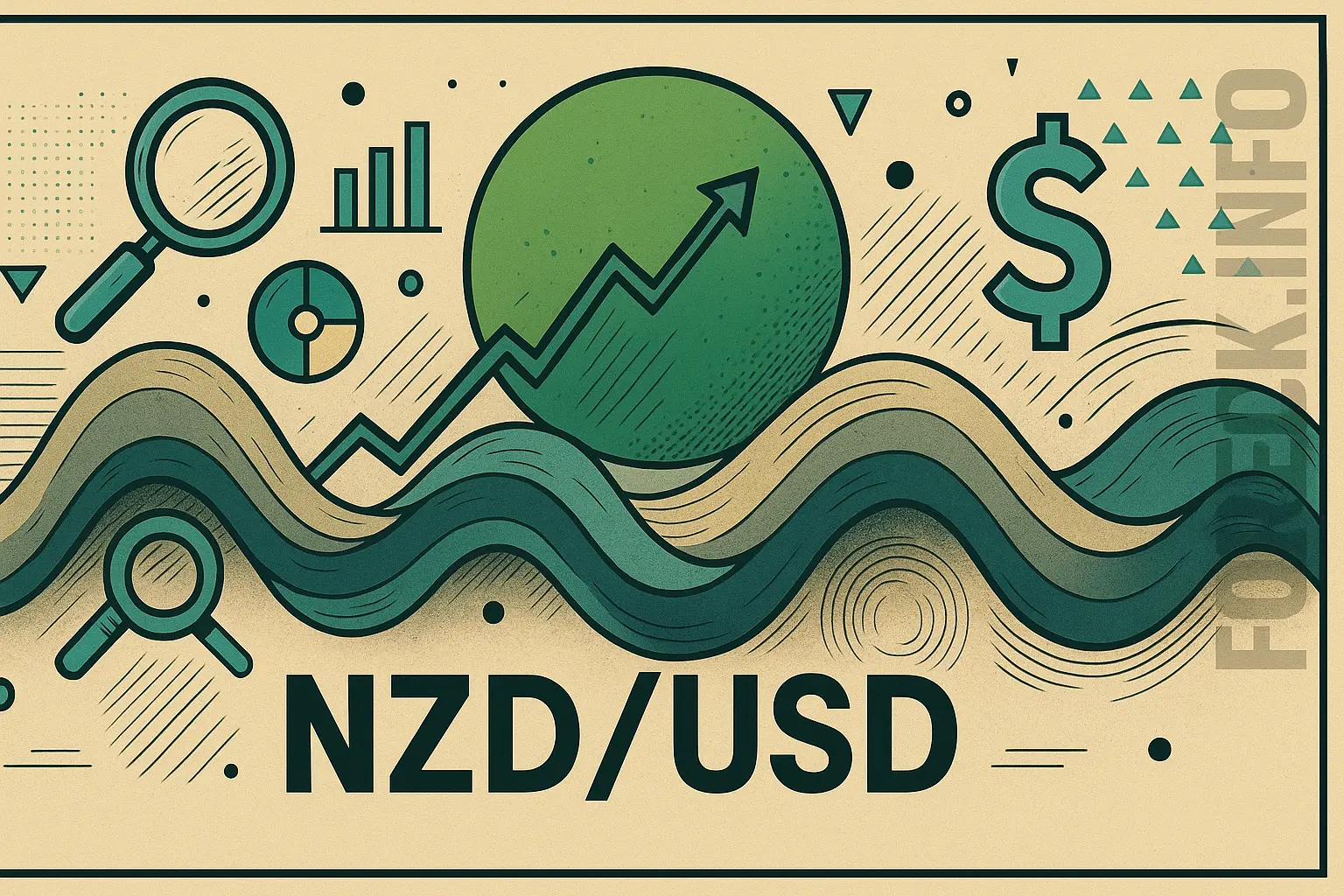
 The NZD/USD pair is trading near 0.5953, showing corrective movement amid a sideways trend in the US dollar. The kiwi’s upside potential is currently capped by faster-than-expected inflation growth: Statistics New Zealand reported the Consumer Price Index (CPI) accelerated from 2.5% to 2.7% in the second quarter, holding within the Reserve Bank of New Zealand’s (RBNZ) official target range of 1.0–3.0%.
By Sagar Dua The latest batch of June US housing data signaled resilience in the real estate sector, with building permits rising 0.2% to 1.397 million and housing starts jumping 4.6% to 1.321 million. This underscores continued stability and supports the likelihood that the Federal Reserve will keep rates elevated for an extended period. Yet, in recent speeches, Fed officials hinted at a possible pivot toward easing—contradicting consensus market expectations.
 By Sagar Dua
 The global currency market is reacting to mixed macroeconomic signals, persistent inflation, Fed policy debates, and a new escalation in trade tensions. Here’s a comprehensive analysis of the major Forex pairs and gold.

Forex analysis helps traders figure out where a currency pair might move next and guides their trading decisions. It’s a daily tool for planning entries and exits, based on two main approaches. Fundamental analysis looks at the broader economy: growth, inflation, and especially central bank policy on interest rates. Technical analysis studies past price movements, chart patterns, and signals that tend to repeat over time. Together, these methods give traders a clearer picture of the market and improve decision-making.