

Top Pick
- Fully licensed and regulated US exchange
- Strong focus on security and compliance
- User-friendly interface for beginners

The cryptocurrency market strengthened earlier this week but came under sharp selling pressure on Thursday, erasing much of its previous gains. In the latest market snapshot, Bitcoin (BTC) is trading near 81600.00 (+0.9%), Ethereum (ETH) at 2400.00 (+2.1%), Tether (USDT) at 0.9991 (–0.01%), BNB at 744.00 (+5.1%) and XRP at 1.3250 (+4.8%). Total cryptocurrency market capitalization has declined to approximately $2.73 trillion, while Bitcoin dominance has increased to 60.0%. From October 19 to 22, US spot Bitcoin ETFs recorded net inflows of $439.1 million, while Ethereum ETFs saw outflows of $225.1 million. The market remains volatile despite the recovery attempt discussed in our previous crypto weekly review.

 By John Isige
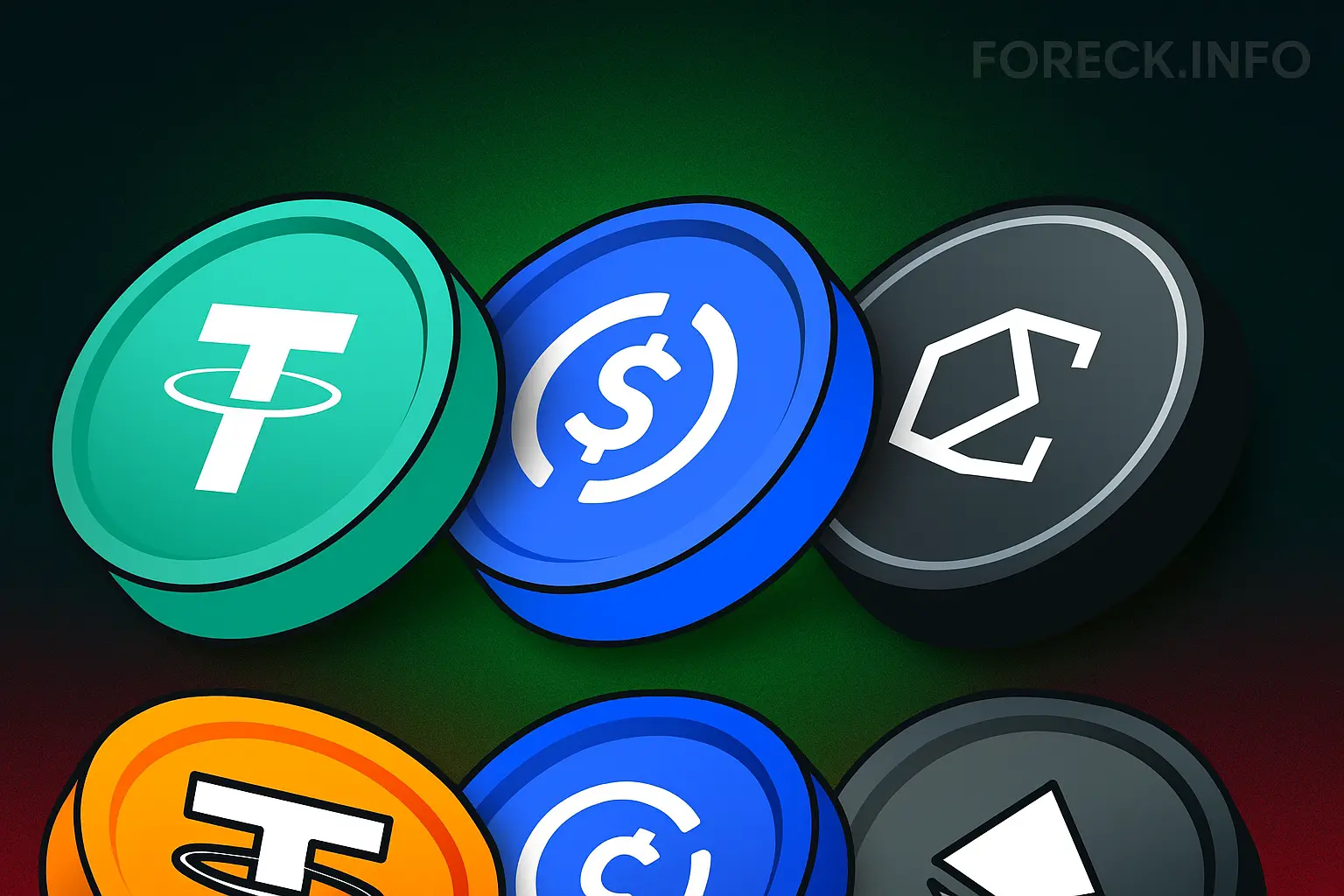
Tether has no plans to go public, despite competitor Circle’s successful NYSE listing, according to CEO Paolo Ardoino. The issuer of the world’s largest stablecoin, USDT, is focused on growth and diversification—without an IPO in sight.
 By John Isige
Argentina’s Anti-Corruption Office (OA) has concluded its ethics investigation into President Javier Milei’s public endorsement of the Libra token, finding no violations and officially clearing the president of wrongdoing.
 By John Isige
Circle, the issuer of the USDC stablecoin, has officially gone public on the New York Stock Exchange (NYSE) under the ticker CRCL. The listing marks a major milestone for the company, whose shares are now available to global investors and institutions, positioning Circle as a central player in the future of digital finance.
 By John Isige
Metaplanet has smashed Asia’s fundraising records, securing ¥770.9 billion (≈$5.4 billion) to buy Bitcoin—an unprecedented equity raise executed via 555 million moving-strike warrants priced at a premium. CEO Simon Gerovich says the deal, enabled by the company’s “high volatility and deep liquidity,” positions Metaplanet as a regional blueprint for corporate BTC treasuries.
 By John Isige
Uber is actively exploring the use of stablecoins as a means to reduce costs associated with international money transfers. While the ride-hailing giant currently has no formal roadmap for integrating cryptocurrency-based payments, its CEO has highlighted stablecoins as a promising tool for enhancing operational efficiency on a global scale.

For crypto, the framework is similar to traditional financial markets but comes with its own twist. Here, price action turns on liquidity, adoption, regulation, and flows from institutions alongside retail sentiment. Network health—hash rate, staking, active wallets—adds another layer. Macro still matters too: rates, dollar strength, and risk appetite shape inflows and outflows. Then, as with any market, you use the chart—trend, support and resistance, momentum, and volume—to spot setups and manage risk.