
Top Pick

- Fully licensed and regulated US exchange
- Strong focus on security and compliance
- User-friendly interface for beginners

The cryptocurrency market strengthened earlier this week but came under sharp selling pressure on Thursday, erasing much of its previous gains. In the latest market snapshot, Bitcoin (BTC) is trading near 81600.00 (+0.9%), Ethereum (ETH) at 2400.00 (+2.1%), Tether (USDT) at 0.9991 (–0.01%), BNB at 744.00 (+5.1%) and XRP at 1.3250 (+4.8%). Total cryptocurrency market capitalization has declined to approximately $2.73 trillion, while Bitcoin dominance has increased to 60.0%. From October 19 to 22, US spot Bitcoin ETFs recorded net inflows of $439.1 million, while Ethereum ETFs saw outflows of $225.1 million. The market remains volatile despite the recovery attempt discussed in our previous crypto weekly review.

 By John Isige
Crypto exchange Coinbase has introduced a new savings product for UK users, developed together with Clearbank. Starting November 11, the service began rolling out to selected customers and lets eligible users earn a variable 3.75% AER on GBP balances. Funds can be deposited and withdrawn instantly, with no minimum balance and no lock-up period, making the account fully flexible.
 By John Isige
Banks JPMorgan and DBS (Singapore) have begun jointly developing a framework that will allow clients to move tokenized deposits across multiple blockchain networks. The partnership brings together JPMorgan’s Kinexys digital payment platform and DBS’s Token Services to create infrastructure for direct cross-chain settlements without intermediaries.

 By Andrew Bennett
Crypto crime is hitting record levels — and so is the French hardware wallet maker Ledger. Here’s why an IPO is becoming increasingly likely.
 By John Isige
The ETH/USD pair continues to form a medium-term downtrend while correcting within a broader long-term bullish structure. Last week, the price attempted to exit the descending channel by breaking below its lower boundary and tested the 3125.00 level (Murray level [2/8], 50.0% Fibonacci correction), but failed to consolidate below it.
 By John Isige
Bitcoin managed to stabilize over the weekend, holding above the 50 EMA on the 4-hour chart. This improved the short-term market structure and opened the door for further gains throughout the week. Since no major U.S. macroeconomic data releases are expected today, no additional pressure from the macro side is anticipated — easing sentiment for Bitcoin and, consequently, the altcoin market.
 By John Isige
Last week, the BTC/USD pair tested the 100,000.00 mark (Murray level [0/8]) amid signals that the US Federal Reserve may keep its current rate unchanged at the December meeting. The pair then regained part of its losses, returning to the 106,250.00 area (Murray level [2/8]).
 By John Isige
Five spot XRP ETFs have been listed on the Depository Trust and Clearing Corporation (DTCC) platform under the category “active and pre-launch,” indicating that they are active and preparing for market debut.
 By John Isige
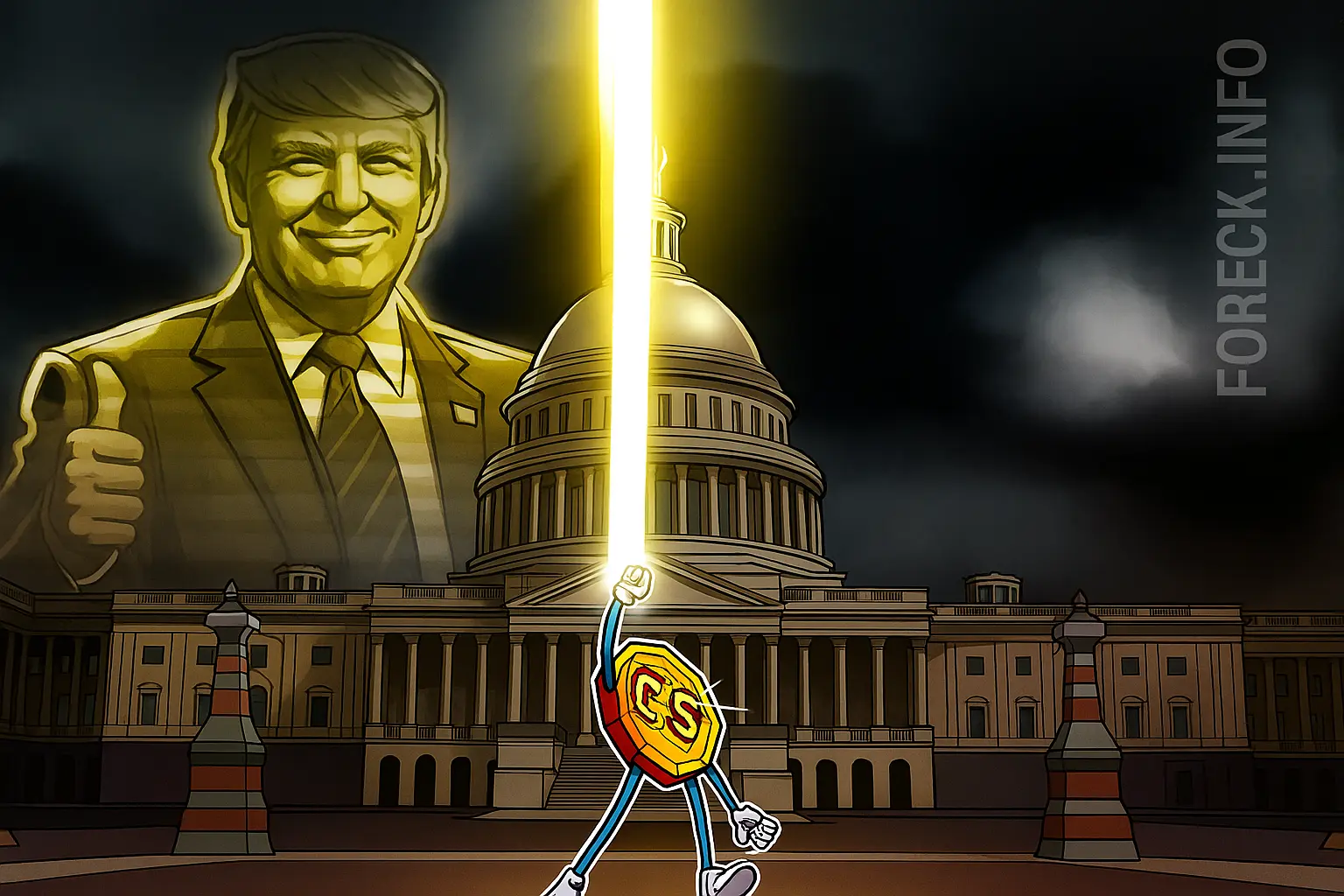
Bitcoin climbed above $106,000 as the end of the U.S. government shutdown and Donald Trump’s proposal for a “Tariff Dividend” payout program became the main drivers behind the crypto market’s rally.
 By John Isige
Robert Kiyosaki warns of an imminent global economic collapse and promises wealth to those who make the right investments now. Here are his latest price forecasts.
 By John Isige
The well-known gold advocate and crypto skeptic Peter Schiff has once again lashed out at Bitcoin, calling its current price above $100,000 a “unique opportunity” to exit the market.
 By Andrew Bennett
Sell-off or reboot? Coinbase analysts believe the October crash marked the beginning of a new, more resilient market phase.
By John Isige JPMorgan is expanding its exposure to Bitcoin and Ethereum while simultaneously testing its own digital payment systems.


For crypto, the framework is similar to traditional financial markets but comes with its own twist. Here, price action turns on liquidity, adoption, regulation, and flows from institutions alongside retail sentiment. Network health—hash rate, staking, active wallets—adds another layer. Macro still matters too: rates, dollar strength, and risk appetite shape inflows and outflows. Then, as with any market, you use the chart—trend, support and resistance, momentum, and volume—to spot setups and manage risk.