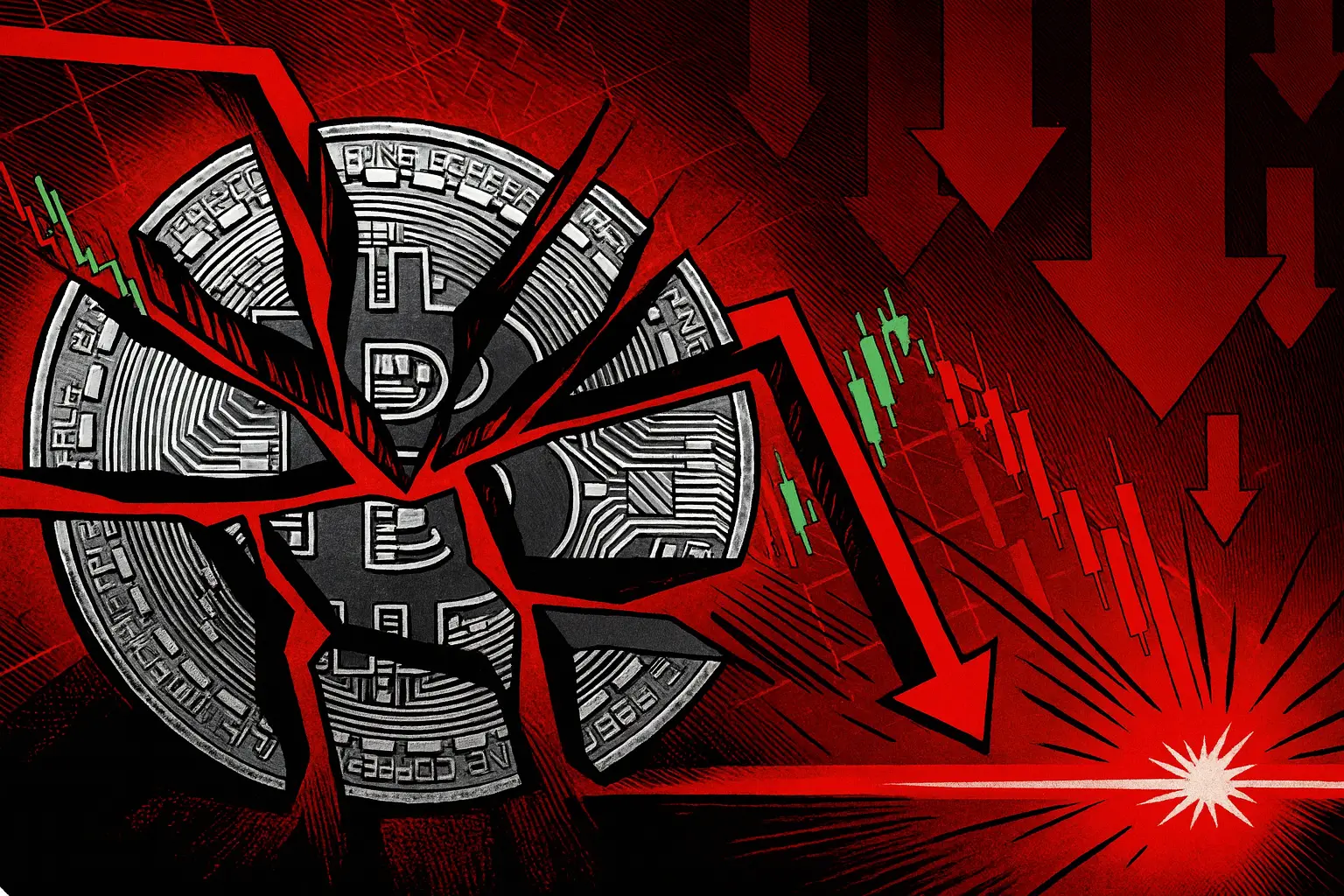

Within just a few weeks, Bitcoin went through one of its sharpest corrections in recent years. After setting a record high near $126,000 in early October, BTC slid to roughly $82,000 by the end of November. Such rapid moves tend to shake confidence, especially among newer crypto investors, and often reignite doubts about Bitcoin’s long-term outlook.
What is frequently overlooked, however, is the broader context. Even after the recent decline, Bitcoin is still up nearly 400% over the past five years, a performance few asset classes can match. This raises a more relevant question for long-term investors: what price levels for Bitcoin could realistically be reached by 2030?
Why “Bitcoin Is Too Expensive” Is a Misleading Argument
During the months when Bitcoin traded well above $100,000, many retail investors voiced frustration, arguing that BTC had become “too expensive” and that the opportunity to enter the market had already passed. Similar complaints were common in earlier cycles as well — notably when Bitcoin first crossed $10,000.
This mindset often reflects a behavioral bias known as unit bias. One whole Bitcoin may look prohibitively expensive compared with altcoins such as Ethereum or XRP. Yet the relevant metric is not the price of a single coin, but the total value of the network, measured by market capitalization.
Bitcoin’s Position Among Global Assets
With a market capitalization of around $1.7 trillion, Bitcoin now ranks among the world’s largest assets. Even so, it currently sits only around eighth place globally, positioned behind companies like Amazon and just ahead of Meta.
For comparison, gold’s market capitalization exceeds $30 trillion. This gap highlights that, despite Bitcoin’s scale, significant long-term upside may still exist. If BTC were to reach Nvidia’s valuation, its price would be close to $213,000 per coin. Matching gold’s market value would imply prices in the millions of dollars, although such a scenario would likely take many years to materialize.
Conservative and Base-Case Scenarios for 2030
Alexander Höptner, CEO of AllUnity, takes a measured approach when discussing Bitcoin’s long-term outlook. He points to so-called binary events — such as governments establishing Bitcoin reserves or major disruptions in corporate crypto treasuries — as potential catalysts that could dramatically alter the market trajectory.
According to Höptner, plausible outcomes range from €100,000 in an extremely conservative scenario to €1 million in a highly optimistic case. He also expects at least two additional bear markets, periodic corrections, and future halving cycles along the way. His personal benchmark stands near €250,000 per BTC, equivalent to roughly $290,000, signaling a bullish yet cautious stance.
Market Capitalization as a Natural Limiting Factor
Market analyst Stefan Lübeck urges caution when evaluating aggressive price targets. As Bitcoin’s market capitalization expands, the speed and magnitude of price increases tend to slow, simply because each new rally requires larger amounts of fresh capital.
Lübeck notes that the rise from $45,000 to $126,000 following the launch of US spot Bitcoin ETFs required close to $500 billion in net inflows. Based on this dynamic, his downside scenario for 2030 sits around $260,000, with a base case near $370,000 and a more optimistic ceiling of approximately $650,000 — levels that would already demand trillions of dollars in additional capital.
One Million Dollars per Bitcoin: Hype or Plausible Outcome?
Despite more conservative projections, many prominent figures remain firmly bullish. Michael Saylor, Arthur Hayes, and Cathie Wood have all suggested that Bitcoin could surpass $1 million per coin within the next four to five years.
Kristian Csepcsar from mining pool Braiins supports this view with two core arguments. First, governments continue to expand fiat money supply, gradually eroding purchasing power, while Bitcoin’s supply remains capped at 21 million coins. Second, institutional adoption has accelerated far faster than expected — transforming BTC from a niche experiment into an asset embraced by ETFs and discussed at the highest political levels.
Bottom Line: Bitcoin as a Long-Term Investment Thesis
Even the most optimistic forecasts acknowledge that Bitcoin’s path forward will remain volatile. Still, there is broad consensus that BTC is likely to retain strategic relevance well beyond 2030.
Ultimately, portfolio allocation comes down to individual risk tolerance. If recent corrections caused sleepless nights, exposure may be too high. If 30–35% drawdowns are viewed calmly, the market may still offer opportunities for gradual accumulation.
The classic investment principle — time in the market beats timing the market — arguably applies to Bitcoin even more strongly than to traditional equities, particularly for investors with a five- to ten-year horizon and a disciplined accumulation strategy.