
The conflict between the United States and Iran has entered a new stage of escalation in recent days and is increasingly affecting global financial markets. Rising geopolitical risks are putting pressure on risk assets — cryptocurrencies and stocks — while traditional safe havens such as gold and oil are gaining. Market participants are trying to assess how this dynamic could affect Bitcoin and other asset classes in the short and medium term.
US-Iran crisis increases pressure on Bitcoin and markets
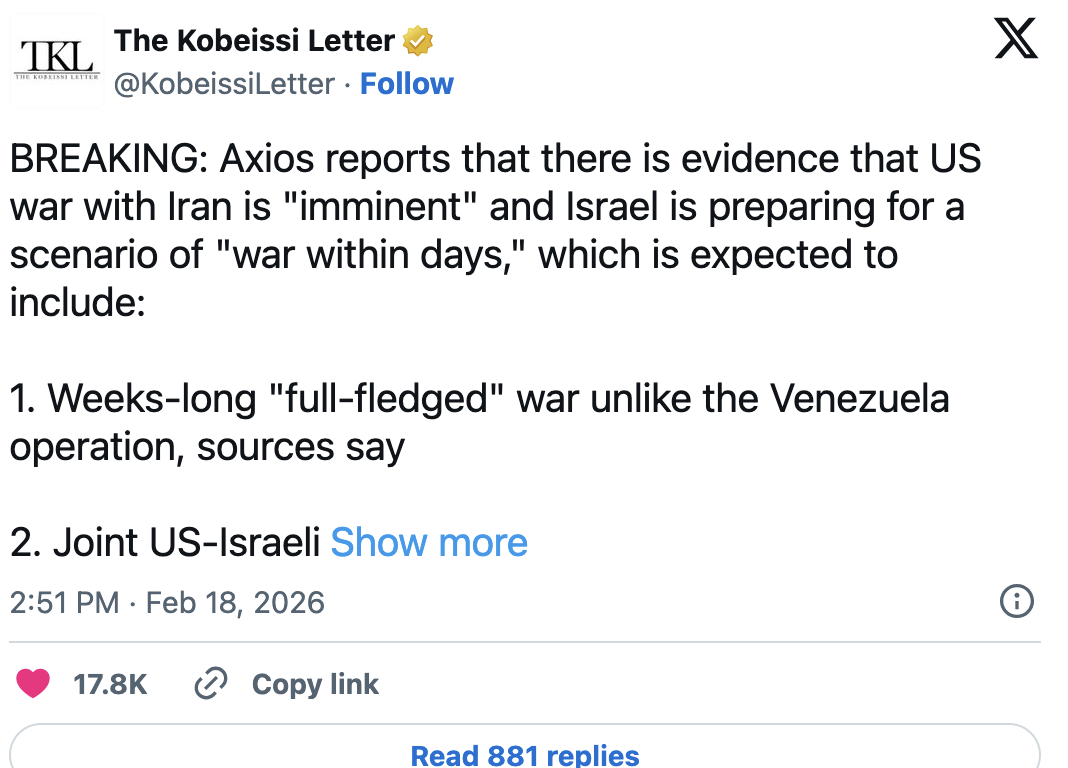
Tensions between the US and Iran have increased significantly in recent days. According to recent reports, both sides continue to expand their military presence in the region, and the possibility of a direct military confrontation can no longer be ruled out. Iranian armed forces recently conducted large-scale naval exercises in the strategically important Strait of Hormuz, which remains at the center of geopolitical risk. At the same time, the United States deployed additional troops and warships to strengthen its position.
The Strait of Hormuz is a key global oil transit chokepoint: around 20% of the world’s seaborne oil exports pass through it every day. Even announcements of possible temporary shipping restrictions or military exercises in the area can trigger higher risk premiums in the energy market and increase uncertainty across financial markets.
Financial markets are nervous: what is happening now
Fears of military escalation have already pushed oil prices higher. Brent is trading above $71 per barrel again, while WTI has moved above $66, approaching multi-month highs. The market is pricing in an additional risk premium in case supply security from the Persian Gulf is threatened.
Gold has also gained noticeably, once again confirming its role as a classic safe-haven asset. Investors typically increase exposure to precious metals when geopolitical uncertainty rises — even as diplomatic contacts continue, such as the recent indirect talks in Geneva.
Equity markets are reacting as well: US tech futures are declining, while global equities are trading mixed, depending on regional headlines and macroeconomic data. Overall market nervousness is increasing volatility in risk assets.
Cryptocurrencies, including Bitcoin, are moving in line with the broader risk-off trend. While gold and oil are rising, BTC continues to fall and remains in a phase of elevated volatility as investors reduce exposure to riskier assets and increase liquidity. Despite its “digital gold” narrative, Bitcoin still behaves like a risk asset in such phases. Combined with macro risk factors, this creates conditions for stronger short-term downside pressure on the price.
Global uncertainty at extreme levels
Another signal of market stress is the World Uncertainty Index, published in the FRED (Federal Reserve Economic Data) database. The index is currently at an exceptionally high level. It measures global uncertainty by analyzing thousands of reports, government documents, and economic reviews, taking into account geopolitical conflicts, monetary policy risks, trade disputes, and macroeconomic shocks.
High index readings indicate that governments, companies, and investors are facing serious planning difficulties. Historically, such levels were often seen during major crises — financial, geopolitical, or during abrupt shifts in monetary policy.
For current markets, this means heightened sensitivity to any new headlines. Risk assets — Bitcoin, equities, and growth stocks — often react faster and more sharply in such conditions even to speculative geopolitical signals. This helps explain the elevated market nervousness in the absence of a full-scale panic move.
Conclusion: risk is present, but a full escalation is not yet priced in
Geopolitical tensions between the US and Iran are clearly creating a rising risk scenario for financial markets. Higher oil prices, stronger safe-haven assets, and pressure on risk instruments show that investors are taking the situation seriously. At the same time, market reactions remain relatively restrained.
There is no large-scale flight from risk yet in either equities or cryptocurrencies. Instead, the market is seeing a cautious repricing of positions amid elevated uncertainty, rather than a full pricing-in of a broad military conflict scenario. The crypto market is also reacting more defensively than panic-driven.
This suggests that a military conflict is still viewed as a possible risk, not the base-case scenario. If diplomatic de-escalation occurs or the situation stabilizes, the recent pressure could ease quickly. Conversely, a clear escalation and direct confrontation would likely be fully priced in only once concrete actions emerge.
For Bitcoin and other risk assets, the situation remains fragile but open. The coming days will be critical in determining whether geopolitical uncertainty intensifies further or whether the market begins to gradually price this factor out.