

The economic situation for mining has deteriorated significantly. According to Checkonchain, the average cost of producing one Bitcoin is now around $88,000, while the current market price remains below $69,000. This means that many miners are operating at a loss of more than 21% on each mined block.
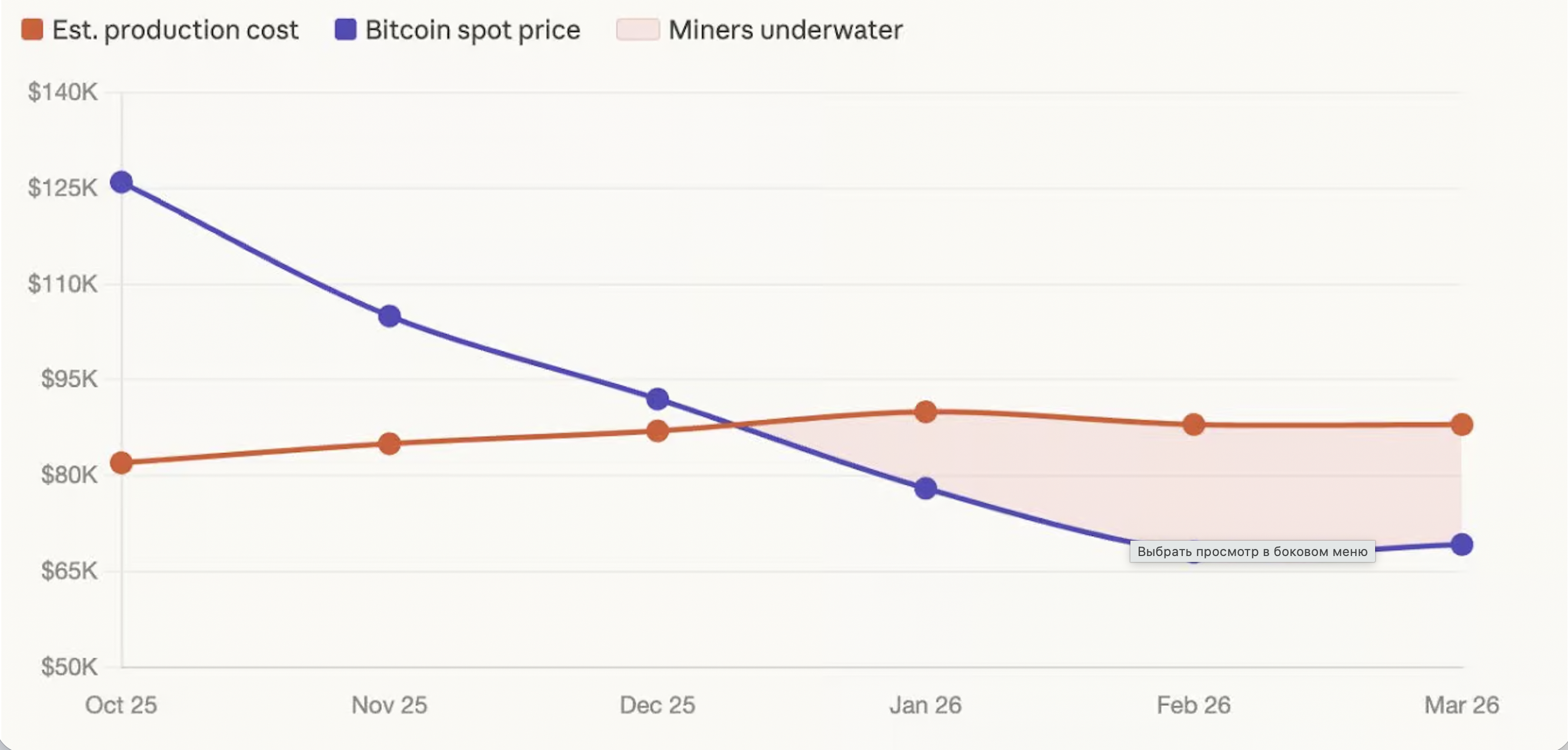
Pressure on the sector has been building since the market correction in October, when Bitcoin was trading near $126,000. Geopolitical developments have added further strain: the conflict involving the US, Israel, and Iran is pushing energy prices higher, directly increasing mining costs.
The Bitcoin network is showing signs of weakening
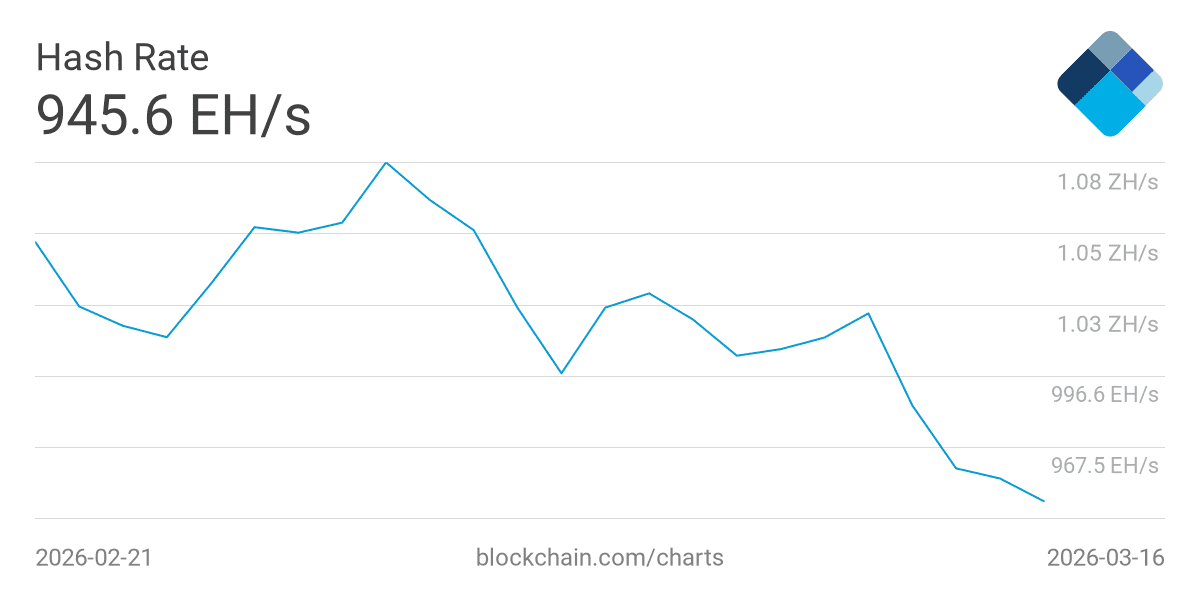
The negative impact is already visible in network metrics. Mining difficulty has fallen by 7.76%, while hashrate has declined to around 945 EH/s.
A key indicator of profitability remains hashprice, which currently stands at about $33.30 per PH/s per day. For many operators, this is close to the break-even point.
Selling pressure on the market is increasing
When miners can no longer cover operating costs, they are forced to sell accumulated holdings to keep their businesses running. This creates additional pressure on a market that is already under strain.
A significant share of the circulating supply is already sitting in loss territory, increasing the risk of further downside. Forced selling may weigh on Bitcoin prices in the short term and affect overall market structure.
Large miners are changing strategy
Publicly traded mining companies are already beginning to adapt. Players such as Marathon Digital and Cipher Mining are actively diversifying by investing in data centers for artificial intelligence and high-performance computing. The goal is to build more stable sources of revenue amid ongoing crypto market instability.
