

Bitcoin ETF flows reverse course
U.S. spot Bitcoin ETFs recorded $998.95 million in net inflows on September 21, their strongest daily result since October 6, 2025, when Bitcoin set an all-time high near $126,200. The session was also the ninth-largest daily inflow since the group of products began trading in January 2024.
According to Farside Investors data, most of the money went into three leading funds. BlackRock’s IBIT attracted $381.4 million, Ark Invest and 21Shares’ ARKB received $289.1 million, and Fidelity’s FBTC took in $238.8 million. Morgan Stanley’s MSBT recorded $61.7 million, while Bitwise’s BITB added $21.6 million; smaller inflows into Grayscale funds brought the day’s total to approximately $999.0 million.
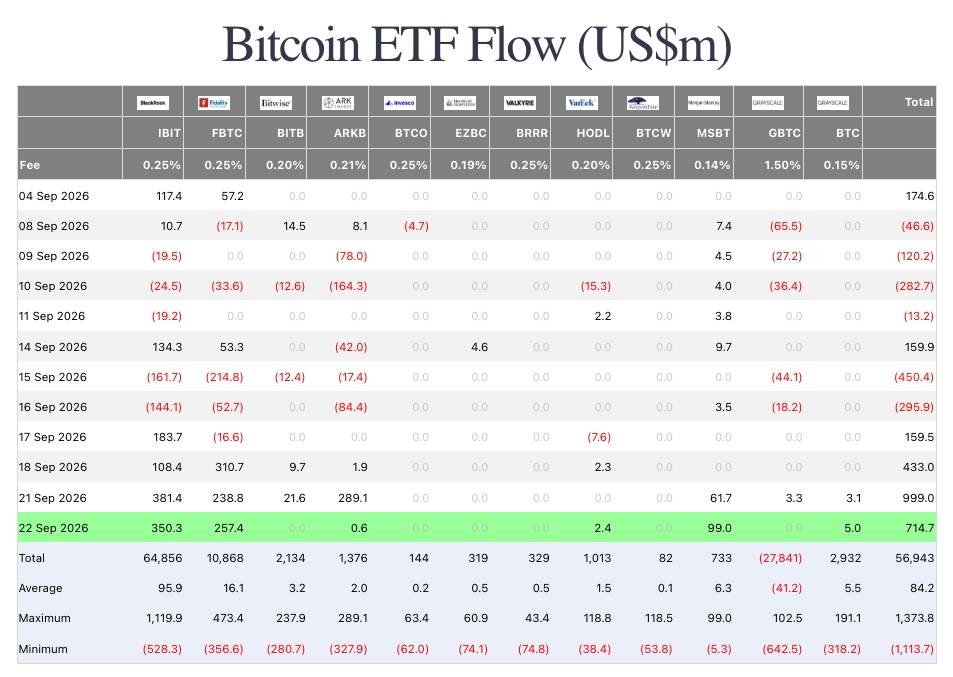
The inflow continued on September 22, when another $714.7 million entered Bitcoin ETFs and daily demand exceeded $400 million for a third consecutive trading session. IBIT again led with $350.3 million, followed by FBTC with $257.4 million and MSBT with $99.0 million.
The nearly $1 billion received in one session was more than 160 times the net inflow for the entire previous week. Bitcoin ETFs had suffered several sessions of withdrawals between September 8 and 16, with flows only beginning to recover near the end of the week. As a result, the week ending September 18 still closed with a modest $6.2 million inflow, the smallest weekly gain in the funds’ 141 weeks of trading.
Despite the sharp recovery in recent sessions and $3.52 billion of inflows in August, the group’s year-to-date result was still negative by approximately $450 million at the close of September 22. FORECK.INFO previously examined the August trend in its weekly ETF review.
Bitcoin ETF investors return to profit
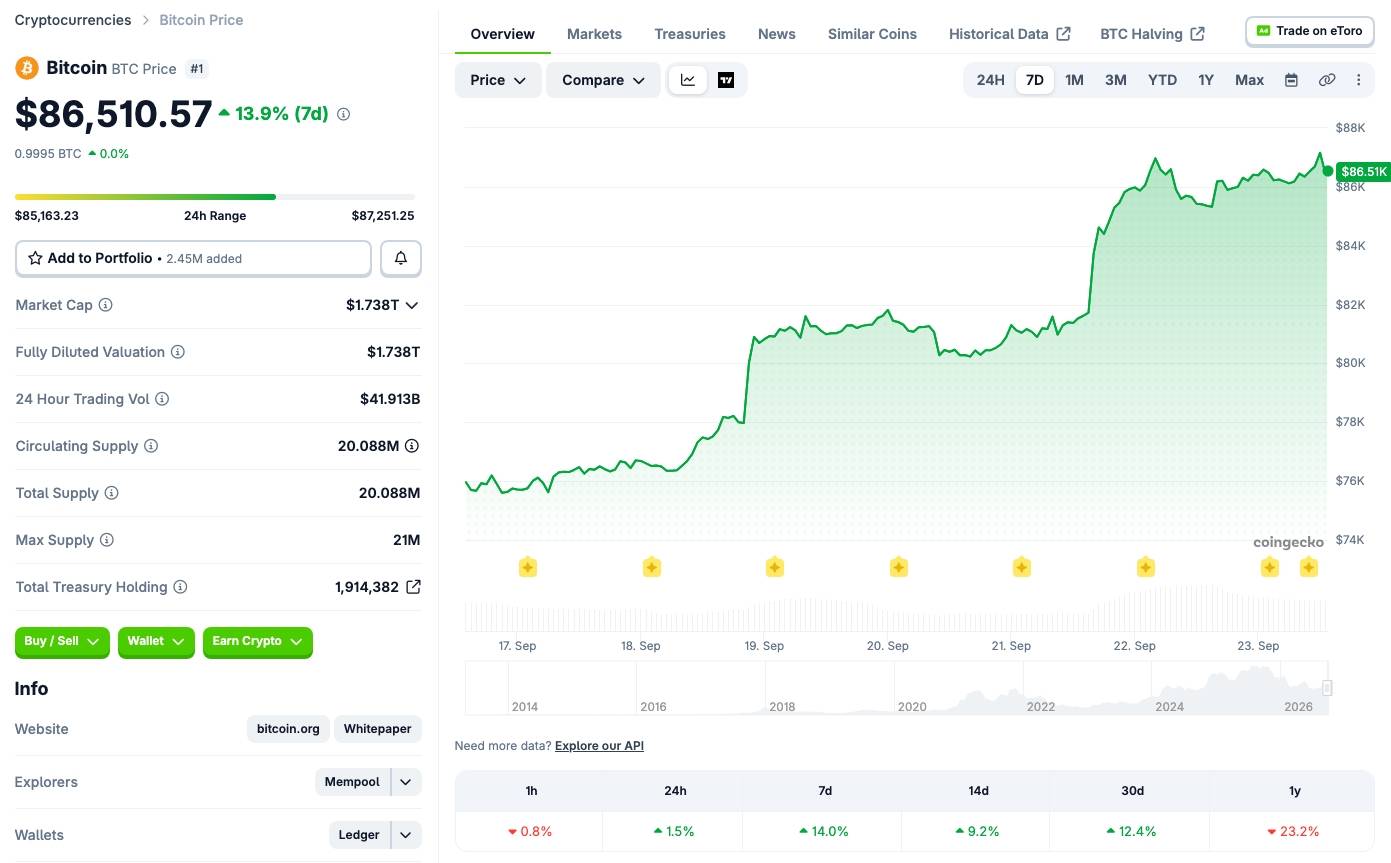
The surge in demand coincided with Bitcoin breaking above $87,000 during the September 21 session, its highest level since January. At the time the original report was prepared, the largest cryptocurrency was trading near $86,500 and had gained almost 14% over one week.
More importantly, Bitcoin moved above $81,722, the estimated average acquisition price for investors in U.S. spot Bitcoin ETFs. According to Bloomberg analyst James Seyffart, this put the average ETF investor back in unrealized profit for the first time since January 2026.
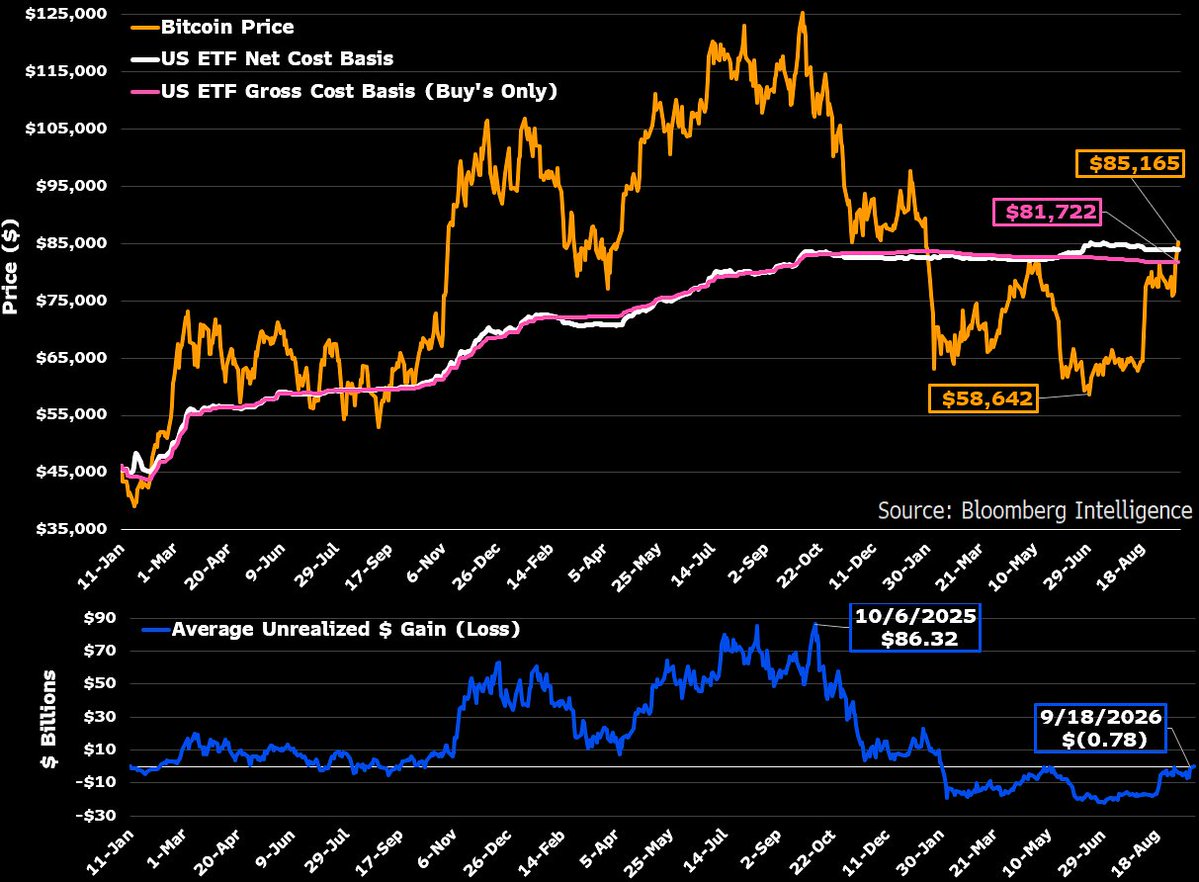
This threshold matters for market structure. Investors who have been trapped in losing positions often sell once the price returns to their break-even level. Demand therefore had to absorb supply from holders seeking to exit without a loss during the previous several months.
With Bitcoin trading above the average acquisition price, break-even selling pressure could ease. The next phase of ETF flows should provide a clearer indication of whether institutional investors genuinely intend to increase their Bitcoin allocations or are mainly using the recovery to exit older positions.
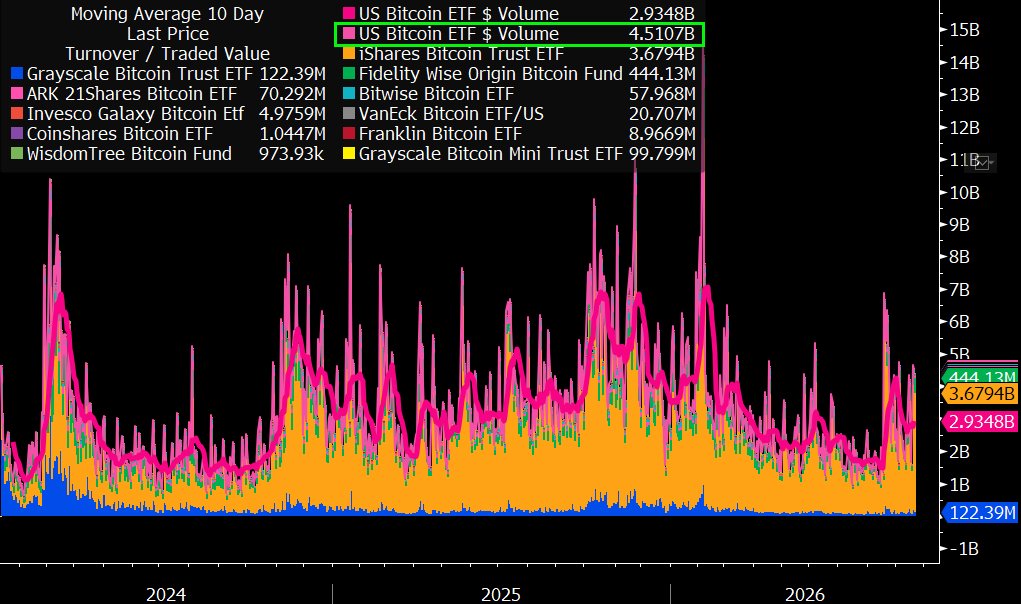
Although the funds attracted nearly $1 billion of new capital in one day, their trading liquidity did not rise by the same proportion. Total turnover was approximately $4.5 billion, lower than in the previous session and relatively moderate compared with Bitcoin’s price increase. Even so, that volume remains high relative to most equity and gold ETFs, while BlackRock’s IBIT came close to ranking among the ten most actively traded ETFs in the U.S. market.
Bitcoin’s recovery partly absorbed the impact of two recent negative developments. On September 16, the Federal Reserve raised its target range by 25 basis points to 3.75–4.00%, its first increase in borrowing costs in roughly three years. In addition, the CLARITY Act failed to clear a procedural stage in the Senate: the bill received a simple majority but fell short of the 60 votes required to advance. This was not a final vote on passage.
Even so, Bitcoin reached an eight-month high. Market sentiment was partly supported by new moves from U.S. regulators, with the SEC and CFTC continuing to advance their own digital-asset frameworks after the legislative process in Congress encountered obstacles.
The rally was also amplified by the closing of short positions. Market data showed hundreds of millions of dollars in crypto short liquidations, with Bitcoin accounting for a large share. Crypto-related stocks, including Coinbase and Strategy, also rose alongside the digital asset.
