

Top Pick

- Fully licensed and regulated US exchange
- Strong focus on security and compliance
- User-friendly interface for beginners

The cryptocurrency market strengthened earlier this week but came under sharp selling pressure on Thursday, erasing much of its previous gains. In the latest market snapshot, Bitcoin (BTC) is trading near 81600.00 (+0.9%), Ethereum (ETH) at 2400.00 (+2.1%), Tether (USDT) at 0.9991 (–0.01%), BNB at 744.00 (+5.1%) and XRP at 1.3250 (+4.8%). Total cryptocurrency market capitalization has declined to approximately $2.73 trillion, while Bitcoin dominance has increased to 60.0%. From October 19 to 22, US spot Bitcoin ETFs recorded net inflows of $439.1 million, while Ethereum ETFs saw outflows of $225.1 million. The market remains volatile despite the recovery attempt discussed in our previous crypto weekly review.

 By John Isige
Arthur Hayes, co-founder of BitMEX and CIO at Maelstrom, believes the upcoming monetary policy meeting of the Bank of Japan (June 16–17, 2025) could become a key trigger for risk assets—including Bitcoin—should the central bank resume quantitative easing (QE). Hayes argues that a return to selective QE, rather than continuing with quantitative tightening (QT), would provide the liquidity boost risk markets need to launch a new rally.
 By John Isige
Analysts at CryptoQuant report that the cryptocurrency market has not yet reached the stage of structural euphoria, typically associated with late-cycle rallies. According to the platform’s latest data, the number of on-chain transactions under $10,000 has dropped by approximately 2.45% over the past 30 days—a clear signal of restrained activity among retail investors.
 By John Isige
The U.S. Department of Justice has unsealed an indictment against Russian businessman Yuri Gugnin, accusing him of laundering over $500 million, circumventing international sanctions, and illegally exporting American technology to Russia. Gugnin, who operated through Florida- and Delaware-registered crypto entities Evita Pay and Evita Investments, now faces 22 separate charges, including wire fraud, bank fraud, conspiracy to violate the International Emergency Economic Powers Act (IEEPA), unlicensed money transmission, and deliberate concealment of suspicious activity.
 By John Isige
Sometimes the numbers speak for themselves, and sometimes they shout: according to Adam_Tehc’s recent investigation, 93 out of the top 100 wallets on Pump.fun (plus PumpSwap) are bots. No, that’s not a typo. Out of a hundred of the busiest accounts, only seven are (probably) controlled by humans. The news broke on X and quickly turned into a heated debate—because let’s face it, who actually wants to fight an army of scripts for an airdrop?
 By John Isige
Bitcoin-based crypto project Avalon Labs has officially burned 80 million AVL tokens, eliminating 44% of the total supply in circulation. The company classified this move as the formal start of a deflationary phase for AVL, an action that immediately doubled the token’s daily trading volume—a clear indicator of heightened market interest.
 By John Isige
Cardano has taken a historic step toward bridging two dominant blockchain spheres—Bitcoin and decentralized finance (DeFi)—with the launch of the Cardinal protocol.
 By John Isige
JPMorgan Chase is about to make one of its biggest moves into crypto yet. According to Bloomberg, the bank will soon start accepting Bitcoin ETFs as collateral for loans — a clear sign that digital assets are becoming part of the mainstream financial toolkit. The program, set to launch in the coming weeks, will first roll out to JPMorgan’s global wealth management clients.
 By John Isige
On June 9, 2025, the combined inflow into U.S.-based spot Bitcoin and Ethereum exchange-traded funds (ETFs) surpassed $438 million, reflecting a notable resurgence in institutional interest across major crypto assets. The renewed momentum follows a brief period of capital outflows, signaling restored investor confidence.
 By John Isige
Paris-based Blockchain Group is doubling down on Bitcoin. The company, which already holds 1,471 BTC (roughly $158M), has announced plans to raise an additional $340M—funds that will go straight into expanding its crypto reserves. The move, described in a recent press release, positions the firm as one of Europe’s most aggressive institutional Bitcoin accumulators.
 By John Isige
Strategy (formerly MicroStrategy) continues to solidify its position as the world’s largest public bitcoin holder. According to co-founder Michael Saylor, the company acquired 1,045 BTC between June 2 and June 8, 2025, investing a total of $110.2 million. This latest purchase brings Strategy’s cumulative bitcoin reserves to a staggering 582,000 BTC.
 By John Isige
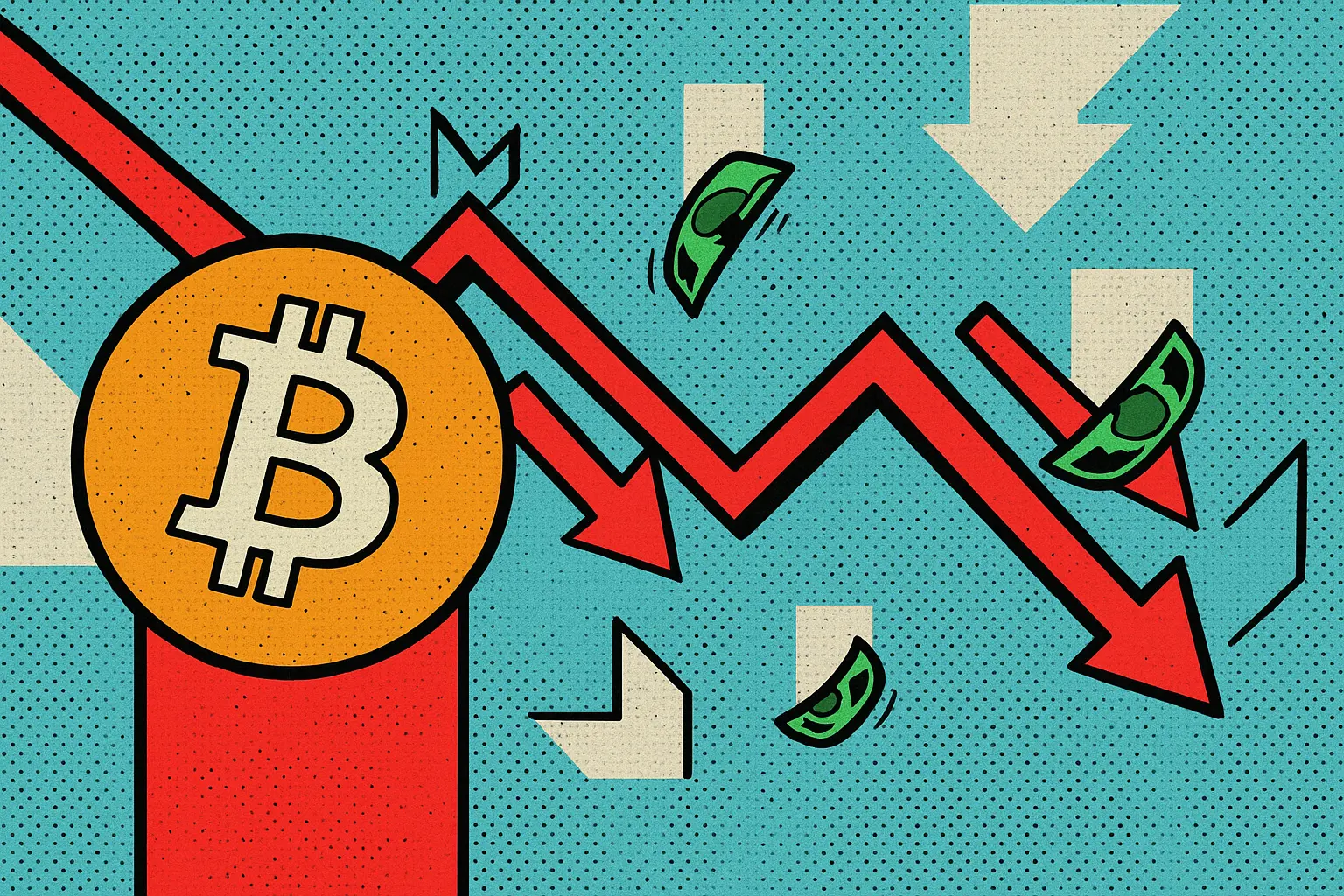
The Bitcoin blockchain is witnessing its lowest transaction volume in nearly two years, prompting miners to adapt while sparking debate over network policy and decentralization.
 By John Isige
Capital inflows into crypto investment funds fell sharply to $224 million last week, according to the latest report from CoinShares. This slowdown highlights growing investor caution as markets brace for the upcoming US Federal Reserve interest rate decision.


For crypto, the framework is similar to traditional financial markets but comes with its own twist. Here, price action turns on liquidity, adoption, regulation, and flows from institutions alongside retail sentiment. Network health—hash rate, staking, active wallets—adds another layer. Macro still matters too: rates, dollar strength, and risk appetite shape inflows and outflows. Then, as with any market, you use the chart—trend, support and resistance, momentum, and volume—to spot setups and manage risk.