
Top Pick

- Fully licensed and regulated US exchange
- Strong focus on security and compliance
- User-friendly interface for beginners

The cryptocurrency market strengthened earlier this week but came under sharp selling pressure on Thursday, erasing much of its previous gains. In the latest market snapshot, Bitcoin (BTC) is trading near 81600.00 (+0.9%), Ethereum (ETH) at 2400.00 (+2.1%), Tether (USDT) at 0.9991 (–0.01%), BNB at 744.00 (+5.1%) and XRP at 1.3250 (+4.8%). Total cryptocurrency market capitalization has declined to approximately $2.73 trillion, while Bitcoin dominance has increased to 60.0%. From October 19 to 22, US spot Bitcoin ETFs recorded net inflows of $439.1 million, while Ethereum ETFs saw outflows of $225.1 million. The market remains volatile despite the recovery attempt discussed in our previous crypto weekly review.

 By John Isige
Saylor doubles down: new Bitcoin purchase in sight. Michael Saylor has hinted at another Bitcoin purchase — in his typical way. In a post on X, the MicroStrategy founder shared a chart of his company’s previous Bitcoin investments, adding the caption: “The most important orange dot is always the next one.”
 By John Isige
OpenSea CEO announces token launch for early 2026. OpenSea CEO Devin Finzer has announced the launch of a new token scheduled for early 2026. The NFT marketplace aims to simultaneously drive its transformation into a universal trading platform.
 By John Isige
“Bitcoin Bull Run Will End in Ten Days.” Following the recent price drop, more analysts are warning that the current bull market may soon be over. Some even expect a correction of up to 50%.
 By John Isige
Tensions between Fetch.ai CEO Humayun Sheikh and the Ocean Protocol Foundation have flared into legal threats and exchange actions. As the spat escalated, Binance — which handles about $18.3B in daily volume — said it will stop crediting OCEAN deposits via Ethereum’s ERC-20 network starting Oct 20, warning that transfers after that date may be lost. While Binance didn’t cite the feud, the timing fueled speculation.
 By John Isige
This week, the cryptocurrency market continued its downward correction: BTC is trading around 106,250.00 (−7.6%), ETH near 3,790.00 (−7.4%), USDT at 1.0013 (−0.01%), BNB at 1,080.00 (−16.1%), and XRP at 2.2440 (−12.3%). Total market capitalization has reached $3.59 trillion, with BTC dominance at 59.1%. Bitcoin ETFs recorded net inflows of $858.7 million, while Ethereum ETFs added $79.5 million.
 By John Isige
Ripple Labs is creating the first major XRP fund. The company announced plans to establish the first large XRP Treasury — a digital asset fund — which could give the XRP token a new boost in the market — Bloomberg.
 By John Isige
This Investment Firm Predicts Solana Could Reach $6,000. A new report forecasts that Solana may reach $6,000 in the long term. What would need to happen for that to become reality?

 By Andrew Bennett
Uptober Cancelled? The Crypto Market Falls Again. The crypto market is once again dominated by red numbers today. However, long-term investors see this correction as an attractive buying opportunity.
 By John Isige
Crypto Market Pulls Back Again: Bitcoin and Altcoins Decline. Bitcoin and stock indices fell by evening as investors awaited new signals from the U.S. and China.
 By John Isige
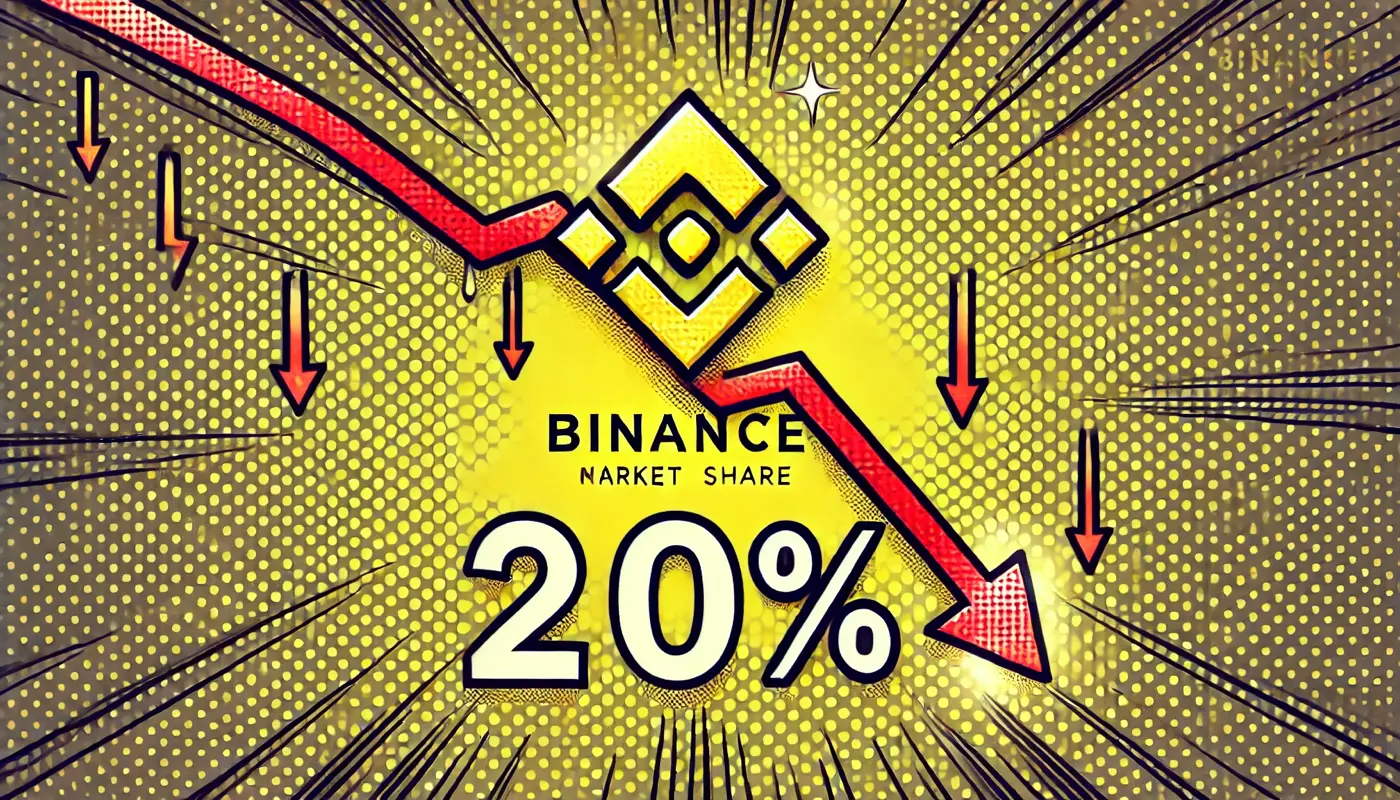
Binance Under Pressure: Billions Withdrawn from the Crypto Exchange. Binance is facing growing scrutiny after being blamed for triggering last Friday’s mass liquidations. As a result, many users are now turning away from the exchange.
 By John Isige
Veteran trader Peter Brandt has called the long-term XRP chart one of the “cleanest” he has seen in his entire career. In his view, Ripple may soon demonstrate a strong upward breakout.
 By Andrew Bennett
European Stability Mechanism chief Pierre Gramegna warned in Washington that stablecoins left to grow without proper rules could become a transmission belt for financial stress. Citing Bloomberg, he urged regulators to move fast—before dollar-pegged tokens and other “stable” assets scale up beyond oversight. His message wasn’t anti-innovation: stablecoins can have a place, he said, but only with protections comparable to central-bank money so they don’t amplify shocks.


For crypto, the framework is similar to traditional financial markets but comes with its own twist. Here, price action turns on liquidity, adoption, regulation, and flows from institutions alongside retail sentiment. Network health—hash rate, staking, active wallets—adds another layer. Macro still matters too: rates, dollar strength, and risk appetite shape inflows and outflows. Then, as with any market, you use the chart—trend, support and resistance, momentum, and volume—to spot setups and manage risk.