

Wall Street Is Acting Like a New Supercycle Has Begun
The S&P 500 has closed above 7,500 points for the first time, the Dow Jones has reclaimed 50,000, and the Nasdaq has set another all-time high. Nvidia, now valued at around $5.7 trillion, continues to pull the broader market higher — its shares have gained roughly 20% in just seven trading days. Since the March lows, the S&P 500 has risen approximately 19%, representing a return of around $11 trillion in market capitalization.
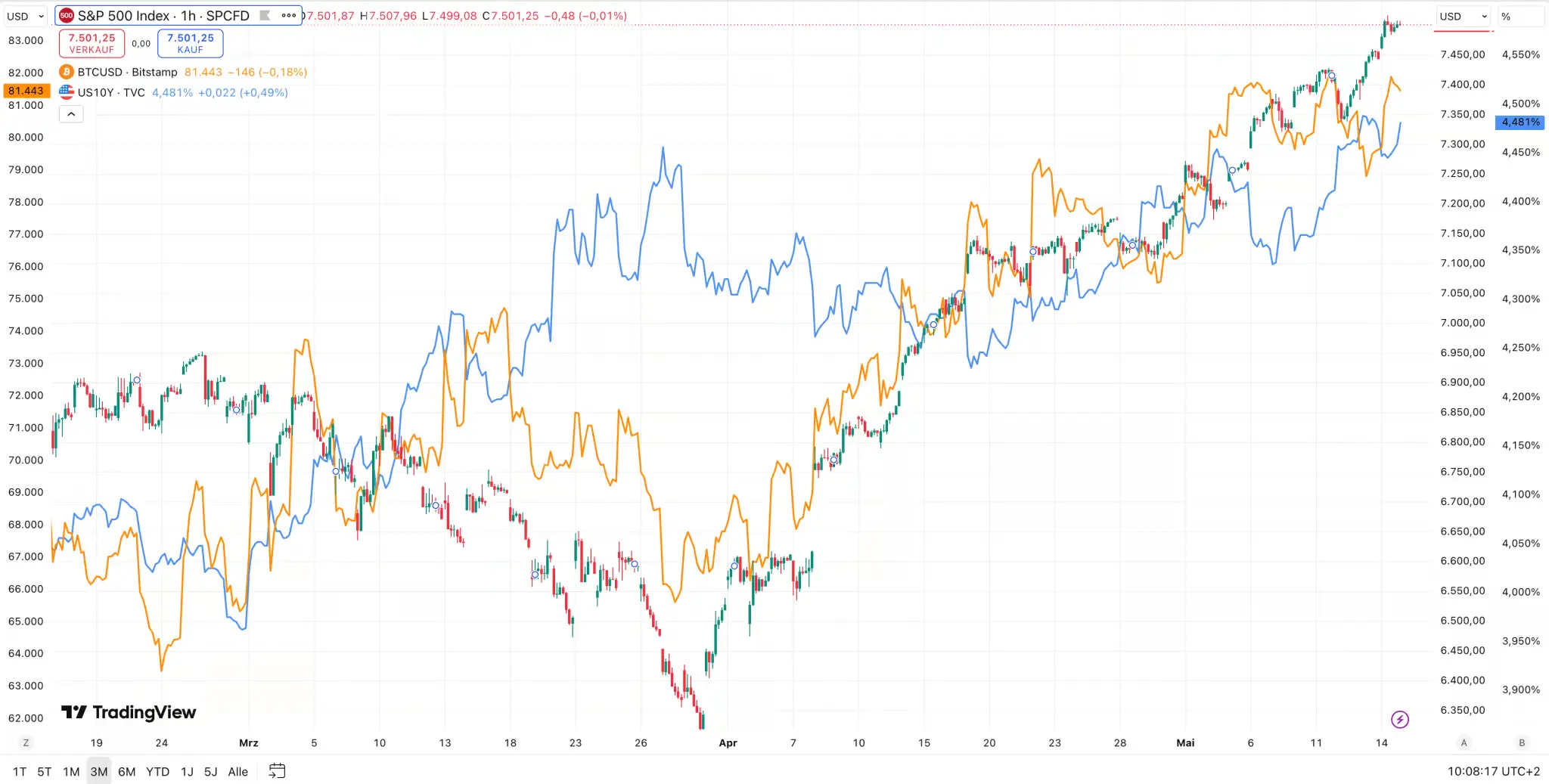
The rest of the AI sector is keeping pace: Cerebras Systems briefly jumped nearly 90% above its IPO price on its market debut. For Bitcoin, this kind of environment is broadly positive — in previous market cycles, the leading cryptocurrency has typically benefited with a lag from sharply rising risk appetite. The key question remains whether liquidity conditions can continue to support this rally.
The Bond Market Is Sounding an Inflation Warning
This is where the core problem lies. US wholesale prices rose 6% year-on-year in April — the fastest pace in nearly four years. The Consumer Price Index remains at 3.8%, well above the Fed's target. Markets are increasingly pricing in another rate hike rather than any near-term easing: the yield on 2-year US Treasuries has risen back above 4% for the first time since June 2025, while 30-year bonds are once again trading above 5%.
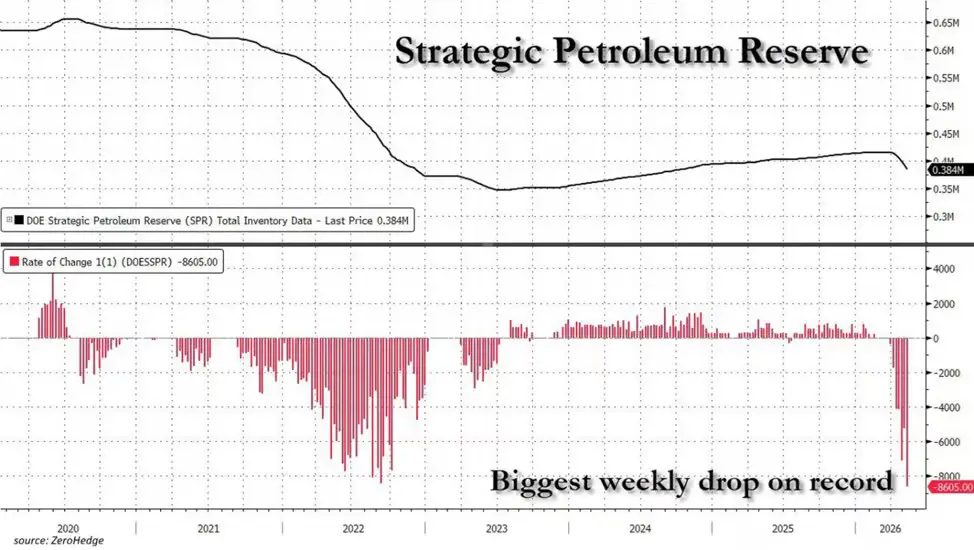
The pressure is global in nature. In Japan, the yield on 20-year government bonds has reached 3.605% — the highest level since 1996. The oil market is adding further inflationary momentum: WTI is trading around $101 per barrel, while the US Strategic Petroleum Reserve last week recorded its largest single-week drawdown in history.
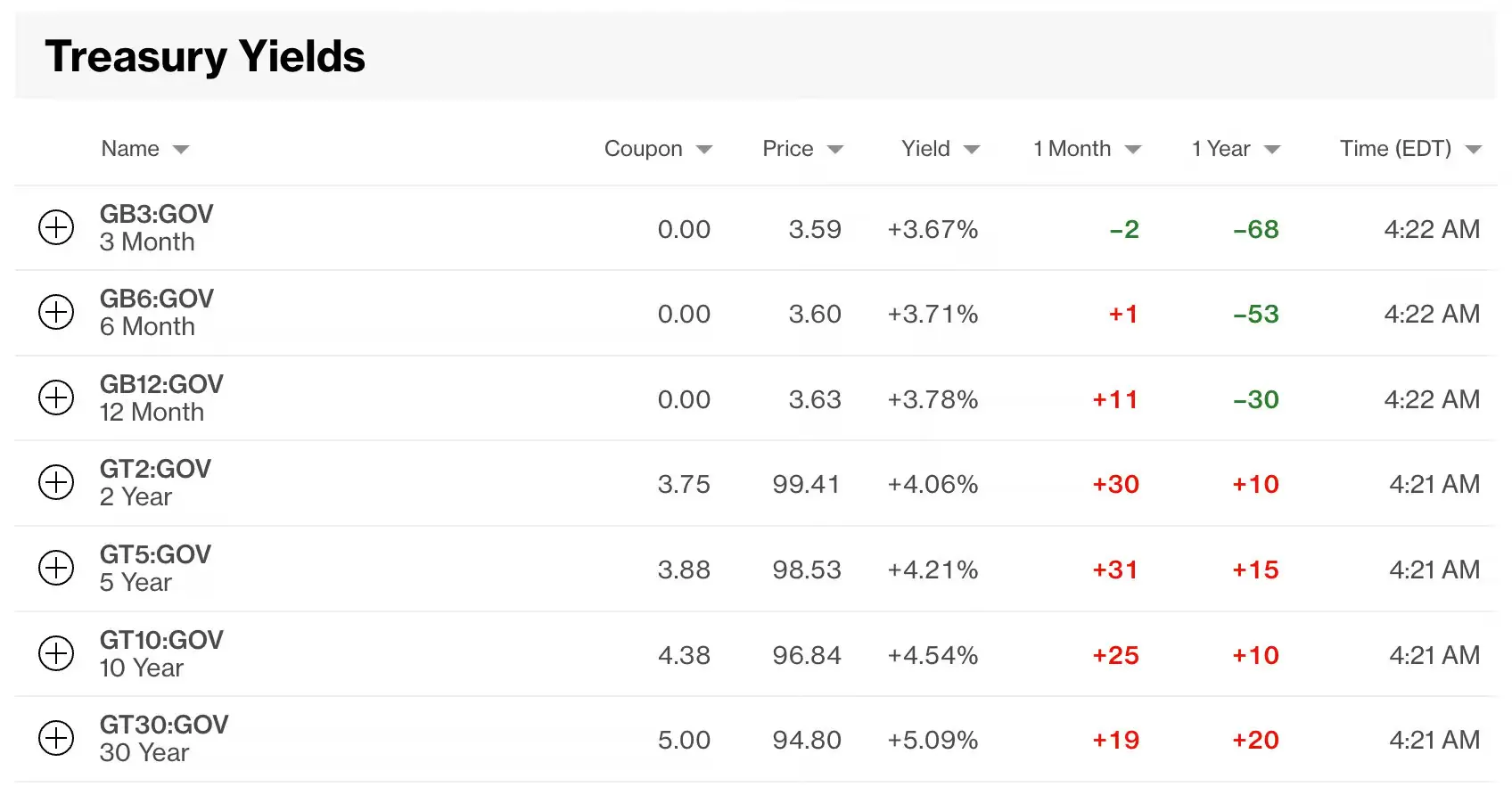
For Bitcoin, this is a challenging environment. Higher yields increase the opportunity cost of holding non-yielding assets like BTC. However, if real rates remain low against a backdrop of persistent inflation, Bitcoin can continue to defend its narrative as a hedge against the erosion of purchasing power.
Political Tailwinds Are Stabilizing Bitcoin
Short-term support this week also came from Washington and Beijing. The Trump–Xi summit concluded with several signals pointing toward geopolitical de-escalation. In parallel, the US Senate Banking Committee passed the Crypto CLARITY Act by 15 votes to 9 — bringing a comprehensive market structure law for crypto assets closer to becoming reality than at any point in history.
Bitcoin responded with a surge to $82,000. At the same time, market data shows approximately $144 million flowing into Bitcoin ETFs through BlackRock products. For now, regulatory optimism is proving sufficient to offset — at least temporarily — the pressure from rising yields.
The $80,000 Level Is Becoming a Stress Test
If the yield on 30-year US Treasuries sustains a move above 5%, or the Dollar Index pushes toward 100, Bitcoin will likely retest support at $80,000. If, on the other hand, newly confirmed Fed Chair Kevin Warsh softens his tone ahead of the June meeting, a window toward $85,000 could open up.
The coming weeks will determine which narrative proves stronger: the AI-driven euphoria of the equity markets, or the inflationary pressure emanating from the bond market.
Conclusion: Bitcoin finds itself at a point of maximum uncertainty — regulatory optimism and AI-driven euphoria are pulling prices higher, while persistent inflation and rising bond yields are applying systematic downward pressure. The $80,000 level is now the critical line in the sand: whether it holds or breaks over the next two weeks will effectively determine the medium-term trend. Until the Fed delivers clear signals of a policy pivot, volatility will remain elevated and any rally will be speculative in nature rather than structurally driven.
