

Trading data suggest the ETF saw solid activity on its first day, with early volume arriving quickly and underscoring Wall Street’s continued appetite for new crypto investment products. The launch of BESO comes at a time when major financial institutions are increasingly bringing their own crypto ETFs to market or preparing similar products for release. That trend suggests digital assets are becoming more deeply integrated into traditional investment infrastructure.
According to Nasdaq data, 185,574 shares of BESO were traded on its first day, representing roughly $4.8 million in volume. The fund closed at $26.04, but rose to $33 in after-hours trading.
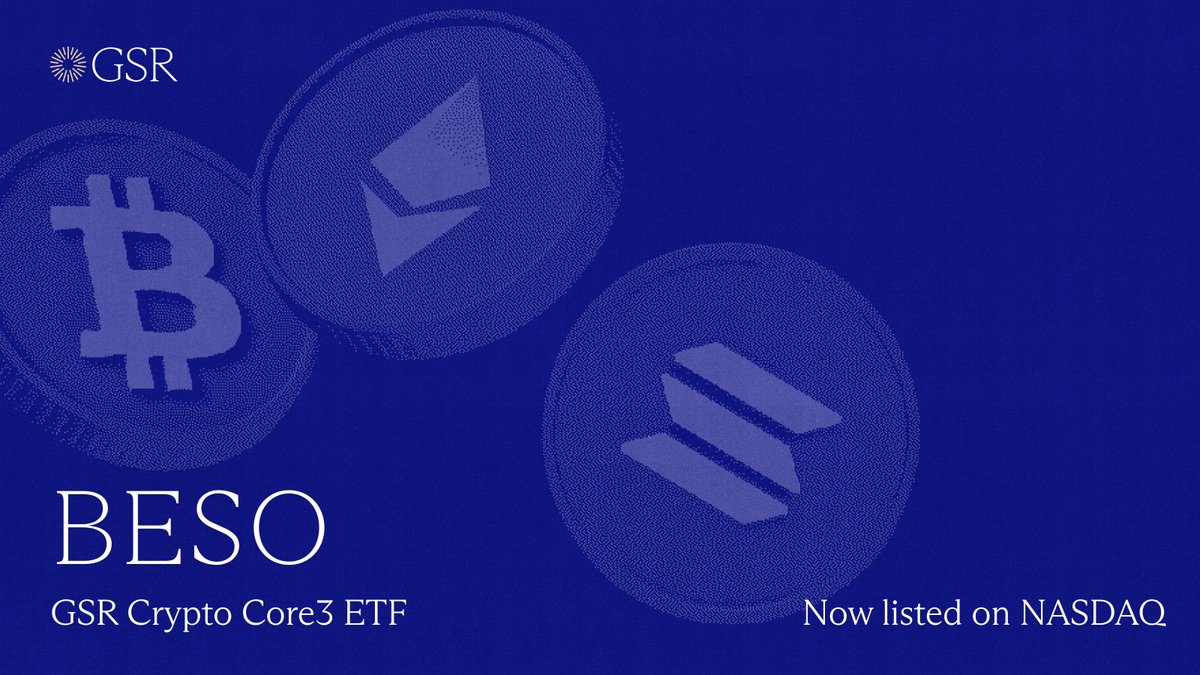
What makes the new fund especially notable is that it is unlikely to appeal to hardline Bitcoin maximalists. According to GSR’s published model allocation, in the fund’s optimized structure Ethereum accounts for 51.4%, Solana for 41.67%, and Bitcoin for just 6.93%. In other words, the fund is not built around traditional BTC dominance, but around a more aggressive ETH-and-SOL-heavy mix that GSR sees as more attractive from a return perspective.
For GSR itself, the launch looks like a logical extension of its broader expansion strategy. The company was founded in 2013 by former Goldman Sachs traders and is considered one of the most established market makers in the crypto industry. GSR CEO Xin Song said the expansion into ETFs is intended to open the company’s services to a broader investor base and reflects its view of how the digital asset class is evolving.
More broadly, the launch of BESO suggests that the next stage of competition in the crypto ETF market will no longer revolve around Bitcoin alone. More issuers are now trying to offer investors more sophisticated asset baskets that combine leading cryptocurrencies, staking yield, and active management. In that context, BESO looks like a bet on the next phase of institutional demand — not just for access to crypto, but for more flexible allocation within the asset class.
