

On July 23, Uniswap Labs introduced Permissioned Pools, a new Uniswap v4 hook standard designed to support the onchain trading of regulated and permissioned assets.
The system allows issuers of tokenized funds, securities, equities and other restricted assets to apply eligibility rules directly at the protocol level rather than relying only on checks performed through a website interface. Uniswap cited an industry estimate suggesting that the tokenized asset market could reach $11 trillion by 2030. As explained in FORECK.INFO’s analysis of tokenized stocks and onchain equity markets, regulated financial instruments require infrastructure that combines blockchain-based trading with investor eligibility and compliance controls.
Why Tokenized Assets Need Permissioned Pools
Traditional Uniswap pools are permissionless, meaning that any compatible wallet can generally trade or provide liquidity. This creates a challenge for regulated assets that may only be held or traded by investors who satisfy specific identity, jurisdictional or eligibility requirements. Restricting access only through a frontend is not sufficient because users may interact directly with smart contracts and bypass the website.
Permissioned Pools address this issue by checking an issuer-managed allowlist onchain whenever a user attempts to swap an asset or add liquidity. If the wallet does not have the required permissions, the transaction is rejected.
The standard helps issuers enforce their own compliance rules, although using a Permissioned Pool does not by itself guarantee compliance with every law or regulatory requirement in every jurisdiction.
How Permissioned Pools Work
Permissioned Pools use Uniswap v4 hooks to apply access controls during swaps and liquidity operations. At the centre of the design is a Permissions Adapter. The adapter holds the underlying permissioned token and creates a wrapped representation that can interact with Uniswap v4’s PoolManager.
The permissioned asset itself therefore does not enter the shared PoolManager directly. Wrapping and unwrapping are handled automatically by approved routing and position-management contracts.
The issuer retains control of the allowlist and may determine which wallets are permitted to trade, provide liquidity or hold the underlying asset. The design also allows issuers to pause trading and update the contract responsible for checking permissions.
Uniswap Remains Permissionless
Permissioned Pools are an optional standard and do not replace Uniswap’s existing permissionless model. Developers and token issuers may continue to deploy ordinary permissionless pools or use Permissioned Pools when an asset requires investor restrictions or other compliance controls.
Uniswap describes the new system as the first generalized, open-source and institutional-grade standard for trading permissioned assets through an AMM. This description represents Uniswap Labs’ characterization of the product rather than an independent regulatory determination.
Superstate, Securitize and Dowgo Support the Standard
Permissioned Pools were developed with participation from Superstate, Securitize and Dowgo. Superstate acted as an early design partner and helped shape the standard for tokenized equities and investment funds.
Uniswap Labs previously worked with Securitize to enable compliant onchain trading for assets issued through the DS Protocol. Securitize is also the tokenization platform used for BlackRock’s BUIDL fund.
Dowgo contributed an ERC-3643 integration and plans to use Permissioned Pools after obtaining DLT TSS authorization under the European Union’s DLT Pilot Regime. This authorization remains a future condition and should not be presented as already granted.
Uniswap Trading Volume Remains Strong
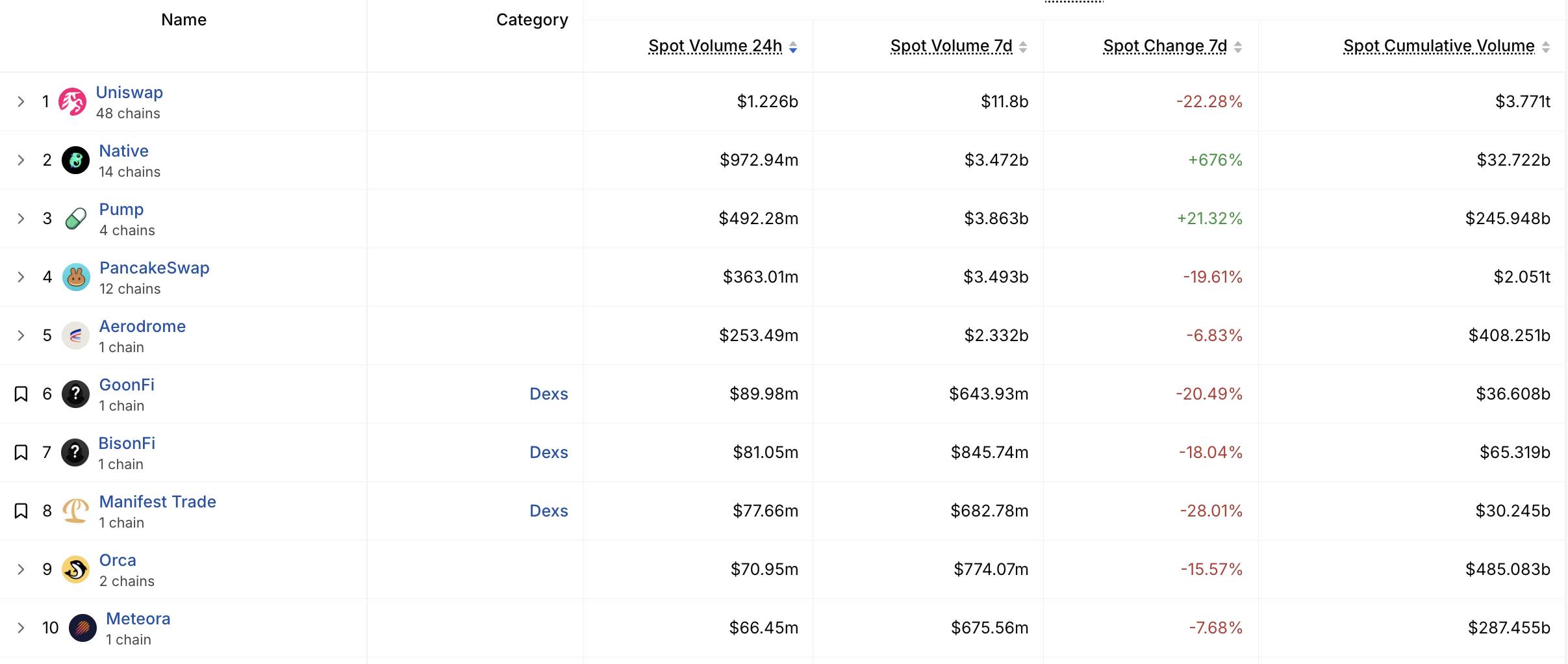
Uniswap remained one of the largest decentralized exchanges by trading volume following the announcement.
At the time of verification, DefiLlama showed approximately $12.1 billion in seven-day trading volume across Uniswap deployments. Combined cumulative trading volume across Uniswap v1, v2, v3 and v4 was approximately $3.77 trillion. These figures are dynamic and may change as DefiLlama updates its onchain data.
Robinhood Chain Drives New Tokenized Asset Activity
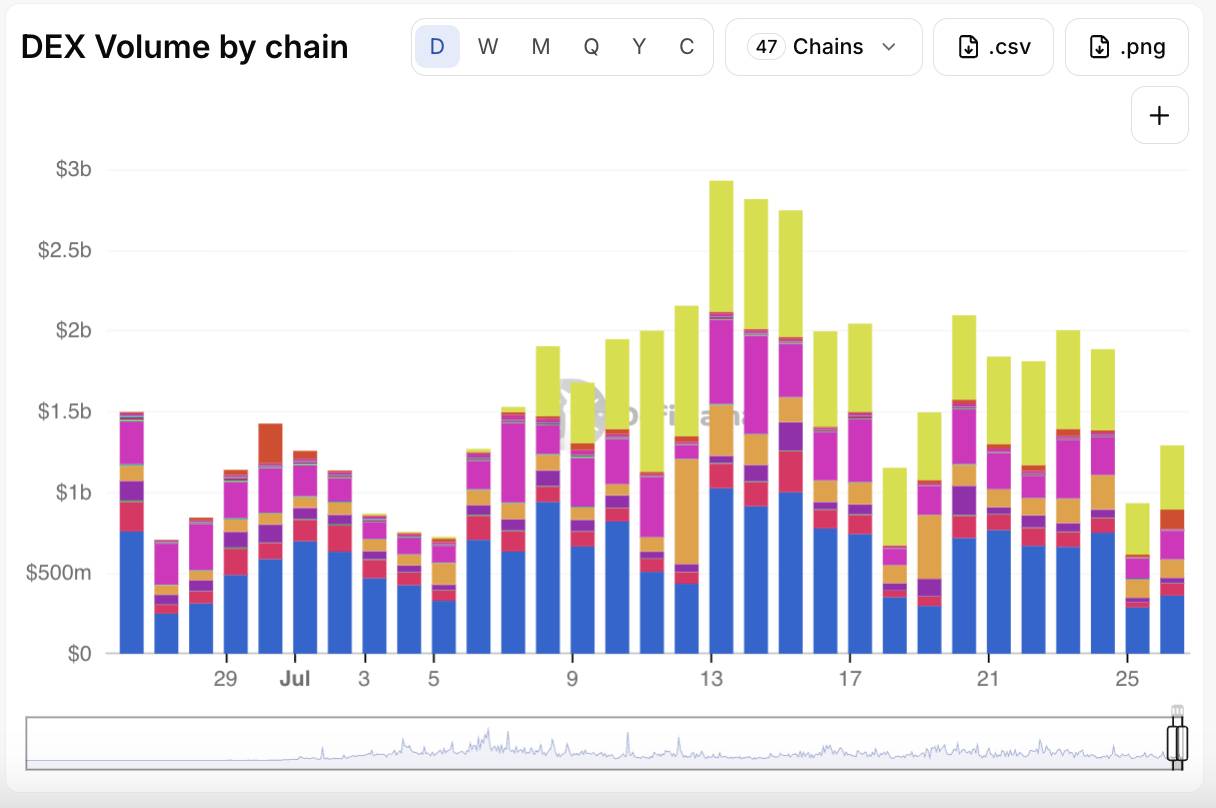
Uniswap launched on Robinhood Chain in early July as the network’s primary public automated market maker.
The network subsequently generated approximately $500 million in Uniswap trading volume during one 24-hour period. Activity included tokenized stocks, wrapped assets and speculative crypto tokens, although it cannot be independently confirmed that memecoins were the primary cause of the increase.
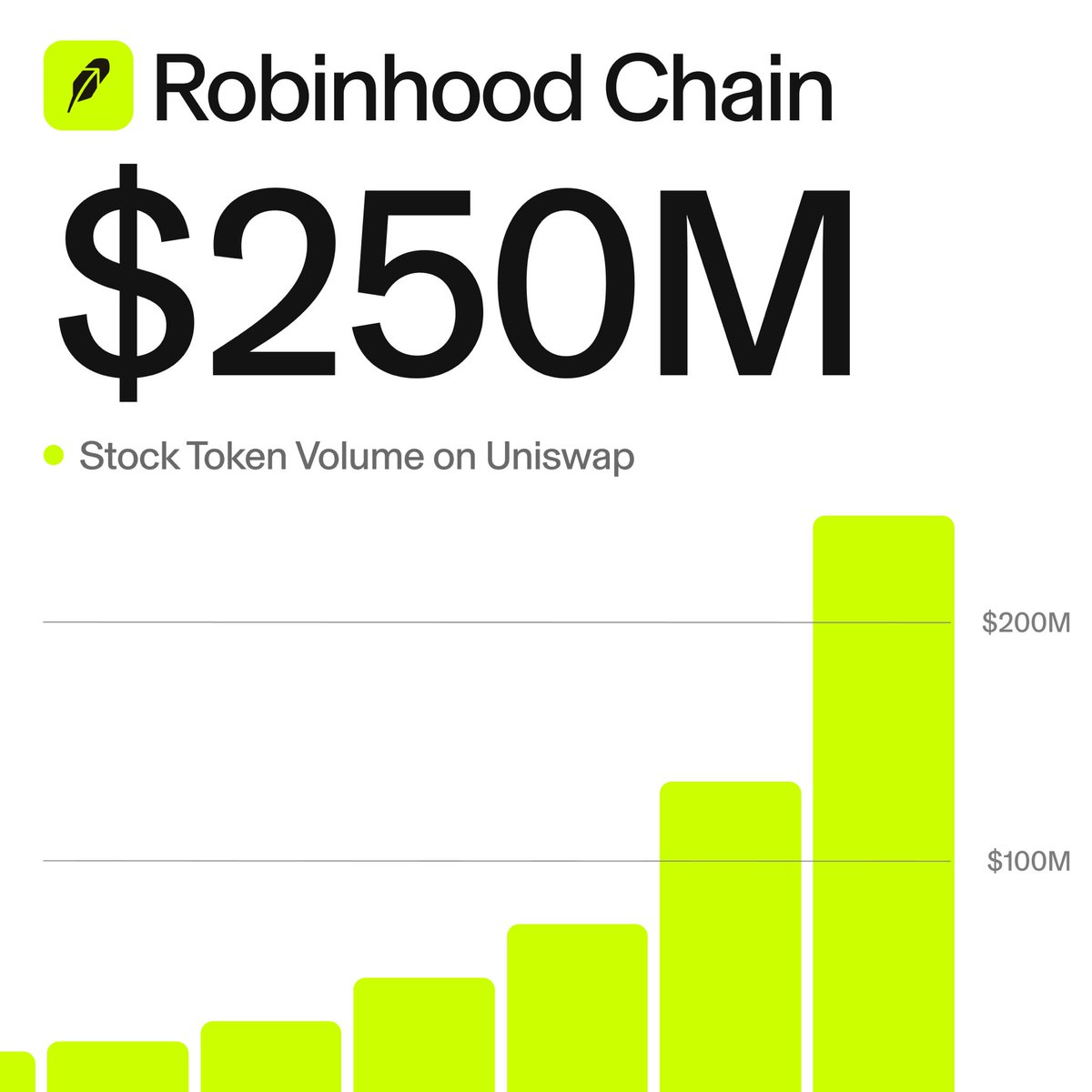
Uniswap later reported that the protocol had processed more than $250 million in stock-token trading volume on Robinhood Chain. This figure was supplied by Uniswap and should be treated as a project-reported operating metric.
UNI Rises Following the Announcement
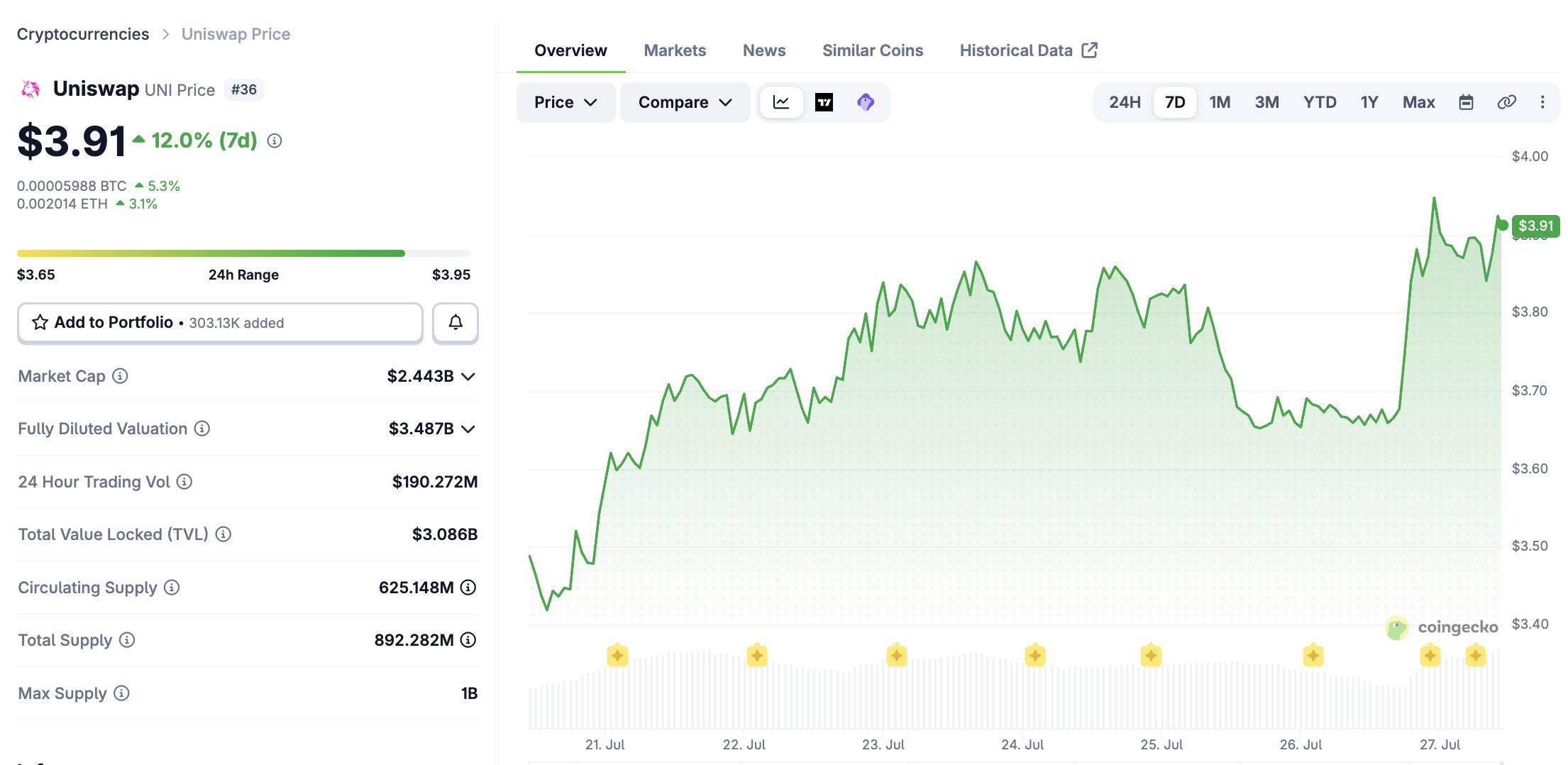
UNI traded near $3.90 following the launch announcement, gaining approximately 6% over 24 hours and around 12% over the previous seven days at the time of verification.
However, the price movement cannot be attributed solely to Permissioned Pools. UNI was also affected by broader cryptocurrency market conditions, activity on Robinhood Chain and developments involving Uniswap protocol fees.
Conclusion: Permissioned Pools extend Uniswap v4 to tokenized assets that require wallet-level eligibility controls. The standard could make AMM liquidity more accessible to regulated issuers, but legal compliance will still depend on the asset, issuer, investor and jurisdiction involved.
