

On September 3, Coinbase said it had submitted SEC-notice registrations for its derivatives exchange and broker as part of the process of bringing single-stock perpetual futures to the United States.

If approved, this would be the first time Coinbase users in the U.S. could trade perpetual futures linked to individual stocks around the clock and use leverage within a formally regulated framework. Like perpetual futures in crypto markets, these contracts do not have an expiration date, allowing traders to keep positions open without rolling them over as they would with traditional futures.
Coinbase’s move comes as perpetual futures, one of the most widely used products in crypto trading, are gradually entering the traditional U.S. financial system.
Most perpetual trading still takes place on platforms outside the United States. In recent months, however, U.S. regulators have started exploring ways to bring this activity onto regulated domestic venues. In May 2026, the CFTC cleared a path for Bitcoin perpetual futures involving Coinbase and Kalshi. A month later, the agency sought feedback on crude-oil perpetuals and a 24/7 trading model as it considered extending the structure to other assets. The same broader shift can be seen in the SEC’s plans for 24-hour trading in traditional securities.
Hyperliquid, the largest perpetual DEX by market activity, is also looking for a route into the United States. Speaking after a meeting with representatives of major crypto companies and institutions, President Donald Trump said CFTC Chair Michael Selig was working to bring Hyperliquid into the country in a compliant and legal form.
Soon after Trump’s remarks, Hyperliquid Labs reportedly entered talks with Payward, Kraken’s parent company, about giving U.S. traders access to selected perpetual products through Bitnomial, a CFTC-regulated exchange and clearing organization. Neither side has announced a completed agreement, and regulatory approval would still be required.
Against this backdrop, Coinbase appears to be accelerating its expansion from crypto into equities in an effort to establish an early position in the U.S. market. The exchange already has a regulatory precedent after receiving CFTC clearance connected with Bitcoin perpetual futures, which may support further discussions about applying a similar model to other asset classes.
According to Coinbase Chief Policy Officer Faryar Shirzad, the next step is to work with the CFTC on product approval, with the company hoping to make equity perpetuals available to U.S. investors this year. He argued that coordination between the SEC and the CFTC is necessary if the United States wants to compete with international markets, where demand for these instruments is already well developed.

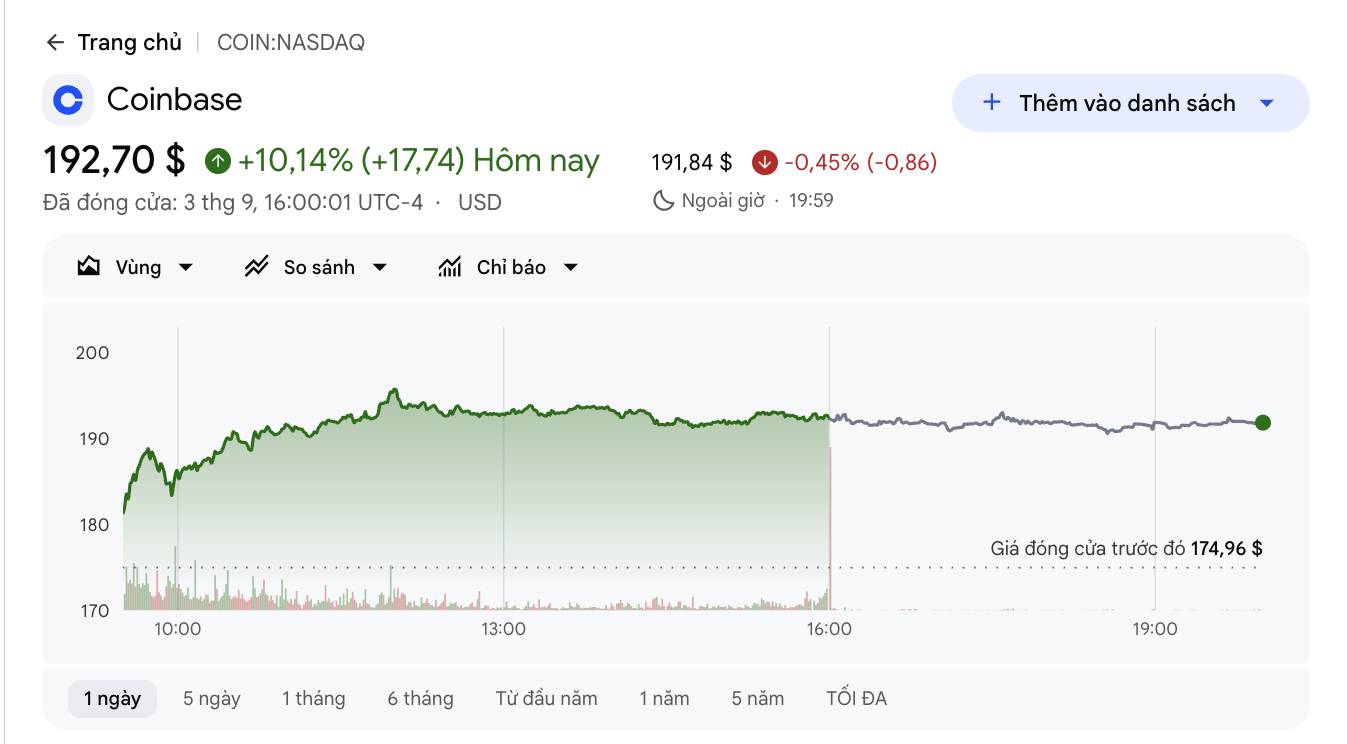
Coinbase shares reacted sharply to the announcement. COIN rose 10.14% during the September 3 session and closed at $192.70.
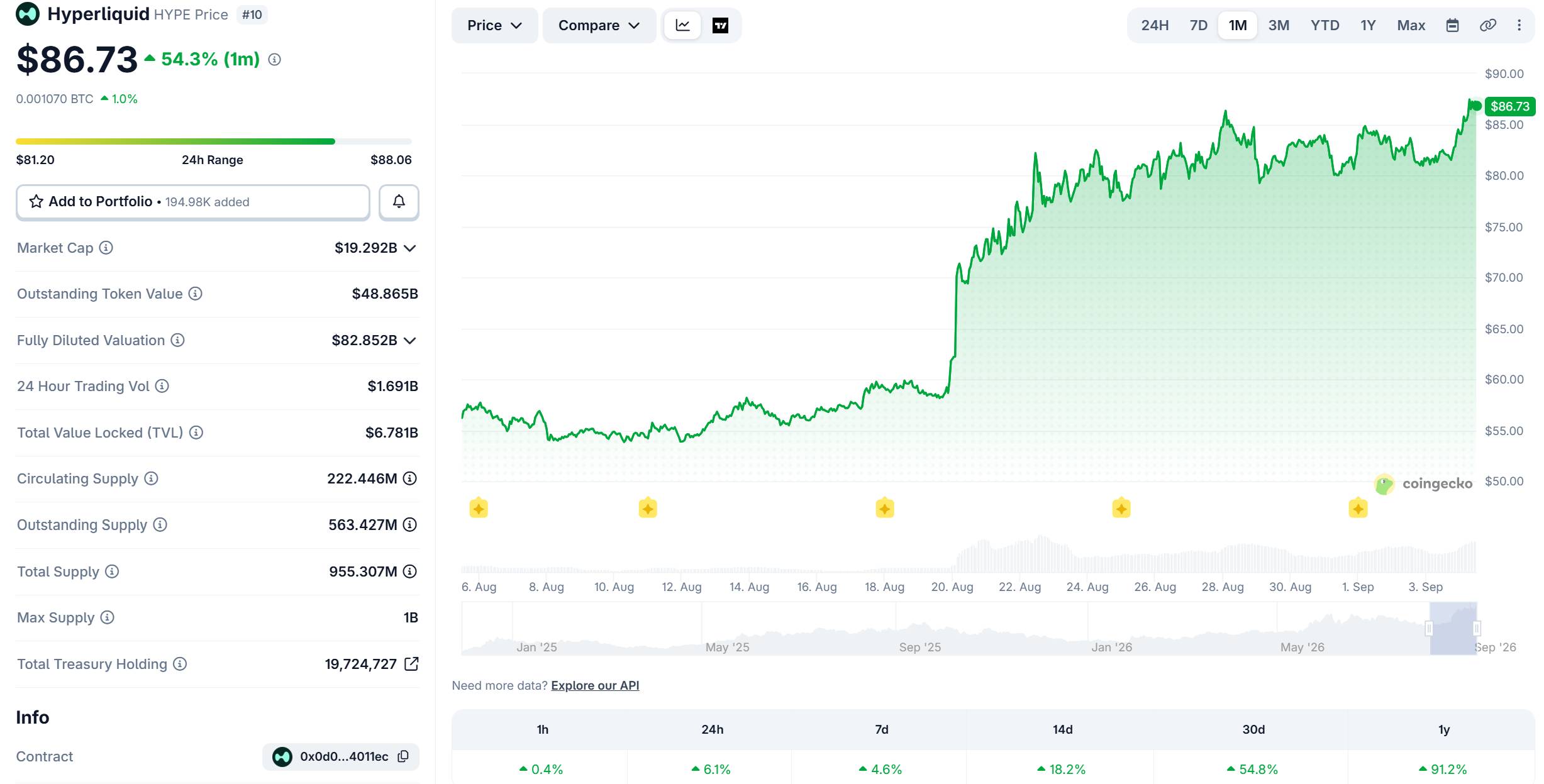
The news also renewed attention around Hyperliquid. HYPE reached a new all-time high above $88 on September 4, extending a rally supported by recent reports about the platform’s possible entry into the U.S. market.
