

According to results released on July 30, the company recorded an $8.32 billion loss on digital assets, including approximately $8.31 billion in unrealized losses. Under current fair-value accounting rules, changes in Bitcoin’s value are recognized directly in quarterly earnings. Revenue reached $122.4 million, up 6.9% from a year earlier.

As of July 26, Strategy held 843,775 BTC, representing a 25% increase since the start of the year. With Bitcoin trading near $64,000 at the time of writing, the position was worth approximately $54.3 billion, compared with a total acquisition cost of $63.69 billion. The company’s average purchase price stood at $75,476 per BTC.
During 2026, Strategy raised $17.06 billion through its at-the-market equity programs. It also repurchased $1.5 billion in principal value of its 2029 convertible notes for approximately $1.38 billion in cash, an 8% discount to face value. At the same time, the company increased its US dollar reserve to $3.75 billion. CFO Andrew Kang said this was sufficient to cover preferred-stock dividends and interest payments for more than 2.1 years.
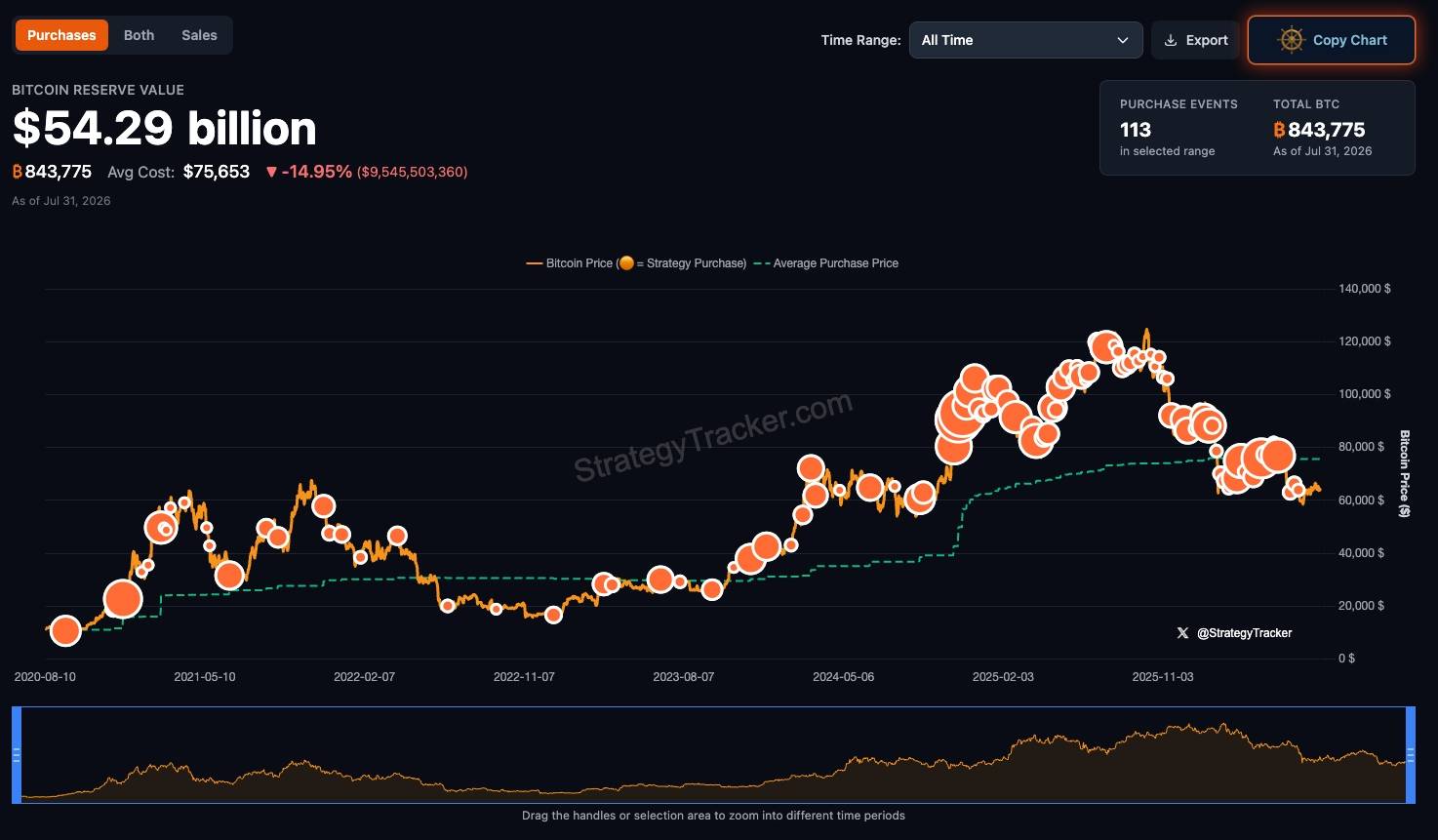
By late July, Strategy had gone five consecutive weeks without purchasing additional Bitcoin, its longest pause in nearly two years. Between July 20 and July 26, the company raised $544.5 million by selling 5.43 million MSTR shares. It also spent $25 million repurchasing 288,930 STRC preferred shares at a discount to their $100 stated value.
After years of raising capital primarily to accumulate Bitcoin, Strategy is now taking a more flexible approach to capital allocation. The company’s board has authorized Bitcoin sales to fund its dollar reserve, meet dividend and interest obligations, and finance repurchases of MSTR or preferred securities. The authorization allows Strategy to generate up to $1.25 billion in additional proceeds from Bitcoin sales for its dollar reserve. This does not mean the company is abandoning its Bitcoin strategy, but future capital will no longer automatically be directed entirely toward new BTC purchases.
Strategy has already used this framework. Between June 29 and June 30, it sold 1,363 BTC for $80.8 million at an average price of $59,256. From July 1 to July 5, it sold another 2,225 BTC for $135.2 million at an average price of $60,773.
In total, the company sold 3,588 BTC for approximately $216 million, its largest disclosed Bitcoin sale to date. The proceeds were used to fund preferred-stock distributions and replenish the dollar reserve. Strategy said total Bitcoin sales in 2026 had generated approximately $218.4 million as of July 26.
Management has also considered borrowing against the company’s Bitcoin holdings. However, executives said Bitcoin-backed lending was not a major priority because Strategy currently has simpler ways to raise liquidity through its capital-market programs.
Before Strategy rebuilt its cash position, CryptoQuant had urged the company to temporarily pause Bitcoin purchases and strengthen its reserves. At the time, the analytics firm estimated that Strategy’s annual preferred-stock dividend obligations had nearly quadrupled to around $1.2 billion, while its cash balance had fallen 38%.
That reduced estimated dividend coverage from more than seven years to roughly 14 months. CryptoQuant recommended rebuilding reserves to approximately $2.8 billion before restarting systematic Bitcoin accumulation. Strategy has since raised its dollar reserve above that level. The pressure was also examined in FORECK.INFO’s report on how Strategy lost its Bitcoin valuation premium.
Grayscale Research viewed Strategy’s Bitcoin sales as a reduction in financial “tail risk” rather than evidence that the company had lost confidence in BTC. According to Grayscale, monetizing part of the position strengthened liquidity, reduced the risk of forced selling under worse market conditions and gave Strategy more flexibility to meet its obligations. Behind Strategy’s 843,775 BTC is a complex capital structure involving common shares, several classes of preferred stock and convertible debt. These instruments create dividend, interest and potential redemption obligations that must be managed regardless of Bitcoin’s price.
That is why Strategy now needs a substantial cash buffer even while remaining committed to its long-term Bitcoin thesis. The company has not abandoned Bitcoin. It remains the largest corporate holder and one of the biggest institutional bets ever made on the digital asset.
Sources
- Strategy — Second Quarter 2026 Financial Results
- SEC Form 8-K — Bitcoin Sales and Q2 Digital-Asset Loss
- Grayscale Research comments reported by Cointelegraph.
