

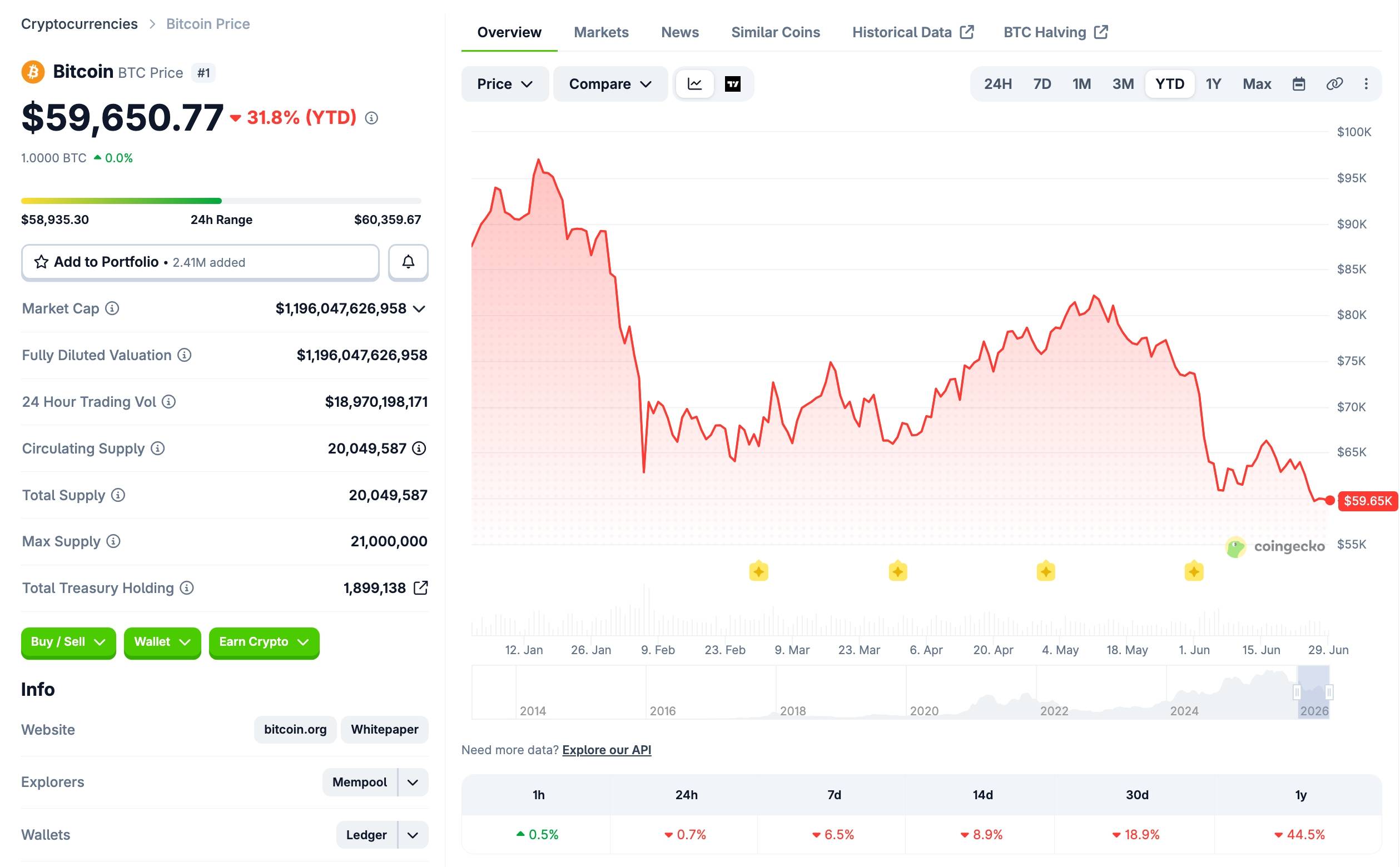
Over the weekend, Strategy shares (MSTR) fell to around USD 82, continuing their decline as Bitcoin dropped close to USD 58,000. As a result, the company’s enterprise mNAV ratio fell below 1 for the first time in several months.
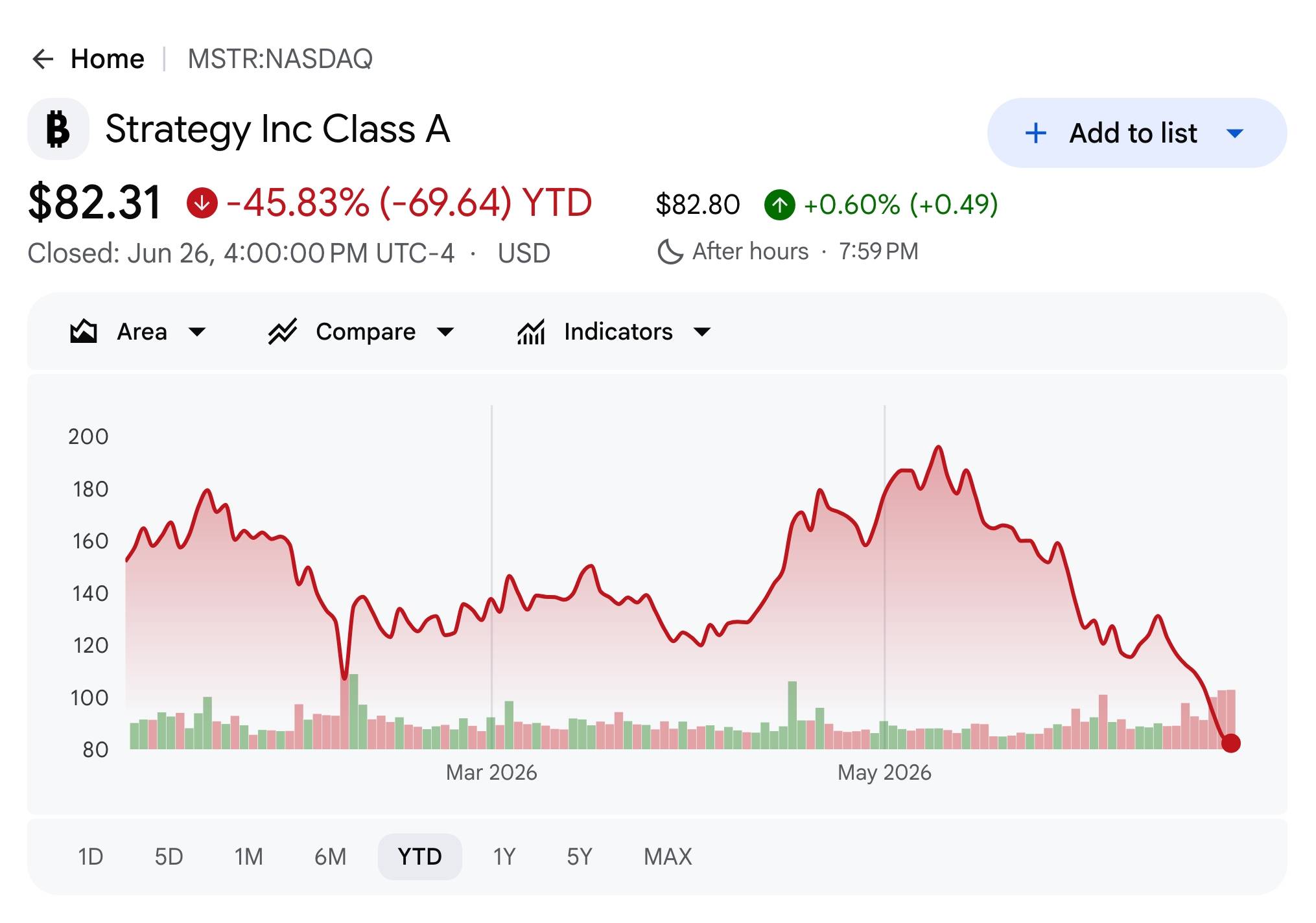
Unlike the traditional mNAV ratio, which compares market capitalisation with the value of Bitcoin holdings, enterprise mNAV also accounts for the company’s full capital structure, including debt, cash reserves, and preferred shares. A ratio below 1 means the market is valuing Strategy as a whole at less than the value of the Bitcoin it owns.
For Strategy, the Bitcoin premium represents the portion of its market value above the net value of its Bitcoin holdings. For years, investors were willing to value the company above its net asset value because they believed it could continue raising capital to buy more Bitcoin. However, that strategy is now beginning to work against the company.
In 2026 alone, Strategy has become almost entirely reliant on issuing perpetual preferred shares such as STRC to raise billions of dollars for additional Bitcoin purchases. In return, the company must carry around USD 1.2 billion in annual dividend obligations, while its cash balance has fallen to only about USD 1.4 billion, according to CryptoQuant estimates.
The on-chain analytics company has even advised the Bitcoin treasury giant, which holds more than half a million BTC, to pause further Bitcoin purchases and prioritise rebuilding its cash reserves as dividend pressure rises, liquidity buffers shrink, and investor confidence begins to weaken.
Strategy is not alone. Most companies that have copied the “Bitcoin treasury” model are facing similar pressure. Japan’s Metaplanet is currently trading at an enterprise mNAV of around 0.9, while Nakamoto — a company backed by David Bailey — is near 0.92. Strive remains one of the few companies maintaining an enterprise mNAV above 1, at around 1.24, largely because it has not yet become heavily dependent on raising capital through preferred-share issuance.
Bitcoin ETFs Record Their Longest Outflow Streak on Record
Selling pressure has also spread to US spot Bitcoin ETFs. According to SoSoValue data, spot Bitcoin ETFs recorded net outflows of USD 1.79 billion in the week ending June 26, making it the second-largest weekly outflow since the products launched in January 2024. It was surpassed only by the USD 2.61 billion outflow recorded in late February 2025.
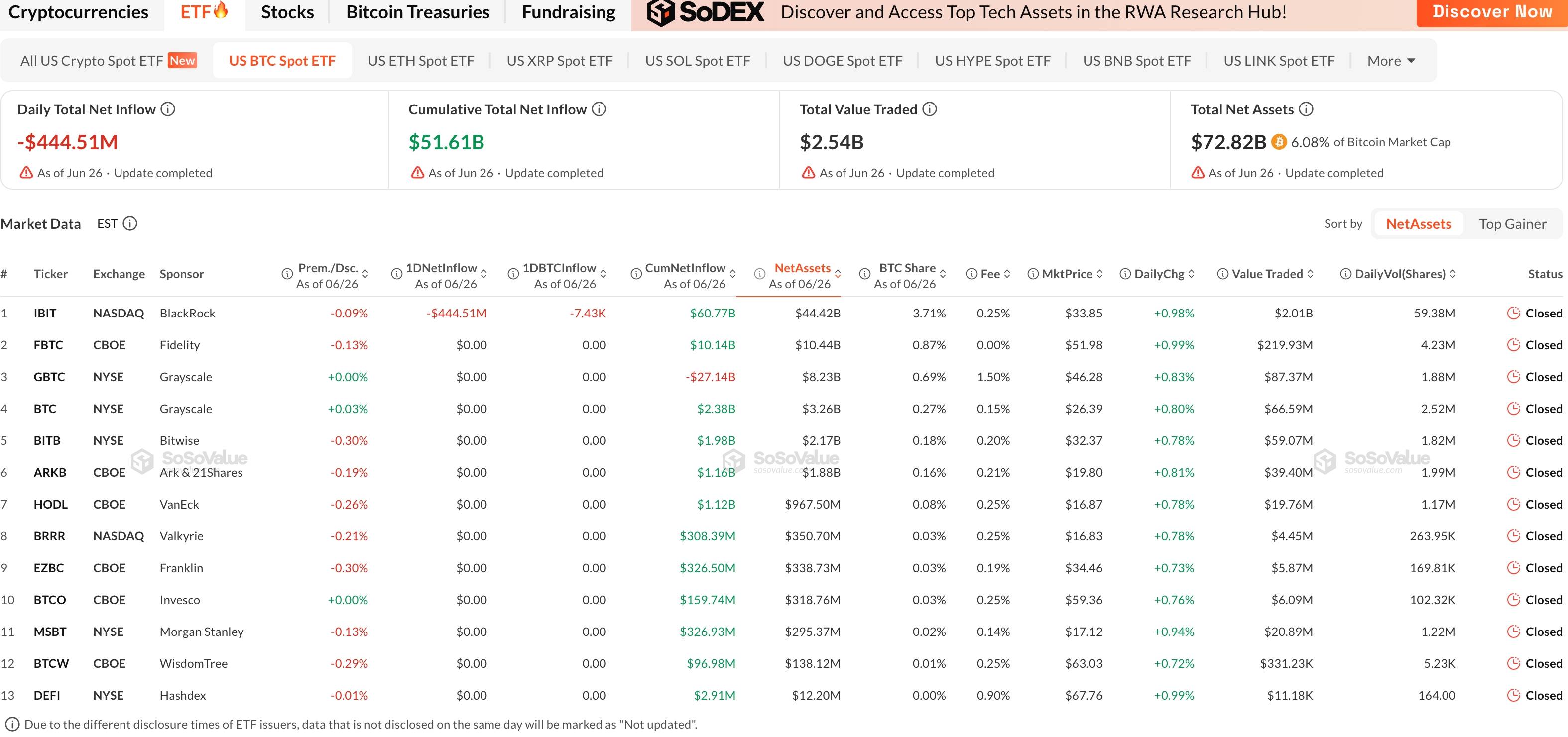
This was also the seventh consecutive week of net outflows, forming the longest selling streak since spot Bitcoin ETFs began trading in the United States.
During the final trading session of the week, the entire USD 444.5 million outflow came from BlackRock’s iShares Bitcoin Trust (IBIT). The previous session had already recorded nearly USD 700 million in outflows in a single day.
According to Bespoke Investment Group, the average IBIT investor is now sitting on a loss of around 40%. When IBIT launched in early 2024, most retail inflows entered the fund during a period when Bitcoin was repeatedly reaching new all-time highs. By mid-2025, the average investment was still showing a gain of around 30%.
However, after Bitcoin lost more than half of its value from its record high of USD 126,272 to around USD 60,000, those gains were erased and replaced by substantial losses.
NovaDius Wealth Management President Nate Geraci described the situation as a harsh introduction to Bitcoin for the broader public.
Although IBIT has still attracted more than USD 60.7 billion in total inflows since launch, its net asset value has fallen to around USD 44.4 billion.
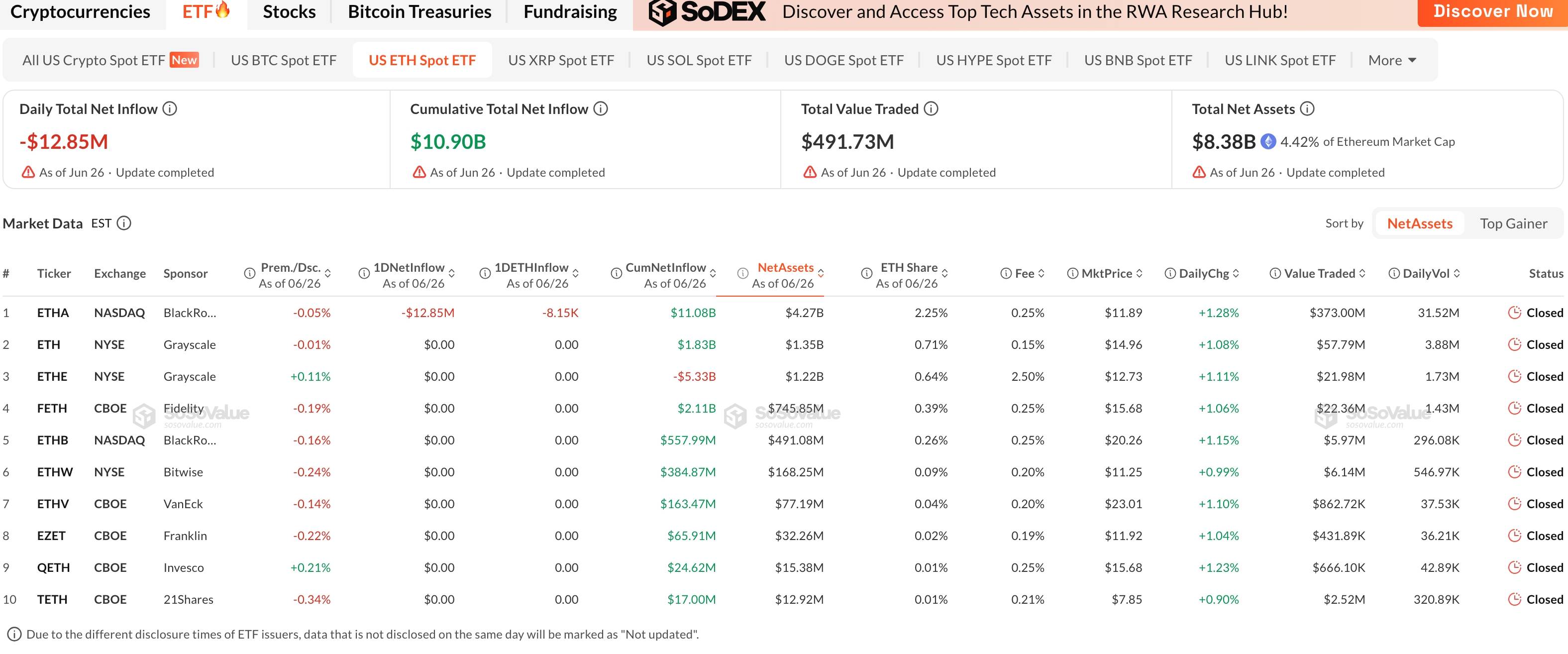
Spot Ethereum ETFs are also under pressure, recording seven consecutive weeks of outflows. Their total net outflow last week exceeded USD 273 million. BlackRock again remained in focus, as ETHA was the only fund to record negative flows during the final trading session.
The selling wave comes as the US Federal Reserve maintains a hawkish position, leaving interest rates unchanged at the first meeting chaired by new Fed Chair Kevin Warsh. The removal of most easing signals from the policy statement led markets to price in the possibility that rates could rise again later this year, putting pressure on risk assets, including cryptocurrencies.
However, not every segment of the crypto ETF market is experiencing outflows. Newly launched ETFs tracking Hyperliquid (HYPE), XRP, and Solana (SOL) are still attracting positive flows.
The Hyperliquid ETF has been particularly notable, drawing more than USD 108 million in a single day — its highest level since launching in May — bringing cumulative inflows to nearly USD 294 million. XRP ETFs also recorded their strongest inflow session in several weeks, while Solana ETFs remained almost flat.
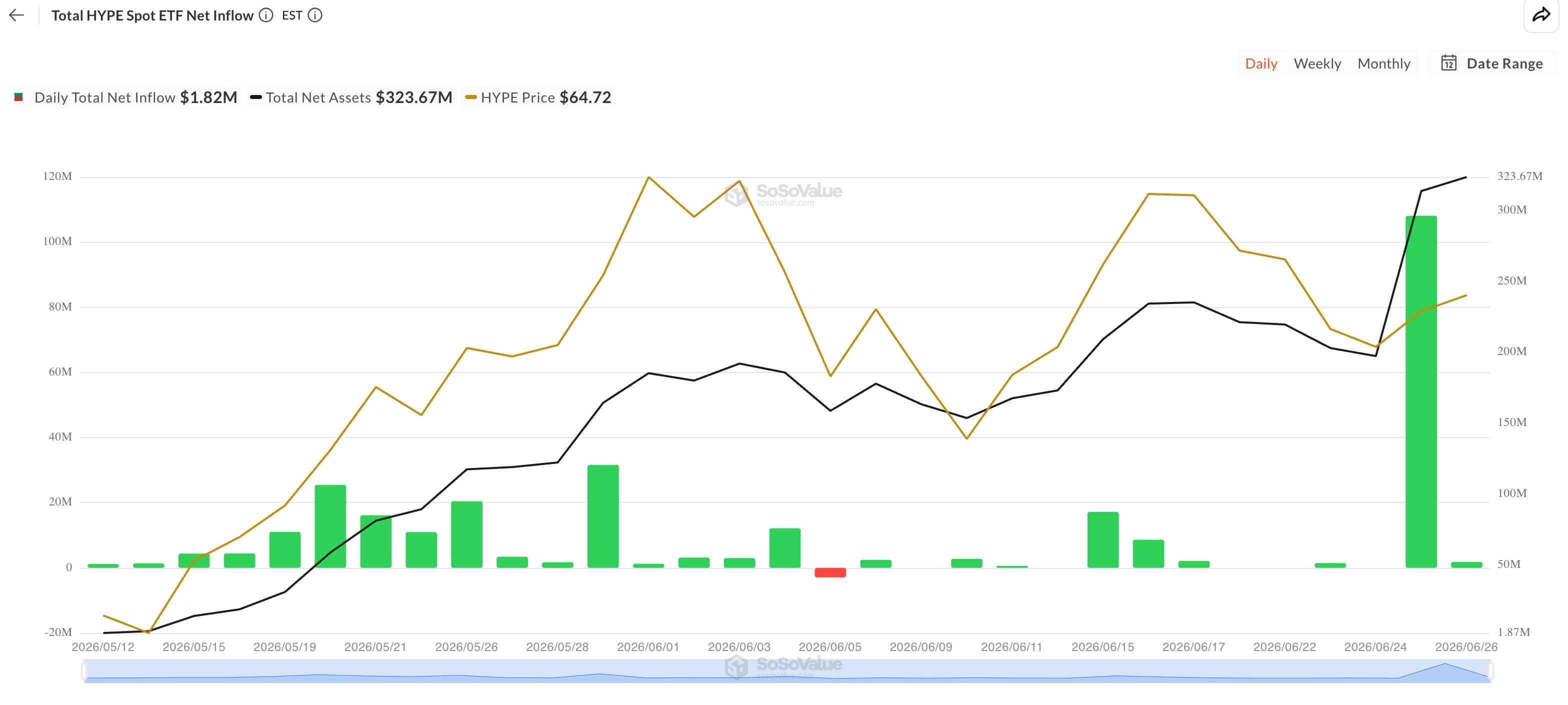
Even so, the combined assets of these three ETF groups total only around USD 2 billion, still far below the more than USD 72.8 billion held by Bitcoin ETFs and USD 8.4 billion held by Ethereum ETFs.
