
Top Pick

- Fully licensed and regulated US exchange
- Strong focus on security and compliance
- User-friendly interface for beginners

The cryptocurrency market strengthened earlier this week but came under sharp selling pressure on Thursday, erasing much of its previous gains. In the latest market snapshot, Bitcoin (BTC) is trading near 81600.00 (+0.9%), Ethereum (ETH) at 2400.00 (+2.1%), Tether (USDT) at 0.9991 (–0.01%), BNB at 744.00 (+5.1%) and XRP at 1.3250 (+4.8%). Total cryptocurrency market capitalization has declined to approximately $2.73 trillion, while Bitcoin dominance has increased to 60.0%. From October 19 to 22, US spot Bitcoin ETFs recorded net inflows of $439.1 million, while Ethereum ETFs saw outflows of $225.1 million. The market remains volatile despite the recovery attempt discussed in our previous crypto weekly review.

 By John Isige
 Bitcoin is ending the year below last year’s level and continues to move sideways. The market is waiting for new catalysts in 2026.
 By John Isige
 ETH/USD quotes are forming a medium-term downward trend while correcting toward the long-term trajectory. Over the past month and a half, price action has largely stabilized within a broad sideways range of 3165.00–2770.00 (Fibonacci retracement 50.0%–61.8%) and is now approaching its upper boundary. A breakout above 3165.00 (Fibonacci 50.0%, Murray level [2/8]), reinforced by the upper Bollinger Band, would open the way for a test of 3560.00 (Fibonacci 38.2%) and 4062.50 (Murray level [5/8], Fibonacci 23.6%). For bears, the key level remains 2770.00 (Fibonacci 61.8%, Murray level [1/8]); a break below this mark would likely act as a catalyst for a stronger decline toward 2187.50 (Murray level [–1/8]) and 1875.00 (Murray level [–2/8]).

 By Andrew Bennett
 In 2025, the Web3 sector lost nearly $4 billion to security incidents, with more than half of the stolen funds linked to North Korean actors, according to a new annual report from blockchain security firm Hacken.
 By John Isige
 Last week, the BTC/USD pair consolidated in the 87,500.00–89,500.00 range amid reduced trading volumes due to the Catholic Christmas holidays. However, today prices have already returned to the 90,000.00 area. Analysts do not share a single view on the drivers behind the recent upward move, but some believe it may be supported by expectations of progress toward a resolution of the Russia–Ukraine conflict, after U.S. President Donald Trump stated that significant advances had been made in negotiations.
 By Andrew Bennett
 The end of the era of four-year cycles based on Bitcoin halvings may signal a structural shift for Bitcoin and the broader crypto market. For years, this model was treated almost as an iron law governing the behavior of BTC and altcoins. However, the expected year-end rally in 2025 failed to materialize, which analysts see as a potential sign of deeper changes. This is outlined in a new report by Coinbase Institutional focused on the future of the crypto industry.
 By John Isige
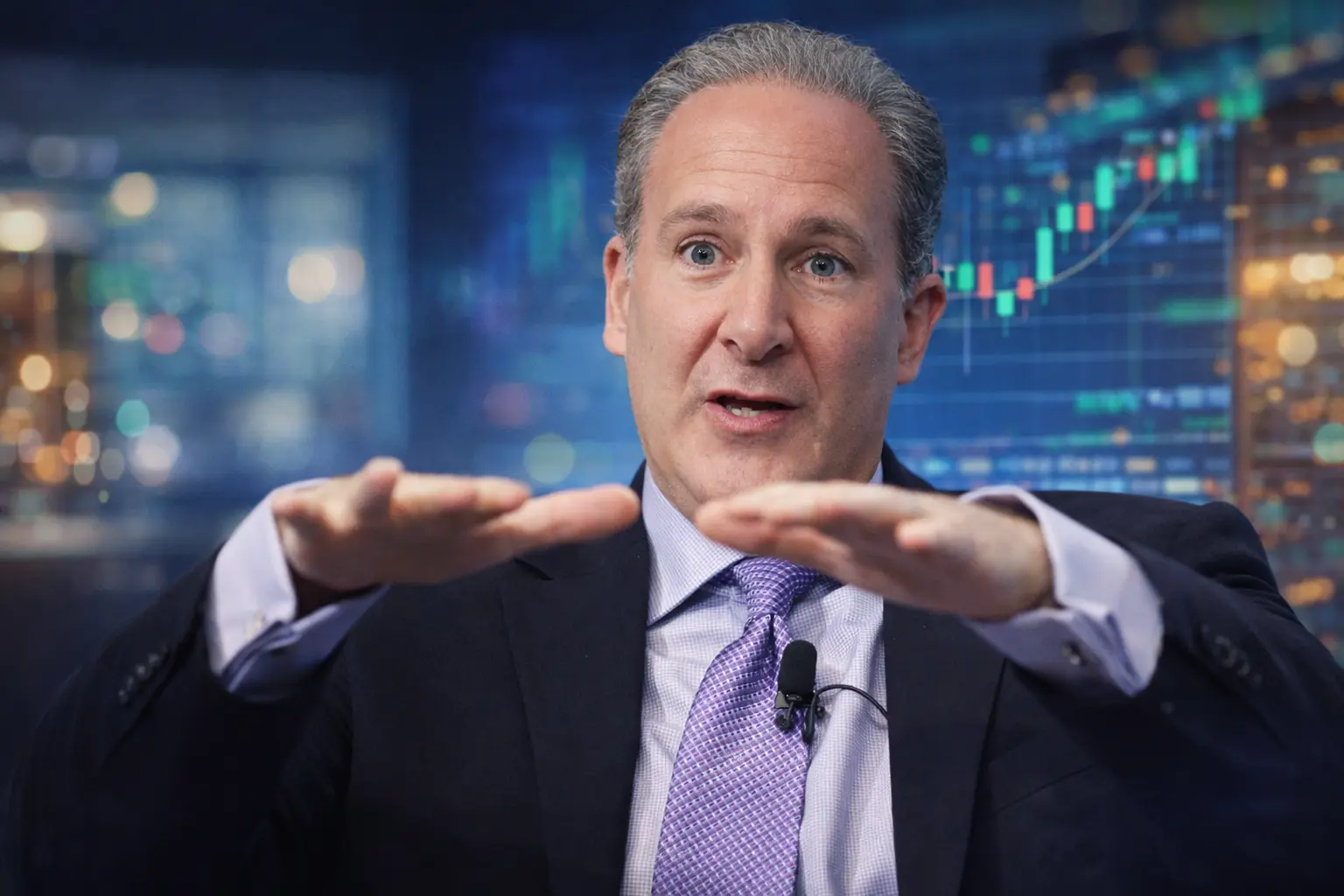
 While the Bitcoin price continues to move sideways, gold and silver are accelerating higher and setting new all-time highs. Against this backdrop, well-known U.S. economist and long-time crypto critic Peter Schiff has issued an extremely bearish outlook for digital assets.
 By Andrew Bennett
 The founder of JAN3, Samson Mow, believes that the Bitcoin bear market ended in 2025, and his long-term outlook for the next decade is highly ambitious.
 By Andrew Bennett
 Tom Lee’s Ethereum-focused treasury company BitMine is already holding close to $12 billion worth of ETH, and the Fundstrat strategist believes this is only the beginning. In a recent interview with CNBC, Lee explained why he expects Ethereum to enter a new major uptrend in 2026, driven by the rapid tokenization of traditional financial assets.
 By Andrew Bennett
 According to a report by the Russian daily Kommersant, the United States is allegedly interested in operating Bitcoin mining facilities at the Zaporizhzhia Nuclear Power Plant.

 By Sergey Lomakin
 Bitcoin slides toward $87,500 as gold and silver set new records: what’s driving the market divergence?
 By John Isige
 This week, the cryptocurrency market remained calm amid the Christmas holidays, with most major assets trading within narrow sideways ranges. Bitcoin (BTC) is holding near 88,700.00 (+0.5%), Ethereum (ETH) is trading around 2,960.00 (–0.3%), USDT is near 0.9993 (–0.03%), BNB stands at 840.00 (–1.3%), while XRP has slipped to 1.8600 (–2.4%). By the end of the week, total market capitalization rose to $2.98 trillion, while Bitcoin’s dominance increased to 59.4%. At the same time, balances in Bitcoin ETFs declined by $506.1 million, and Ethereum ETFs saw outflows of $63.7 million.
 By John Isige
 An unprecedented volume of options is set to expire on the cryptocurrency market, potentially acting as a catalyst for Bitcoin to break out of its prolonged sideways range. As expected, the market is showing a modest Christmas rally during the holiday period. At the time of writing, the Bitcoin price is holding near $89,123, up roughly 1.6% on the day. Altcoins are also benefiting from thinner holiday liquidity: Ethereum (ETH) is up about 1.3%, while XRP shows a more muted gain of 0.2%.


For crypto, the framework is similar to traditional financial markets but comes with its own twist. Here, price action turns on liquidity, adoption, regulation, and flows from institutions alongside retail sentiment. Network health—hash rate, staking, active wallets—adds another layer. Macro still matters too: rates, dollar strength, and risk appetite shape inflows and outflows. Then, as with any market, you use the chart—trend, support and resistance, momentum, and volume—to spot setups and manage risk.