


Top Pick

- Fully licensed and regulated US exchange
- Strong focus on security and compliance
- User-friendly interface for beginners

The cryptocurrency market strengthened earlier this week but came under sharp selling pressure on Thursday, erasing much of its previous gains. In the latest market snapshot, Bitcoin (BTC) is trading near 81600.00 (+0.9%), Ethereum (ETH) at 2400.00 (+2.1%), Tether (USDT) at 0.9991 (–0.01%), BNB at 744.00 (+5.1%) and XRP at 1.3250 (+4.8%). Total cryptocurrency market capitalization has declined to approximately $2.73 trillion, while Bitcoin dominance has increased to 60.0%. From October 19 to 22, US spot Bitcoin ETFs recorded net inflows of $439.1 million, while Ethereum ETFs saw outflows of $225.1 million. The market remains volatile despite the recovery attempt discussed in our previous crypto weekly review.

 By John Isige
Ethereum shorts on the CME have hit an all-time high, sparking debate among investors about the token’s next move. But what does the data really show?
 By John Isige
SWIFT’s decades-old cross-border messaging rails are “on borrowed time,” and Ripple — with its native token XRP — could emerge as a successor, says Sal Gilbertie, CEO of Teucrium. He links the threat to Ripple’s push to become a regulated financial institution.
 By John Isige
In the past week, participants from Ethereum’s 2014 ICO transferred coins worth a total of $45 million, according to analysts from Lookonchain and Onchain Lens.
 By John Isige
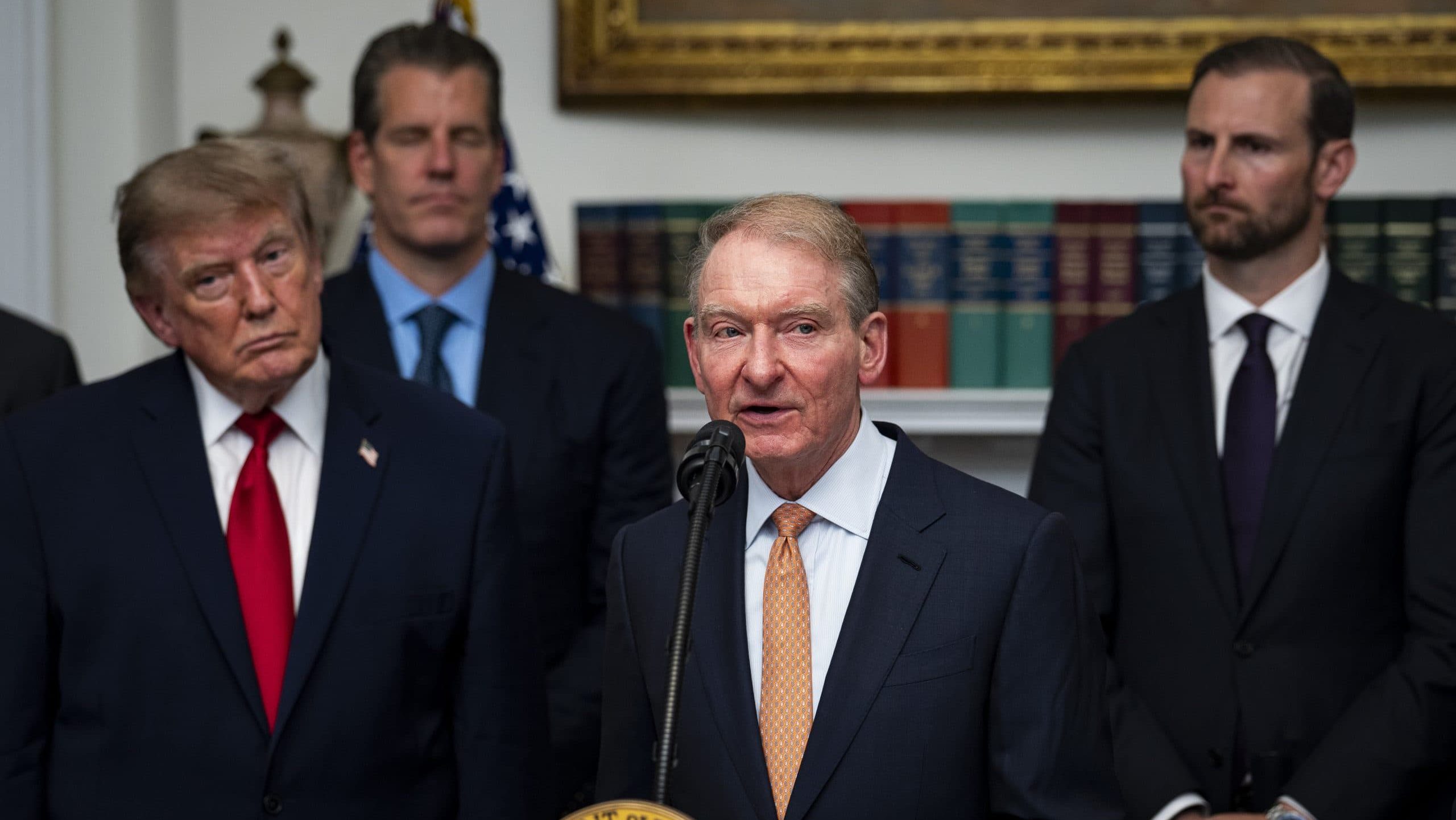
The U.S. Treasury will not allocate federal funds to purchase Bitcoin directly, opting instead to expand its holdings through coins seized in criminal and civil cases, Treasury Secretary Scott Bessent said.
 By John Isige
Over the past four days, Bitcoin has corrected nearly 8% from its record high above $124,000. Technical indicators point to the risk of a deeper decline.
 By John Isige
Concerns over future Federal Reserve policy were the main driver behind Bitcoin’s latest correction, according to Vincent Liu, CIO of Kronos Research, in comments to The Block.
 By John Isige
The RIAT Institute has dismissed recent claims from Qubic regarding a supposed 51% attack on the Monero network, calling the announcement “a staged publicity stunt aimed at boosting their own project.”
 By John Isige
Bitcoin wrapped a whirlwind week — including a fresh intraday all-time high at 124,533 US dollars — back near last week’s close, a touch below 118,000 US dollars. By contrast, several large-cap altcoins found a bid: Ethereum (ETH), Solana (SOL), and BNB each gained roughly five percentage points over the period. The new trading week now turns squarely on macro: Eurozone inflation, the Fed’s latest meeting minutes, U.S. housing data, and the annual Jackson Hole gathering of central bankers. Here’s what’s on the docket — and why crypto cares.
 By John Isige
The crypto market is pulling back after sharp gains in recent weeks. Bitcoin has dropped well below its record high, while XRP is struggling to hold the crucial three-dollar mark.
 By John Isige
Last week, BTC/USD posted a new all-time high above 124,500.00 before shifting into correction, with the U.S. dollar strengthening on renewed uncertainty over the Federal Reserve’s next moves. July wholesale inflation data showed producer prices rising sharply: PPI jumped from 2.4% to 3.3% y/y, while core PPI advanced from 2.6% to 3.7%. This has forced analysts to push back expectations for rate cuts, with fears the Fed could hold borrowing costs at 4.25–4.50% well into year-end.
 By John Isige
Since the beginning of the year, the Solana blockchain has shown solid growth across several key metrics. The project’s market capitalization climbed by 29.8%, reaching $82.8 billion, while the total value locked (TVL) rose 30.4% to $8.6 billion, according to Messari.
 By John Isige
Grayscale has submitted a filing to the U.S. Securities and Exchange Commission (SEC) to register a spot exchange-traded fund tied to Dogecoin (DOGE). The product, called the Grayscale Dogecoin Trust ETF, would list on NYSE Arca under the ticker GDOG if approved.


For crypto, the framework is similar to traditional financial markets but comes with its own twist. Here, price action turns on liquidity, adoption, regulation, and flows from institutions alongside retail sentiment. Network health—hash rate, staking, active wallets—adds another layer. Macro still matters too: rates, dollar strength, and risk appetite shape inflows and outflows. Then, as with any market, you use the chart—trend, support and resistance, momentum, and volume—to spot setups and manage risk.