
On July 21, memecoin launch platform pump.fun announced the launch of BOOST mode. The new mechanism will be enabled automatically for all tokens launched on the platform. Previously, after a memecoin completed the bonding stage and migrated to a liquidity pool, around 20% of the funds remained permanently locked in the pool. Even if all investors sold their tokens, part of the SOL or USDC would remain in the pool and could not be withdrawn or used.
Pump.fun refers to these funds as “dead liquidity” and estimates that more than $100 million enters this state every year.
How BOOST Mode Works
BOOST mode is designed to put capital that previously remained effectively frozen to use. Instead of leaving around 17.6 SOL in SOL-denominated pools or approximately $2,516 in USDC pools, the system will use these funds to buy back tokens over a five-minute period through a TWAP mechanism immediately after migration is completed.
All tokens purchased through BOOST mode will be burned automatically. This converts capital that previously generated little additional value into actual buying pressure in the market. BOOST mode will be activated automatically for all tokens migrated after 10:23 PM on July 21, Vietnam time. Users will not need to change any settings, while trading through the bonding curve and liquidity pools will continue to operate as before.
The mechanism will not apply to tokens that completed migration before that time or to assets launched through Mayhem.
pump.fun founder Alon said BOOST mode would improve the liquidity efficiency of memecoins by around 20% after migration without changing the user experience. According to him, reusing dead liquidity could gradually direct hundreds of millions of dollars into memecoins created on pump.fun.
Community Questions the Mechanism’s Effectiveness
Following the BOOST mode announcement, some members of the community questioned whether the mechanism would deliver the benefits claimed by pump.fun.
A user known as @gcrtrd noted that after a memecoin completed migration, around 17.6 SOL previously remained in the liquidity pool. Although these funds were effectively unusable, they still increased the overall size of the pool. In addition, a buyback funded with 17.6 SOL is relatively small. For a memecoin with a market capitalization of around $30,000, the amount would be sufficient to repurchase roughly 3% of the token supply, meaning the impact on price could be limited. According to the user, keeping these funds across tens of thousands of liquidity pools could provide greater benefits to the broader Solana memecoin ecosystem.
In response, pump.fun’s Head of Content, known as json, said many users misunderstood how BOOST mode works.
He stressed that dead liquidity should not be viewed as genuine market liquidity. The funds were already permanently locked in the pool and could not be withdrawn or used for trading. Even if all investors sold their tokens, the capital would simply remain in the LP. Therefore, BOOST does not remove liquidity currently used by the market for trading. Instead, the mechanism uses previously inactive funds to buy back and subsequently burn tokens.
According to pump.fun representatives, this approach will convert effectively unused capital into genuine buying pressure, limit sharp price declines and create a more stable price base at a time when memecoins often face heavy selling pressure after migration.
PUMP Price Shows Little Reaction to BOOST Launch
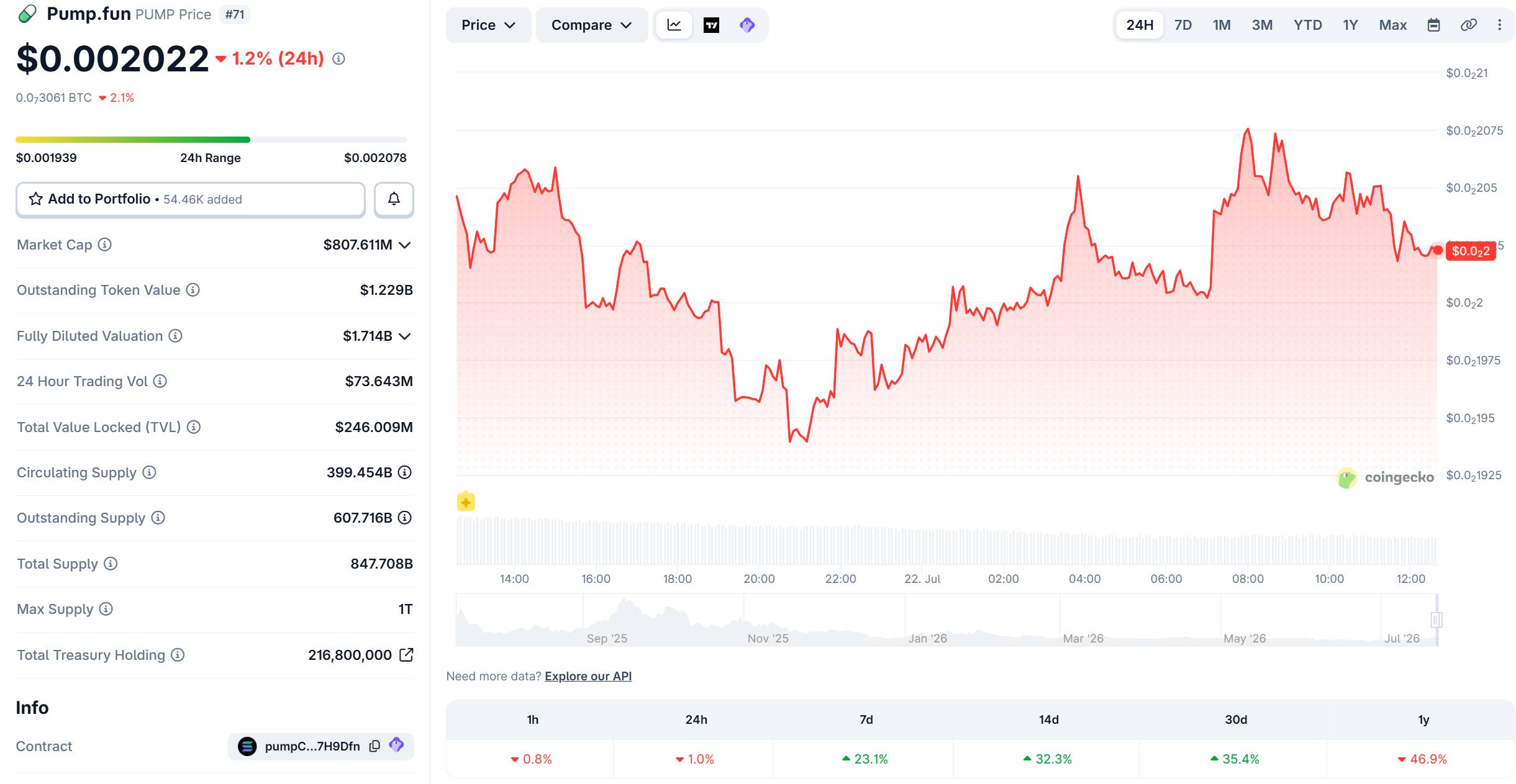
The price of the PUMP token showed almost no significant reaction to the announcement of the new mechanism. At the time of publication, the asset was trading at around $0.02, down approximately 2% over the previous 24 hours.
Several days earlier, PUMP had gained more than 20% after crypto influencer Ansem publicly promoted the token and purchased more than $100,000 worth of PUMP.
Conclusion: According to the FORECK.INFO editorial team, BOOST mode could reduce short-term selling pressure after memecoin migration, although its impact on price will depend on the trading volume and market capitalization of each token. The mechanism improves the efficiency of locked capital, but it does not by itself solve the problems of weak demand and high speculation in the memecoin market.
