
SLINK Surges After a Post From Shivon Zilis's Account
On September 5, a post published through Zilis's account appeared to endorse a ShivoLink account that was promoting the SLINK memecoin on Robinhood Chain. No official connection between the token, Neuralink or Zilis had been confirmed.
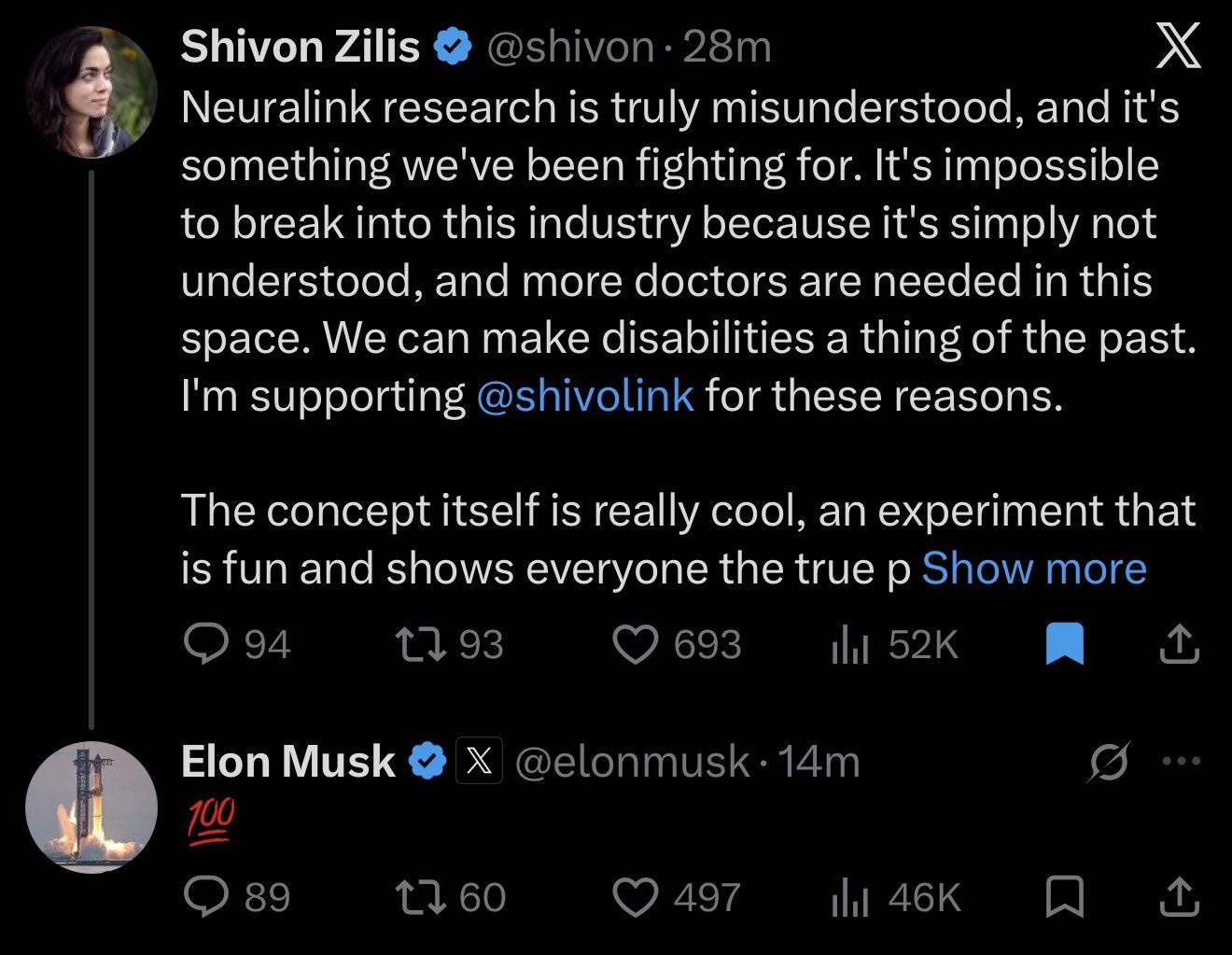
SLINK's market capitalization initially climbed from below $1 million to about $3 million. Doubts quickly emerged over whether the post was authentic, and the token fell back below $600,000 as traders began to suspect that the account had been compromised.
Elon Musk's Reply Is Treated as Confirmation
Minutes later, Musk responded to the post with a “100” emoji. Because he controls X and co-founded Neuralink, some market participants interpreted the reply as indirect confirmation that the post and token were legitimate. There was no formal endorsement, partnership announcement or project update.
Buying accelerated almost immediately, pushing SLINK's market capitalization to roughly $80 million. The move was driven almost entirely by social attention and thin liquidity rather than a change in the token's fundamentals.
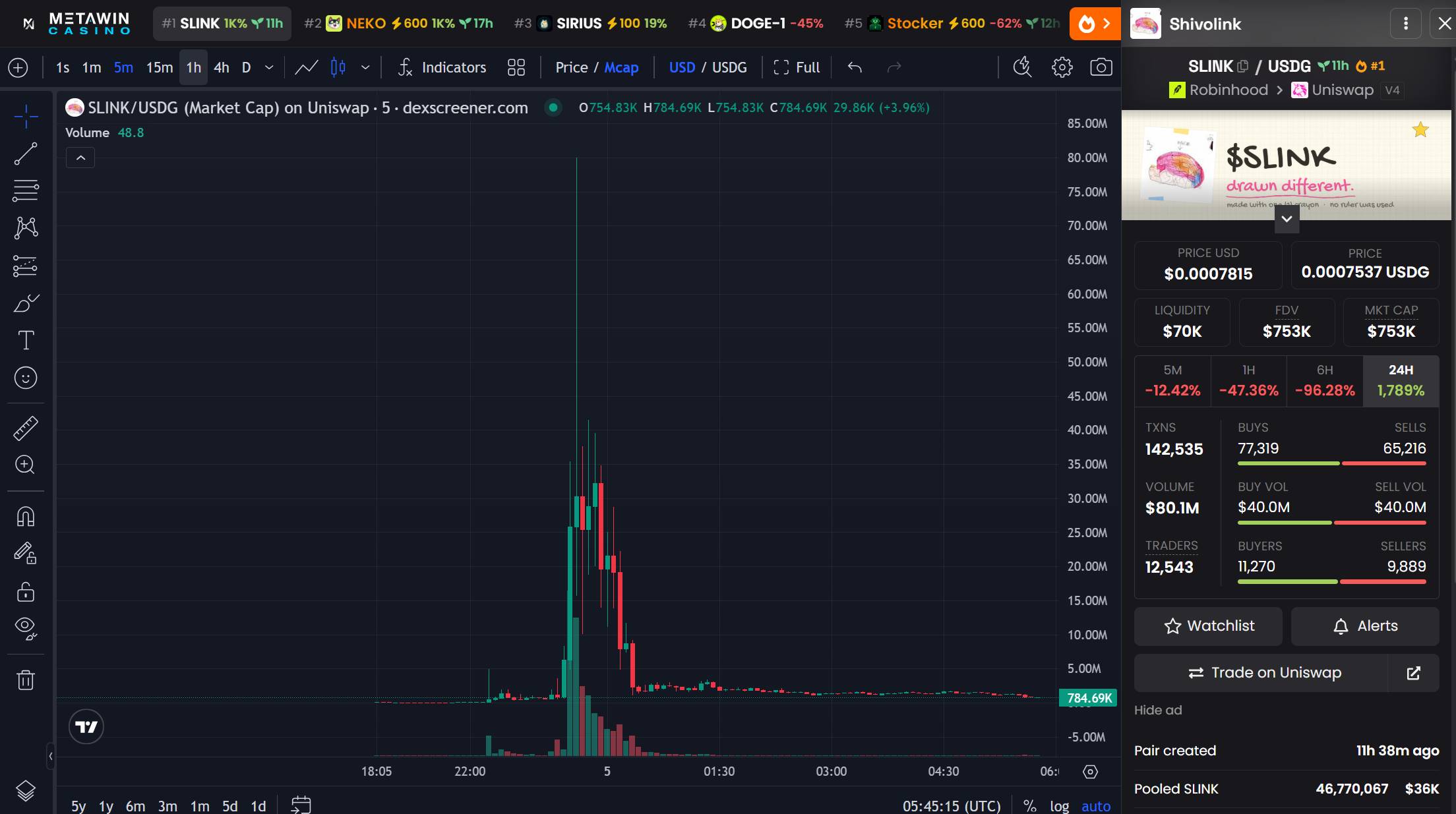
The rally reversed when Zilis's original post was deleted. Traders rushed to exit, sending SLINK back toward $2 million and wiping out more than 97% of its peak value. Musk's reply later also became unavailable at its original URL.
Four Traders Face About $807,000 in Losses
On-chain tracker Onchain Lens identified four traders with combined mark-to-market losses of approximately $807,000 after buying during the surge. The figures reflected the value of their positions after the collapse and did not necessarily represent fully realized losses.
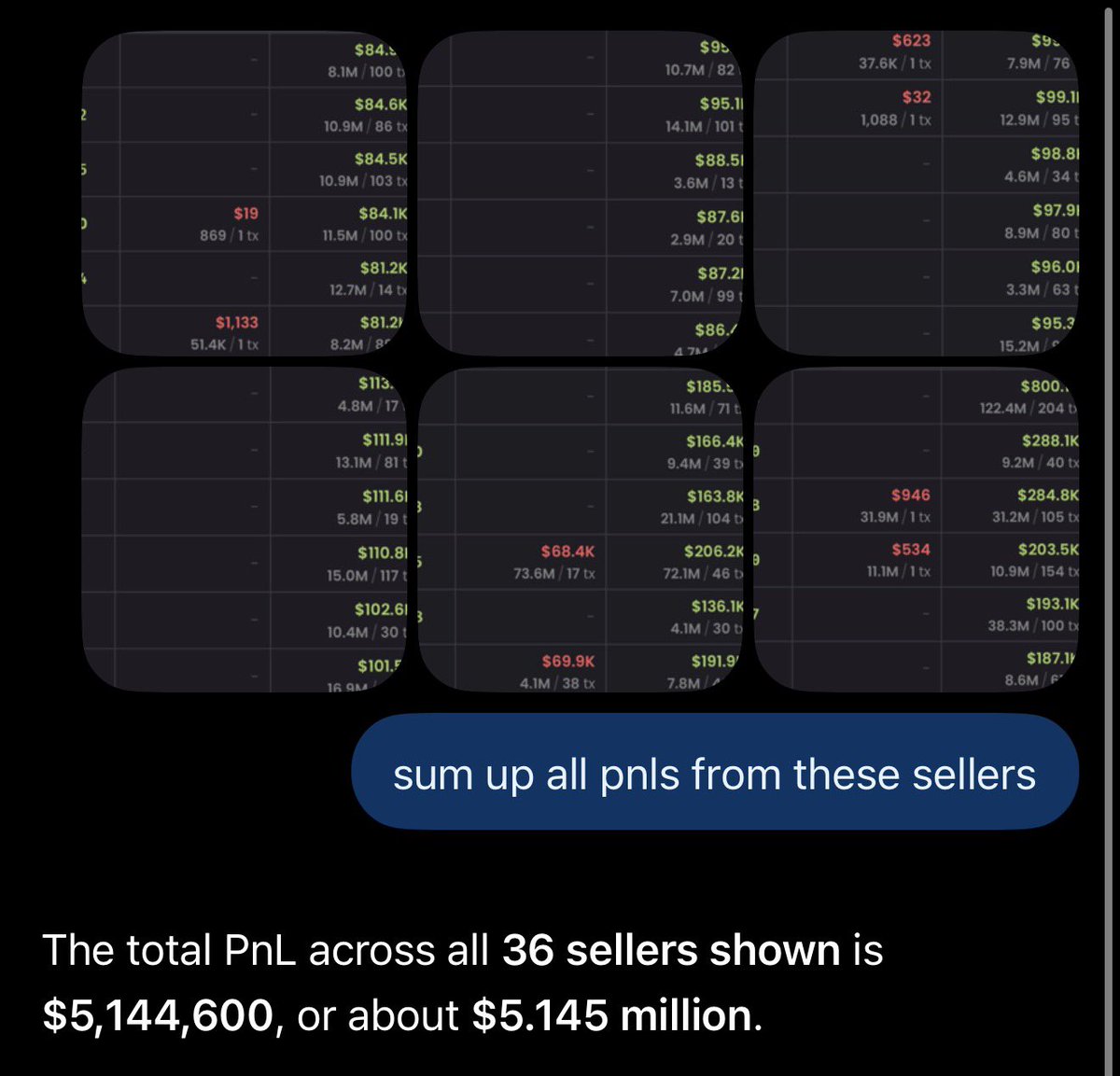
Other on-chain monitoring estimates suggested that more than 30 suspected early or insider-linked wallets sold into the rally and captured about $4.7 million in profit. Separate estimates placed creator and trading fees near $1.3 million, taking the amount potentially extracted from the episode to roughly $6 million. These totals may change as analysts continue to attribute wallets and reconstruct the trading sequence.
Robinhood Chain's Memecoin Activity Adds Context
SLINK traded on Robinhood Chain, which Robinhood describes as a permissionless Layer 2 network built for financial services and tokenized real-world assets. Permissionless deployment means that the presence of a token on the network does not imply approval by Robinhood, Neuralink or any public figure named in its marketing.
The episode followed a broader rise in speculative activity on the network. FORECK.INFO previously examined Robinhood Chain's earlier memecoin boom, when CASHCAT and several smaller tokens rapidly attracted liquidity and attention.
The same infrastructure that allows new assets to reach traders quickly can also accelerate a selloff. When a token has shallow liquidity and highly concentrated ownership, a small number of large exits can erase most of its market value in minutes.
What the SLINK Crash Shows
The SLINK episode followed a familiar high-risk pattern: a recognized identity created perceived legitimacy, a high-profile reply amplified attention, and early wallets sold into a wave of fear of missing out. Once the social signal disappeared, the token's liquidity and valuation collapsed together.
There is no evidence that Musk intended to promote SLINK or knew that the post was unauthorized when he replied. Even so, the market reaction shows how readily a brief social-media interaction can be mistaken for verification. A reply from a public figure is not proof of a token's ownership, affiliation or legitimacy.
SLINK's round trip from below $1 million to about $80 million and back near $2 million in less than an hour underscores the risks created by compromised accounts, concentrated token ownership and social-media-driven trading.
