
The concern is straightforward: why would financial institutions continue using a volatile asset like XRP for transactions if Ripple now offers its own stable and low-cost alternative alongside USDT and USDC?
Back when the project launched, former Ripple CTO David Schwartz tried to calm those fears. He argued that even if XRP were to lose market share to stablecoins, it would be better for that shift to benefit a Ripple product rather than an external rival. He also stressed that RLUSD poses no greater threat to XRP than products from Circle or Tether. Ripple CEO Brad Garlinghouse has made a similar point, saying XRP remains central to the company’s long-term vision and that the ecosystem should be judged over time rather than through short-term hype cycles.
Still, the debate has not gone away. Even as Ripple reportedly considers share buybacks worth up to 750 million dollars, investors continue to ask whether XRP could eventually be overshadowed by stablecoins.
XRP and stablecoins may serve different roles
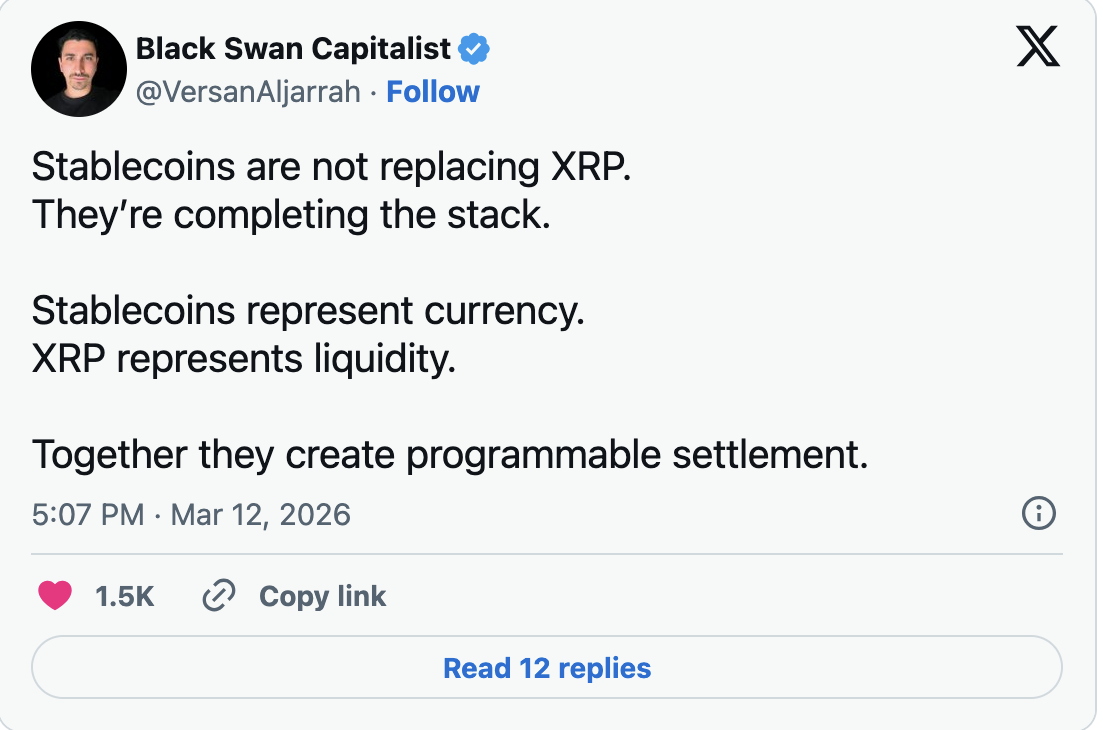
Crypto analyst Versan Aljarrah believes these fears are overstated. In his view, XRP and dollar-backed stablecoins play different roles inside the emerging digital financial system.
Stablecoins act as digital representations of fiat money and provide transactional stability, while XRP serves as a source of liquidity.
From that perspective, both could complement each other by helping create infrastructure in which value moves between currencies almost instantly.
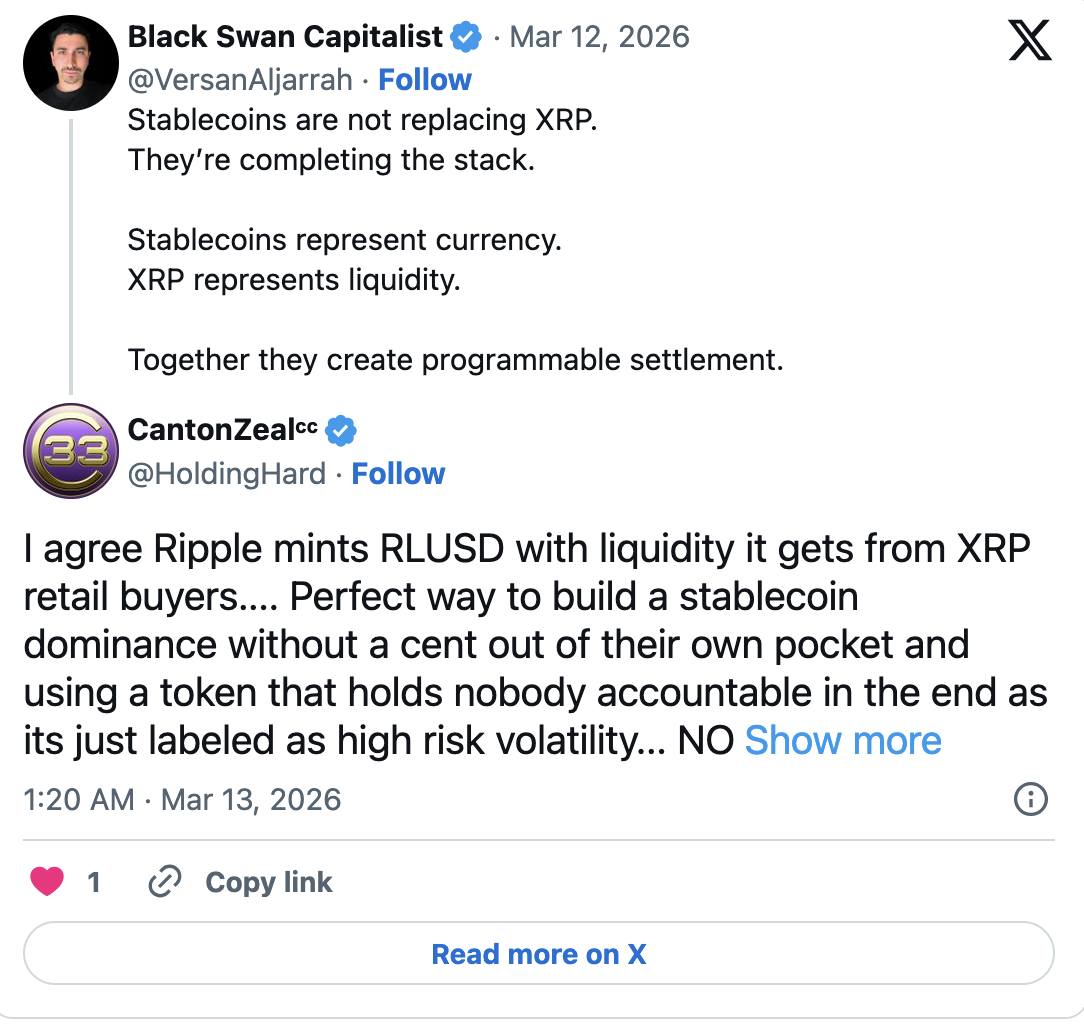
That said, skepticism has not disappeared. Some market participants argue that Ripple is effectively using liquidity from XRP holders to support RLUSD, allowing the stablecoin to strengthen its position without the company having to deploy significant capital of its own.
ETF demand is helping support XRP
At the same time, XRP itself is receiving support from institutional demand. Spot XRP ETFs have shown resilience even during periods of weakness across the broader crypto market.
Bloomberg analysts, including Eric Balchunas and James Seyffart, have noted that Ripple-linked funds are showing unexpectedly steady performance despite pressure across the market.
Conclusion
The rise of RLUSD has sharpened Ripple’s strategic balancing act between expanding its stablecoin business and preserving XRP’s role in the ecosystem. For now, both can coexist by serving different functions, but over the longer term the question of internal competition remains unresolved.
