

Why $80,000 Remained Out of Reach — Again
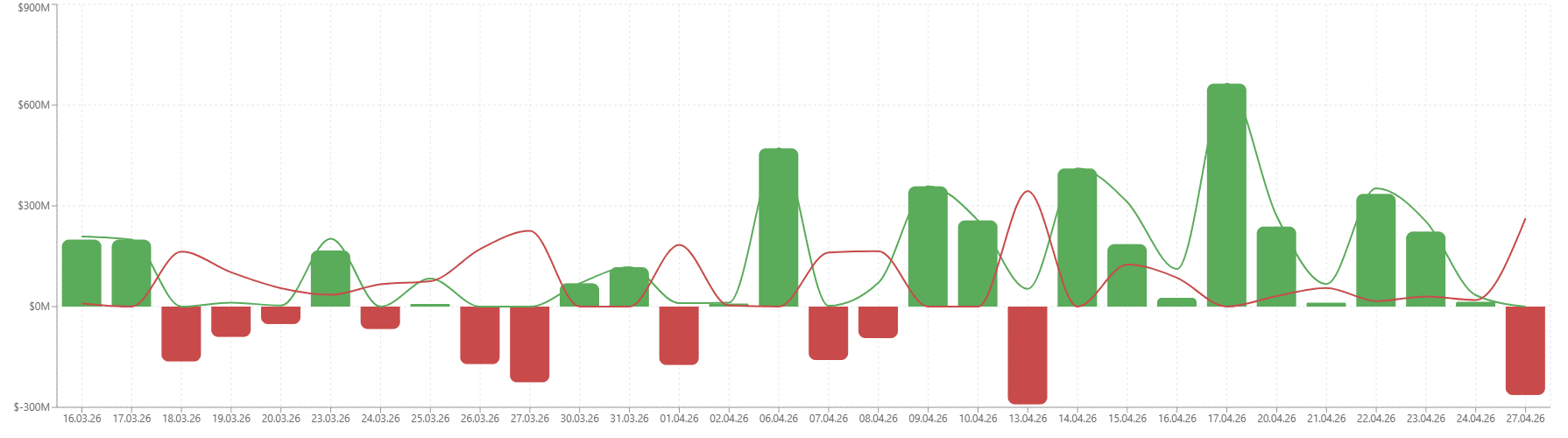
Not long ago, the picture looked promising. Bitcoin was climbing out of a prolonged period of uncertainty: the Fear and Greed Index was gradually recovering, and the panic that had weighed on the market for weeks was clearly easing. Real demand was picking up too — spot Bitcoin ETF data told the story plainly: ten consecutive days of net inflows. Not speculative froth, but a steady stream of capital from both institutional and retail investors.
Against that backdrop, the price surged to $79,400 — and hit a wall. The psychological $80,000 level held firm, the market reversed, and Bitcoin slipped back toward $76,000.
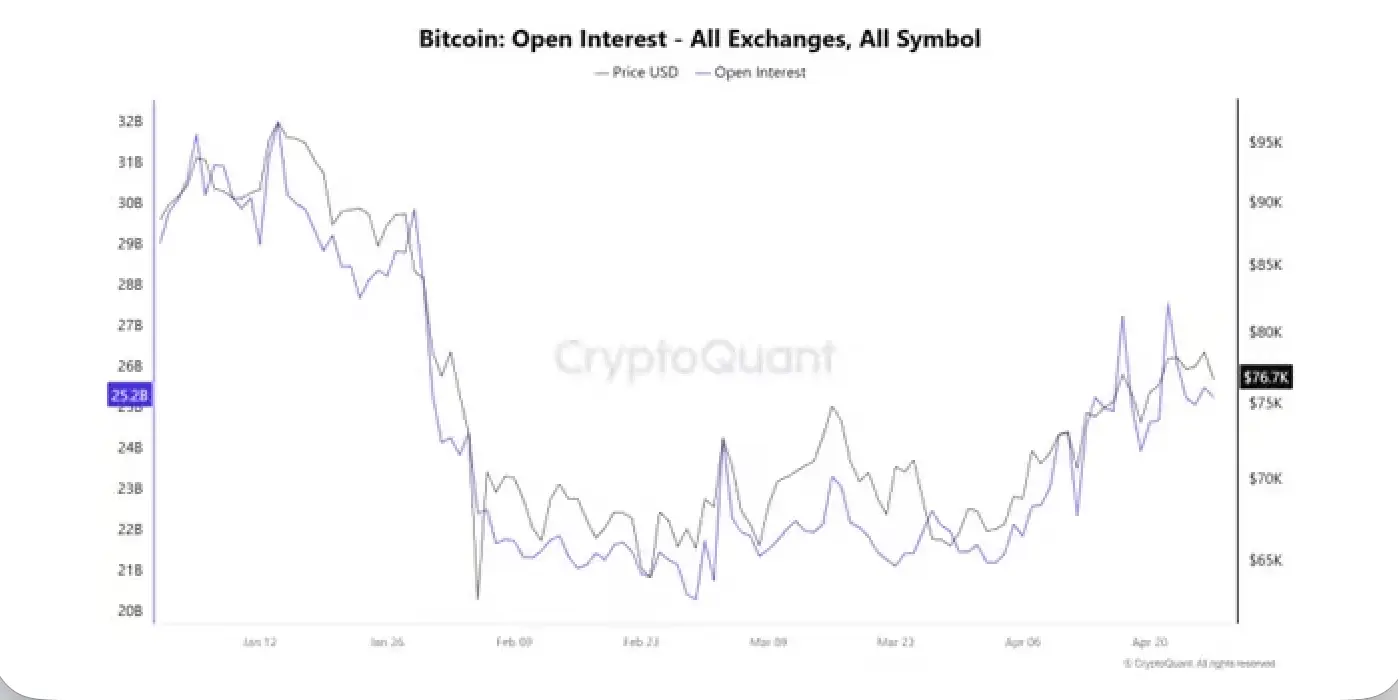
The main technical reason for the reversal was an overheated derivatives market. By the time BTC peaked, open interest had climbed to around $25 billion — the market was loaded with leverage once again. Traders had piled into long positions, and that's exactly what turned the correction into an avalanche. When the price stalled near $80,000, a wave of forced liquidations swept through those longs — totalling more than $150 million. Margin calls fired like dominoes: each automatically closed position added more pressure to the next.
The ETF Inflow Machine Stalls
After ten straight days of solid net inflows, Bitcoin ETFs saw money move in the opposite direction for the first time — outflows came in at around $263 million. One day doesn't change the trend, but the signal is clear: the buying momentum that had been driving the market higher is taking a breather.
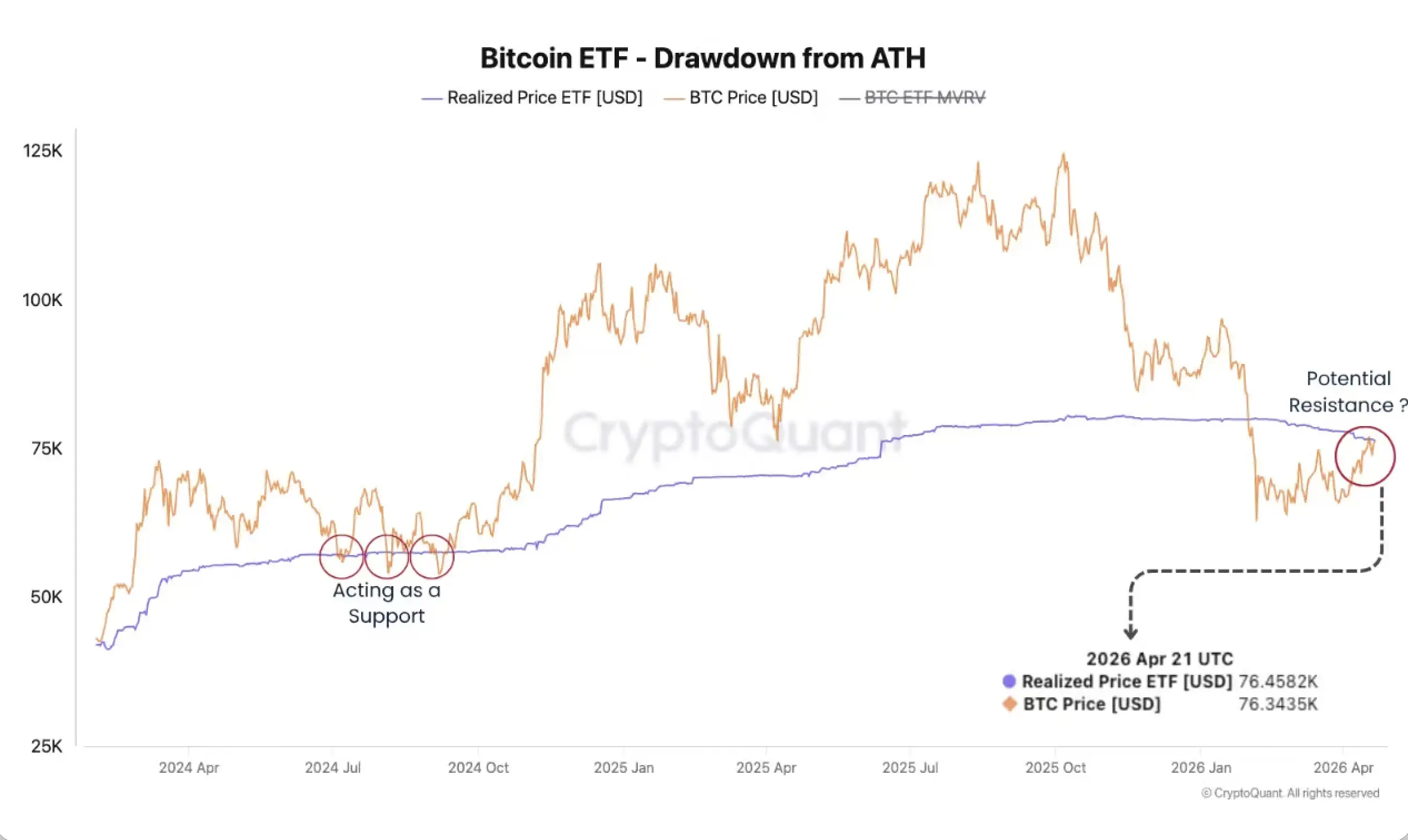
Context matters here. The average entry price for spot Bitcoin ETF investors currently sits around $76,400 — right in line with where the price is trading now. Those who spent weeks deep in the red have finally broken even, and some have taken that opportunity to lock in their positions. The picture is even more complicated for short-term large investors: their average entry is around $79,600, meaning they're still underwater.
This creates persistent selling pressure in the $79,000–$80,000 range: every time the price approaches those levels, a portion of the market moves to sell, unwilling to slip back into the red. That's why $80,000 is acting more like a ceiling right now than a launchpad.
Two Levels That Will Decide Everything
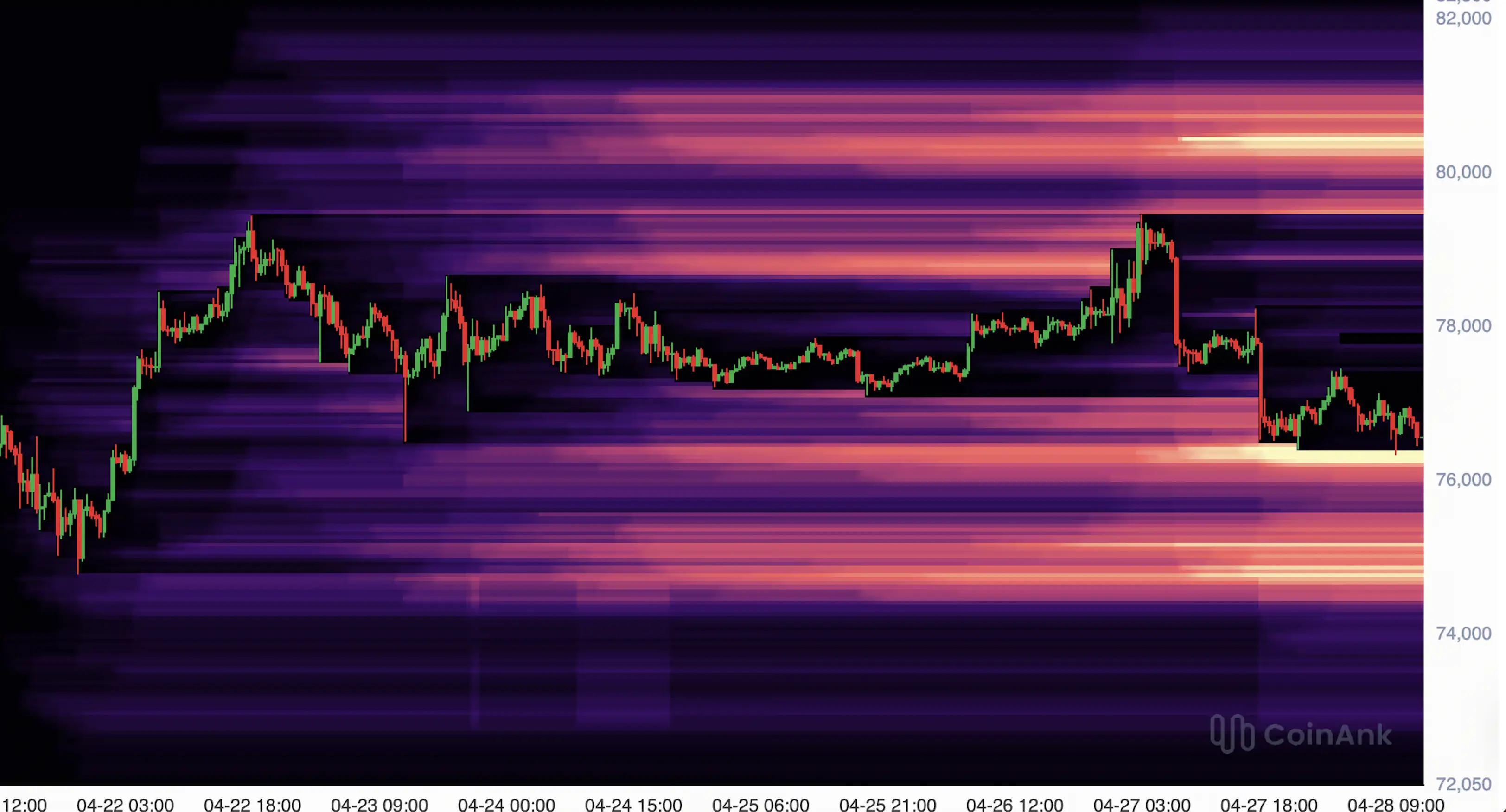
The market is currently caught between two powerful liquidity zones — and a move toward either one could accelerate quickly.
To the downside, around $74,300, a large cluster of long positions sits at risk of forced liquidation if the price continues to fall. Major players — market makers, hedge funds, algorithmic traders — have a clear view of the liquidation map and often deliberately hunt these clusters, flushing out stops and absorbing the resulting liquidity for their own positioning. If the market heads lower, this zone could act like a magnet.
To the upside, between $80,300 and $81,000, the picture is the mirror image: short positions are concentrated there. A breakout above that range would trigger a cascade of forced closures, adding fuel to any upward move.
External factors could tip the balance either way: the Fed's interest rate decision and ongoing geopolitical tensions remain key variables. Either trigger could be enough to push Bitcoin toward a test of $74,300 — or send it back on the attack at $80,000.
