
At 21:30 UTC on July 22, blockchain security firm Blockaid detected a suspicious transaction involving AFX Trade’s USDC bridge on Arbitrum. According to preliminary findings, the attacker obtained enough validator signatures to authorize the withdrawal of 24.15 million USDC.
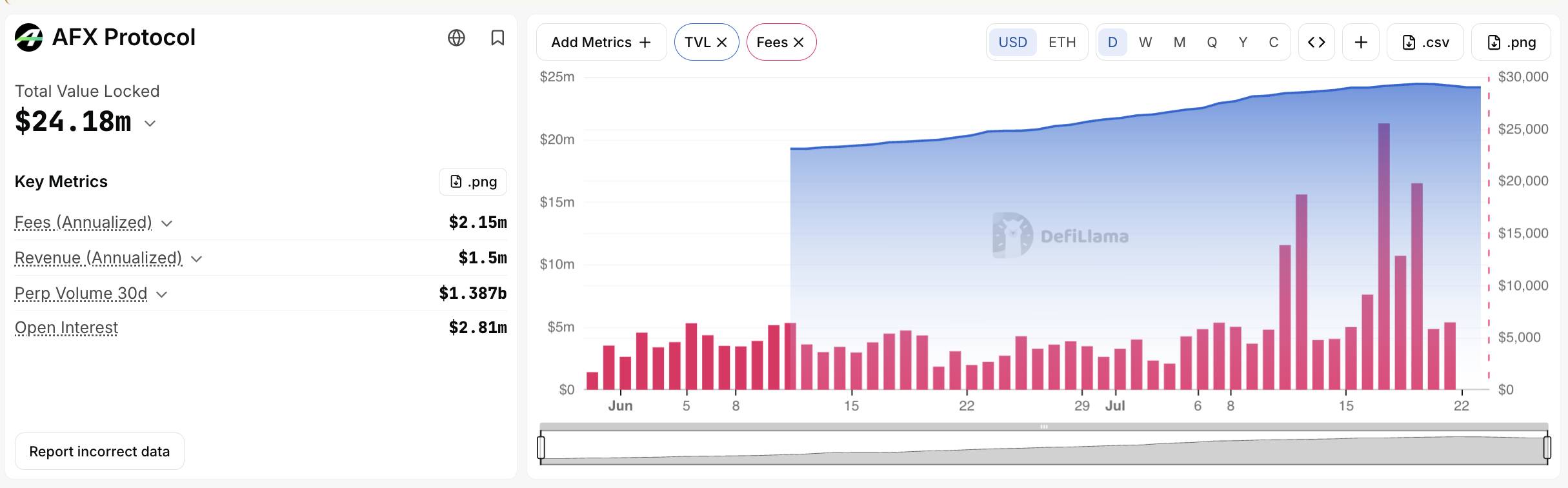
According to DefiLlama, the stolen amount represented almost all of the funds held in the AFX Bridge infrastructure before the attack. The platform classifies the incident as a private key compromise and estimates the loss at $24.15 million.
Hacker Swaps USDC for 12,467 ETH
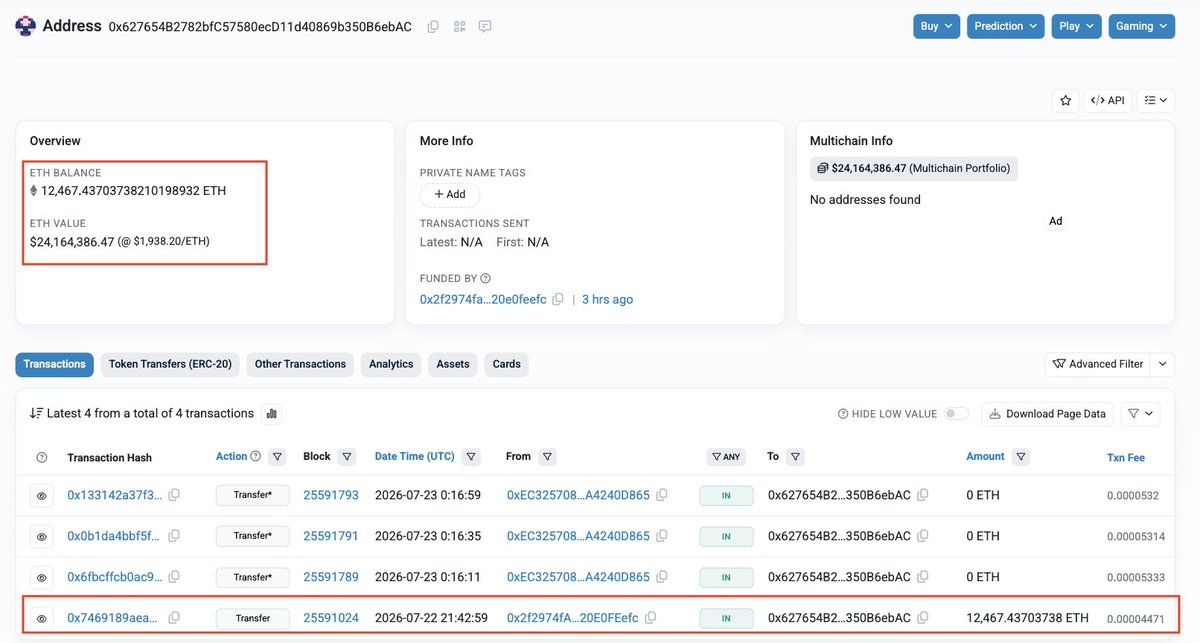
After withdrawing the funds, the attacker transferred the USDC from Arbitrum to Ethereum and then swapped it for approximately 12,467 ETH. According to blockchain analysts, the converted assets were consolidated at a single address.
Converting USDC into ETH could make it more difficult to freeze the stolen funds. Circle reserves the right to block USDC transfers associated with certain addresses, while Ethereum does not provide an equivalent centralized mechanism for freezing native ETH. The chances of recovering the funds will depend on their subsequent movement and cooperation from trading platforms.
According to Blockaid’s preliminary findings, the attacker did not bypass the smart contract’s logic. Five hot validator keys signed the transaction and provided the quorum required to execute the withdrawal. This points to a likely compromise of the key management infrastructure rather than a flaw in the bridge’s code. The conclusions may change after AFX publishes a detailed technical report.
Arbitrum’s Native Bridge Was Not Affected
Following the first reports, Offchain Labs co-founder and CEO Steven Goldfeder clarified that the suspicious transaction was linked to a third-party protocol. He stressed that Arbitrum’s native bridge had not been hacked or exploited. The incident therefore affected infrastructure operated by AFX Trade rather than the core components of the Arbitrum network.
AFX, or Anti-Fragile Exchange, describes itself as an independent Layer 1 blockchain designed for decentralized perpetual contract trading. The platform offers USDC-denominated settlement, trading in cryptocurrencies, stocks, ETFs and commodities, as well as leverage of up to 100x. These features are claims made by the project itself and do not constitute an independent assessment of its security or performance. Although AFX operates on its own network, it used a separate bridge on Arbitrum to receive user deposits in USDC. This infrastructure was the target of the attack.
AFX Suspends Bridge Operations
AFX Trade confirmed the incident involving its USDC bridge and announced that the service had been suspended immediately. The team activated its incident response procedures and said it was working with blockchain security specialists to determine the cause of the attack and trace the stolen assets.
In its initial statement, AFX did not disclose a recovery plan, explain how user losses would be handled or provide a possible timeline for restoring the bridge. These questions remain unresolved pending further verified information.
Losses From July Hacks Approach $97 Million
AFX was not the only DeFi project to suffer a major attack in July 2026. Earlier, the Ostium platform suspended operations following manipulation of its price data system. Initial estimates placed the loss at approximately 18 million USDC, while DefiLlama’s current database estimates the damage at $23.75 million.
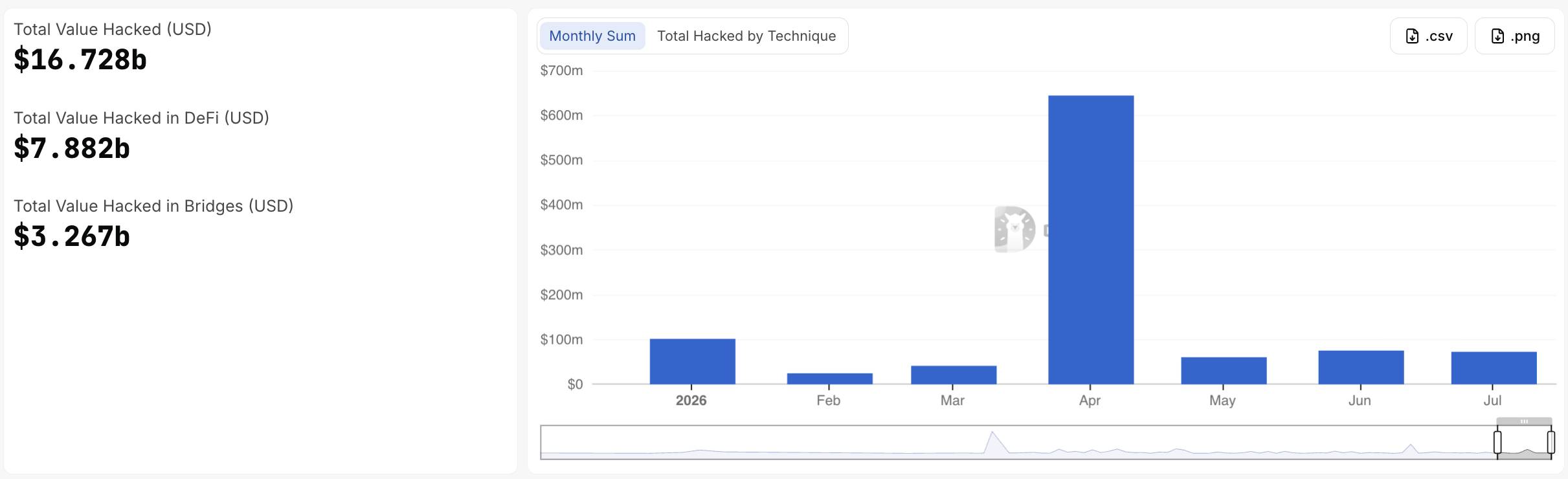
Before the AFX Bridge attack, 13 incidents had been recorded in July, causing combined losses of approximately $72.6 million. After adding the $24.15 million loss, the total rose to around $96.8 million. These figures remain preliminary and may change as losses are reassessed and some assets are potentially recovered.
Conclusion: The AFX incident shows that the security of cross-chain bridges depends not only on smart contract code but also on the protection of validator keys and governance mechanisms. Even when a contract operates according to its intended rules, the compromise of enough privileged signatures can result in the loss of almost all locked liquidity.
The AFX Trade incident also highlights the importance of carefully selecting tools for storing digital assets. The FORECK.INFO crypto wallet ranking features detailed reviews of popular solutions, their functions, supported cryptocurrencies, advantages and disadvantages. These materials help users compare available options and choose a wallet with a suitable level of control and security.
