
Crypto exchange Kraken is reportedly in talks to invest in Aave, the largest DeFi lending protocol in the market. However, shortly after the report emerged, Aave founder Stani Kulechov pushed back against the media framing, stating that there was “no way” AAVE would be sold at a discount of up to 70%.
Kraken Reportedly Seeks to Acquire a 15% Stake in Aave
According to CoinDesk, Kraken’s parent company, Payward Inc., is negotiating to acquire a 15% stake in Aave Group at a valuation of around USD 385 million.
Sources familiar with the matter said the proposed deal could involve an investment of 35,000 ETH, worth approximately USD 71 million at current prices, in exchange for 250,000 AAVE tokens and a 15% common equity stake in Aave Group.
Payward is also reportedly looking for additional partners to participate in the investment through a syndicate structure rather than funding the entire transaction on its own.
If completed, the deal would mark another step in Kraken’s expansion strategy ahead of a widely anticipated IPO.
In April, Payward completed the acquisition of derivatives exchange Bitnomial in a deal valued at up to USD 550 million, securing the full range of CFTC licences required for brokerage, clearing, and exchange operations.
In May, several reports suggested that Payward was also raising additional capital at a valuation of around USD 20 billion.
Stani Kulechov: “There Is No Way We Would Sell AAVE at a 70% Discount”
Shortly after the article was published, Aave founder Stani Kulechov responded on X. He said CoinDesk’s interpretation was inaccurate and stated: “First of all, there is no way we would sell AAVE at a 70% discount.”
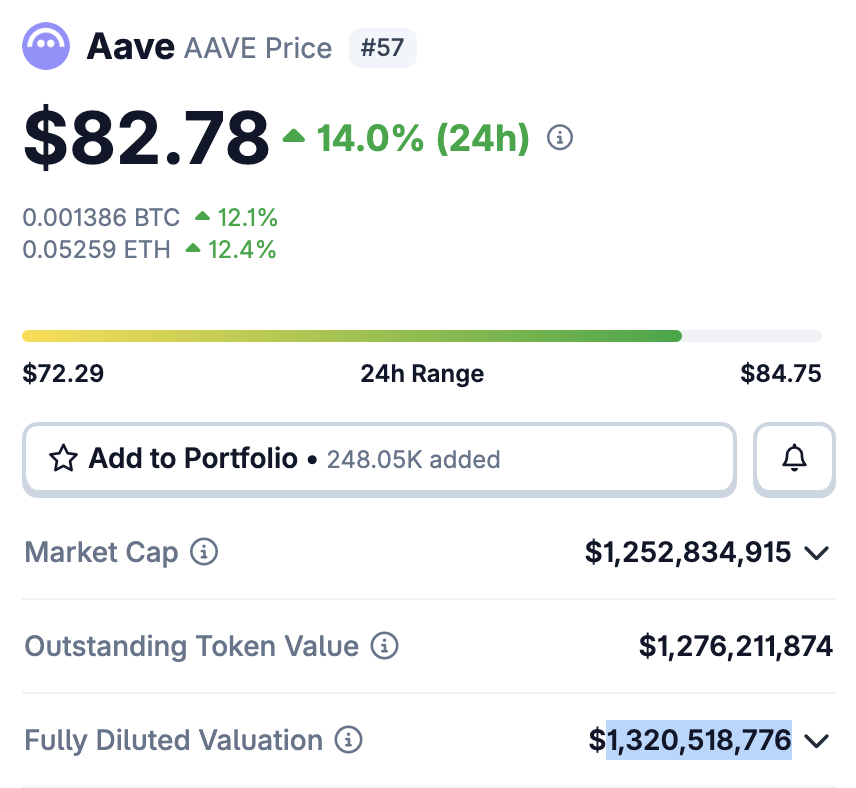
According to Kulechov, the USD 385 million valuation mentioned by CoinDesk represents only around 30% of AAVE’s current fully diluted valuation, implying a discount of roughly 70% compared with the value reflected by the token market.
However, Kulechov did not completely rule out the possibility of cooperation with Kraken. He said Aave Labs still holds a previously allocated amount of AAVE tokens, and several parties have expressed interest in purchasing those tokens or establishing a long-term strategic partnership.
He added that any discussions would most likely concern tokens held by Aave Labs rather than the sale of the entire Aave protocol or a valuation as low as the one described in the CoinDesk report.
Aave No Longer Receives Protocol Revenue
Kulechov also used the occasion to clarify Aave’s current operating model.
He said Aave Labs now serves only as the research and development entity for the Aave DAO. All revenue generated by the protocol and Aave-branded products is currently directed to the DAO and AAVE token holders.
“No revenue from the protocol or Aave products goes to Aave Labs,” Kulechov stressed.
This structure followed the Aave Will Win governance proposal submitted by Kulechov earlier this year, which was approved by roughly 75% of voters. In return, the DAO will provide Aave Labs with a multi-year budget to continue developing the ecosystem.
He also revealed that the team is working on Aavenomics 3.0, a new version of Aave’s tokenomics that will introduce an automatic AAVE token buyback mechanism rather than relying on governance decisions as before.
Aave Continues to Recover After the KelpDAO Incident
The reported deal comes as Aave continues to recover from an incident involving KelpDAO in April. At the time, a hacking group reportedly linked to Lazarus Group exploited a vulnerability in KelpDAO’s bridge to mint around USD 292 million in unbacked rsETH.
The assets were then used as collateral on Aave to borrow real assets, leaving the protocol with estimated bad debt of between USD 190 million and USD 230 million. The project later appealed for donations from the DeFi community to cover the shortfall and reportedly received strong support.
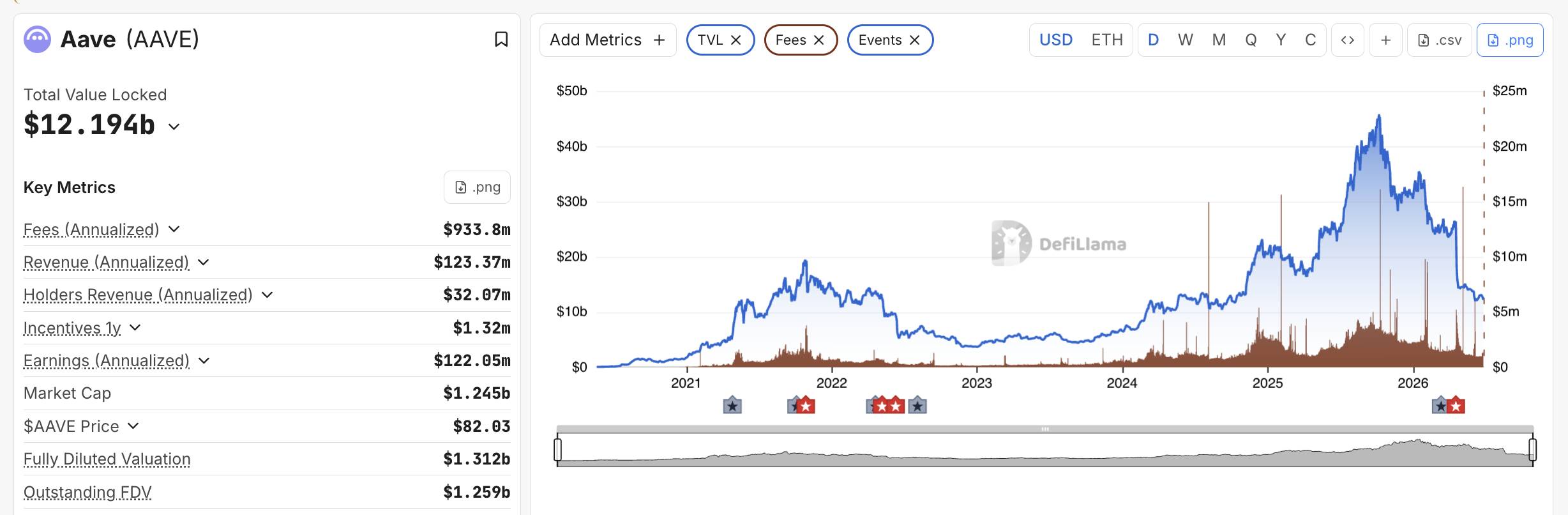
Although Aave’s smart contracts were not directly compromised, the incident still caused total deposits on Aave to nearly halve, falling from around USD 44 billion to USD 23 billion. Outstanding loans also declined from roughly USD 18 billion to USD 9.5 billion, while Aave’s market share in the lending sector dropped from an average of 59% to around 38%.
Earlier this month, Aave introduced a new risk-management framework aimed at reducing the likelihood of similar incidents. Before that, the protocol launched Aave V4 with a hub-and-spoke architecture that allows Layer-2 networks to share liquidity without relying on bridges, the main weakness exploited in the KelpDAO incident.
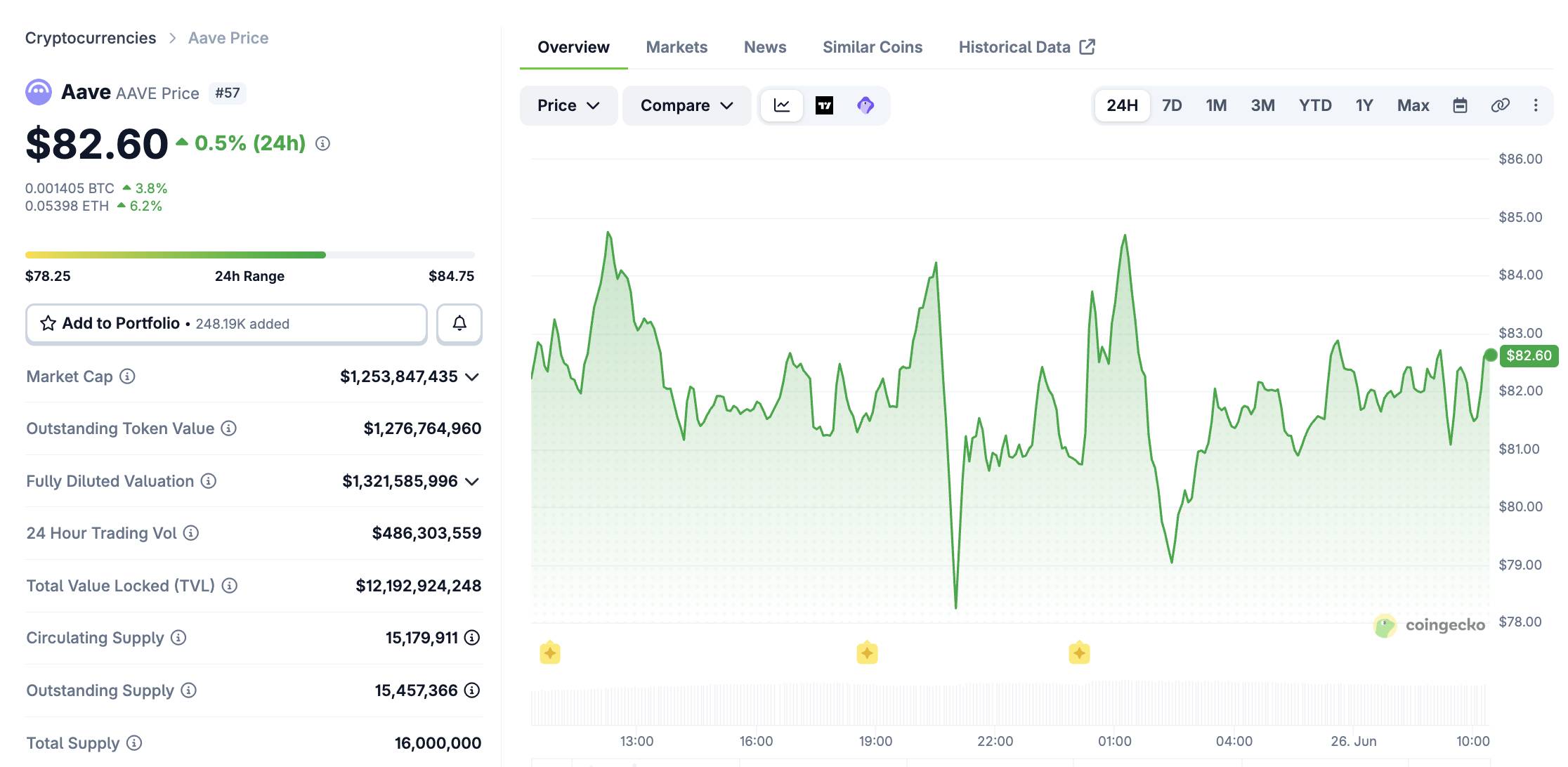
AAVE showed little reaction to the report, rising only around 0.5% over the past 24 hours to trade near USD 82.6. One day earlier, the token had surged more than 16% after Standard Chartered forecast that AAVE could reach USD 3,500 by 2030.
Conclusion
The reported Kraken-Aave discussions highlight growing institutional interest in major DeFi infrastructure, but the disagreement over valuation shows that any transaction would likely focus on Aave Labs-held tokens or a strategic partnership rather than control of the protocol itself. Aave’s recovery from the KelpDAO-related liquidity shock and the planned Aavenomics 3.0 upgrade remain key factors for AAVE holders.
