
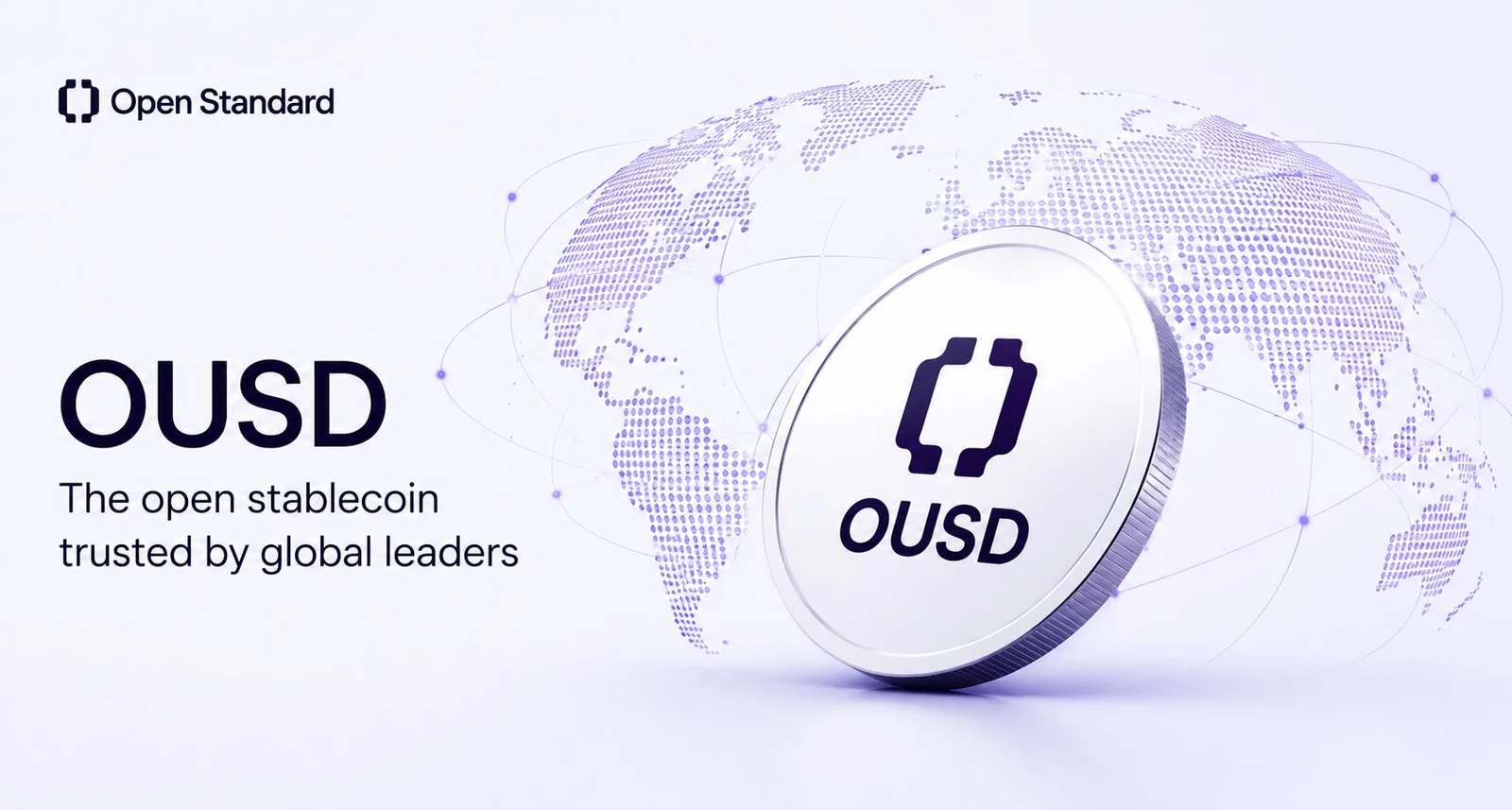
The stablecoin sector has gained a new player that could challenge the dominance of Tether (USDT) and Circle (USDC): Open USD (OUSD).
This is a new stablecoin solution announced by OpenStandard, a company founded by an alliance of major corporations and institutions from both traditional finance and the crypto industry. The project is led by Zach Abrams, former CEO of Bridge, a stablecoin payments platform acquired by Stripe in 2025 for $1.1 billion.
In its launch press release, OpenStandard stated that its mission is to accelerate global stablecoin adoption by removing barriers such as issuance and redemption costs, improving the efficiency of reserve-asset revenue, and giving participating partners greater influence.
Open USD addresses these goals by:
- Offering free issuance and redemption of OUSD, with no transaction limits.
- Sharing revenue from the reserve assets backing OUSD with participating partners.
- Allowing participating partners to jointly govern OUSD through OpenStandard.
Open Standard founder Zach Abrams said:
“Current stablecoin solutions have many strengths, but for adoption at scale, businesses need an open, low-cost, high-throughput and easily accessible solution that aligns with their interests. We have brought together more than 140 partners to launch Open USD. This is a stablecoin designed for the internet economy and operated directly by the businesses that use it.”
OUSD is expected to launch by the end of this year.
OpenStandard also announced a list of partners expected to support OUSD in the coming period, including globally influential names across several sectors:
- Payments and credit: Visa, Stripe, Mastercard, American Express, Discover, Fiserv, Adyen, Cloudflare, Corpay, Jack Henry, Klarna, Affirm, Ramp, OnePay, Brex, Checkout.com, WEX, PayPay Corporation, Western Union, Nuvei, Remitly, Ria, Marqeta, MoneyGram, Nium, Worldline, Galileo, Highnote, i2C, Lithic, Thredd, Episode Six, Verituity, Félix, Taptap Send, CAL.
- Finance and banking: BlackRock, BNY, Standard Chartered, Commonwealth Bank of Australia, Sumitomo Mitsui Financial Group, Intercontinental Exchange, National Australia Bank, DBS, U.S. Bank, BBVA, Mizuho Financial Group, Shinhan Financial Group, Westpac, Itaú, OCBC, ANZ, UOB, Chime, Banco Bradesco, Huntington Bank, Citizens Bank, KB Kookmin Card, Emirates NBD, Hanwha Group, Banorte, Bank Hapoalim, FNB South Africa, K Bank, SoFi, Woori Card, Absa, Kakao Bank, Samsung Card, Bank Leumi, Wenia by Grupo Cibest, Nedbank, Isbank, Abu Dhabi Islamic Bank ADIB, Banco de Crédito del Perú, Mashreq, RAK Bank, Hana Card, Hyundai Card, BCcard, Cross River, Grupo Aval, Davivienda, The Bancorp, Pathward, Banca Transilvania, Nonghyup Card, Neo Financial, Maya Bank, Netbank, Freedom Bank Kazakhstan, Lead Bank, Kapital, MAX.
- Commerce and e-commerce: Google, Samsung Electronics, IBM, Shopify, Mercado Libre, Mercado Pago, Infosys, DoorDash, Wix, Grab and Rakuten Group.
- Crypto: Coinbase, Tempo, Bybit, Solana, OKX, Ripple, Crypto.com, Fireblocks, Gemini, MetaMask, Aave, eToro, Galaxy, Dunamu, Ledger, MoonPay, Anchorage Digital, Digital Asset, Trust Wallet, Meow, Morpho, Ether.Fi, Lightspark, zerohash, Bitso, Bridge, Rain, BVNK, Mesh, Privy, Bitget Wallet, StraitsX, Yellow Card, Reap, Brale, RedotPay, Immersve, Stellar, Polygon, Aptos Labs, Plasma, KAST, Blossom and Lemon.
This may be viewed as the largest institutional push for stablecoin adoption since Facebook’s Libra/Diem stablecoin initiative in 2019, which also brought together major partners from the financial and e-commerce sectors in the United States. However, US regulators at the time feared that the stablecoin could threaten the position of the US dollar and blocked the initiative.
By contrast, in 2025–2026, under the new administration of President Donald Trump, the United States has seen significant developments in the creation of a regulatory framework for digital assets. Two notable milestones include the GENIUS Act, which legalised stablecoins and was passed last July, and the CLARITY Act, a digital-asset market structure bill currently under discussion in the US Congress that includes provisions on how stablecoin interest may be handled.
The emergence of Open USD also directly targets Tether and Circle, the two dominant names in the stablecoin market for many years. OUSD is set to compete directly on issuance and redemption fees, while OpenStandard is also seeking to attract partners by promising to share revenue from reserve assets. This is something Tether and Circle have never offered, despite generating tens of billions of dollars in annual profit from holding stablecoin reserves in US Treasury bills and earning interest on them.
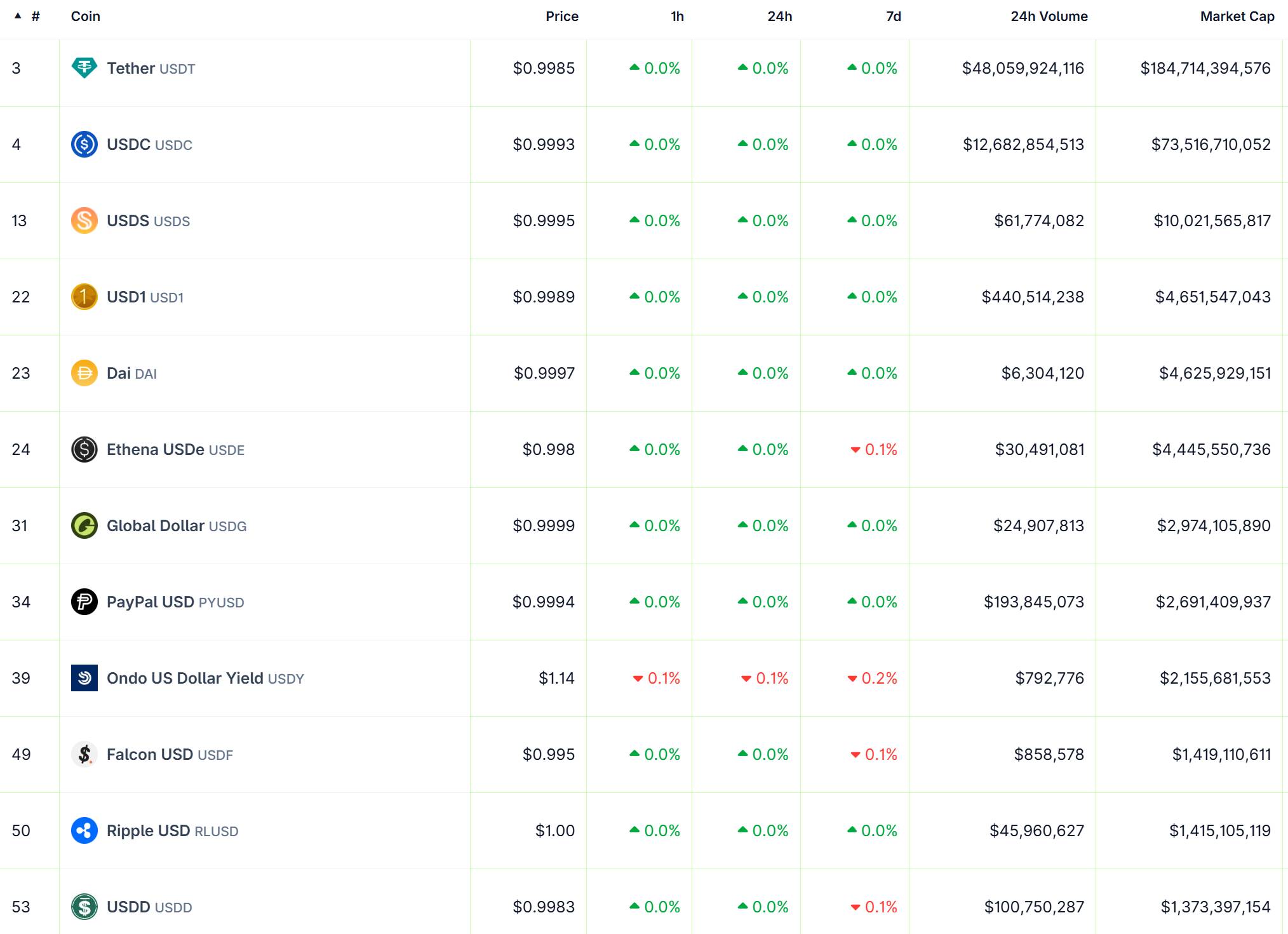
It remains to be seen whether OpenStandard and OUSD will have sufficient strength to challenge USDT and USDC, which currently account for 59.1% and 23.5%, respectively, of the stablecoin sector’s total market capitalisation of $312.3 billion.
Still, the project’s large partner network at launch suggests that those behind it have clearly identified the key factor required to drive stablecoin adoption, drawing lessons from PYUSD. PayPal launched PYUSD in 2023 after recognising the early potential of stablecoins. Its market capitalisation has now reached nearly $2.7 billion, but it has struggled to gain widespread adoption beyond PayPal’s own ecosystem.
Circle CEO Jeremy Allaire quickly responded to the news of OpenStandard’s OUSD launch. He welcomed the arrival of additional players in the stablecoin segment but stressed that Circle remains the leader in institutional adoption and global regulatory compliance.
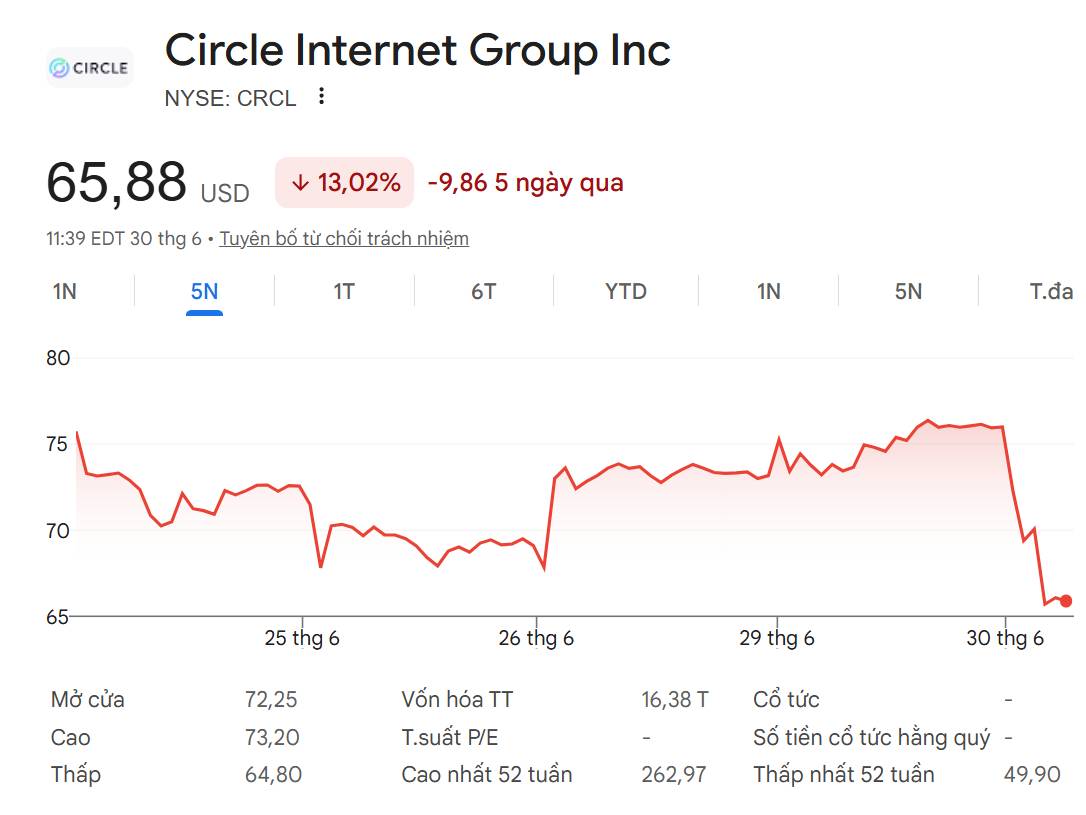
Nevertheless, Circle’s stock price fell by as much as 13% shortly after the US trading session opened on June 30
Conclusion:
OUSD could become one of the most serious institutional stablecoin challengers if its partner network converts into real payment, banking and trading integrations. However, USDT and USDC still benefit from deep liquidity, global user adoption and entrenched market infrastructure, making rapid market-share gains difficult.
To choose a suitable platform for buying, holding or trading stablecoins, explore the cryptocurrency exchange ranking on FORECK.INFO. It features reviewed exchanges, user feedback, information on fees, deposit methods, supported stablecoins and available trading tools.
Before registering, it is important to compare platform conditions, fund-security measures, liquidity, regulatory status and any restrictions that may apply in your country.
