

The Trump-linked project said the change is intended to increase engagement and encourage longer-term responsibility among governance participants. It also adds a financial incentive: users who take part in at least two governance votes during the lock-up period will receive around 2% annual yield on their staked WLFI tokens.
Users who have already locked their tokens will continue voting under the current setup without changes. The move comes amid a wider problem across DAOs, where participation often remains stuck in the 15–25% range.
Attempt to address weak DAO participation
World Liberty Financial is tying voting rights to long-term commitment. In practice, that means governance influence now depends directly on a user’s willingness to freeze capital for almost half a year.
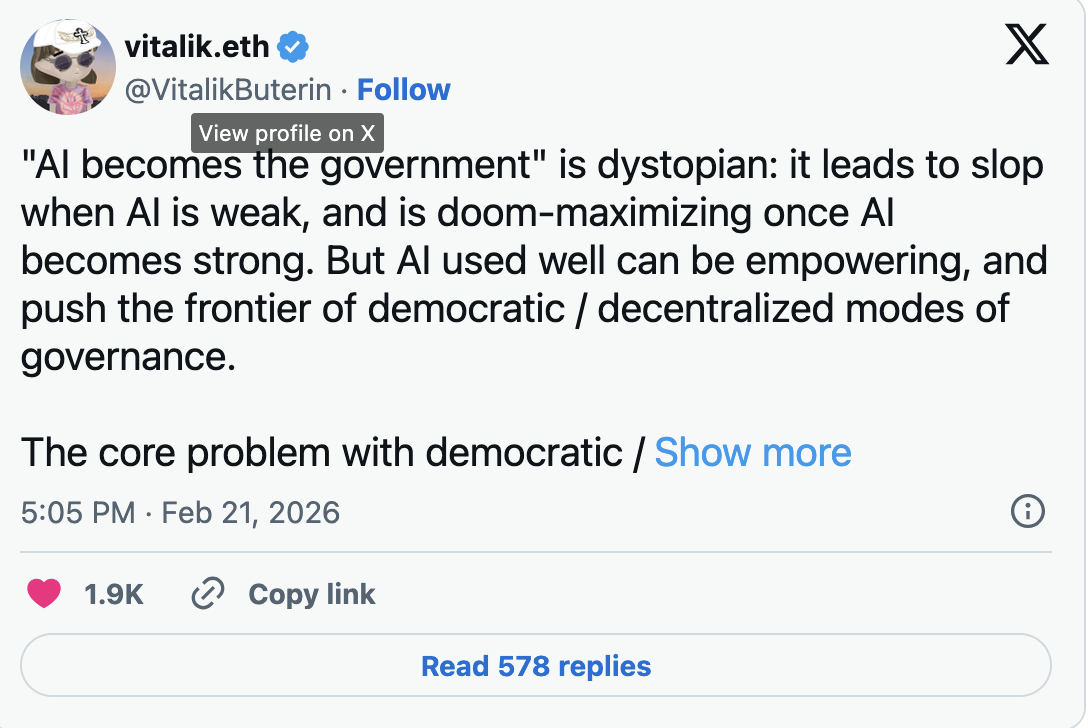
Low participation remains one of the biggest structural problems for most DAOs. Builders have been experimenting with different solutions. Vitalik Buterin, for example, suggested that AI assistants could make it easier for DAO members to vote, while Aave founder Stani Kulechov proposed reducing the influence of token holders in favor of stronger input from leadership teams.
WLFI has chosen a staking-based model, but the key question remains: will stricter conditions actually improve meaningful participation, or simply reduce the number of voters?
Large holders are promised access to the team
The proposal also gives special attention to major token holders. Users who lock at least 50 million WLFI, roughly equal to 5 million dollars, may receive “guaranteed direct access” to the project team.
Later, company spokesperson David Wachsman clarified that this does not mean meetings with specific founders. Instead, he described it as priority access to the business development team and senior executives. These so-called Super Node participants may be able to discuss partnerships and collaboration opportunities.
Even so, the original wording around “guaranteed access” raised questions that the company did not fully address.
The project is expanding its financial ecosystem
World Liberty Financial is continuing to build out its broader crypto ecosystem. At the center of that strategy is the USD1 stablecoin, around which the platform plans to develop a wider financial infrastructure.
Project materials have named Eric Trump, Barron Trump, and Zach and Alex Witkoff among the co-founders. At the same time, some information about the team was later removed from the website after media inquiries.
The company has also applied for a U.S. banking charter and is expanding partnerships with institutional players. Its roadmap includes tokenization of real-world assets such as real estate and energy resources, as well as the launch of a public company that could hold WLFI on its balance sheet.
Criticism and political context
The project is already drawing criticism because of its potential financial ties to the Trump family. According to Reuters, the family may have earned more than 460 million dollars from the project in the first half of 2025 alone.
The White House has said that Donald Trump is not involved in business decisions that could conflict with his official duties and rejected the criticism as unfounded.
Conclusion
WLFI is trying to solve one of the core DAO problems — weak engagement — through a stricter token lock-up model combined with financial incentives.
