

Top Pick
- Fully licensed and regulated US exchange
- Strong focus on security and compliance
- User-friendly interface for beginners

The cryptocurrency market strengthened earlier this week but came under sharp selling pressure on Thursday, erasing much of its previous gains. In the latest market snapshot, Bitcoin (BTC) is trading near 81600.00 (+0.9%), Ethereum (ETH) at 2400.00 (+2.1%), Tether (USDT) at 0.9991 (–0.01%), BNB at 744.00 (+5.1%) and XRP at 1.3250 (+4.8%). Total cryptocurrency market capitalization has declined to approximately $2.73 trillion, while Bitcoin dominance has increased to 60.0%. From October 19 to 22, US spot Bitcoin ETFs recorded net inflows of $439.1 million, while Ethereum ETFs saw outflows of $225.1 million. The market remains volatile despite the recovery attempt discussed in our previous crypto weekly review.

 By John Isige
BitMEX founder Arthur Hayes has publicly characterized Circle’s recent initial public offering as the official kickoff for a new era of “stablecoin mania.” Hayes contends that, far from signaling a mature, saturated market, Circle’s IPO is only the beginning of a frenzied cycle in which a surge of copycat issuers will attempt to emulate Circle’s success.
 By John Isige
On June 16, 2025, the U.S. spot crypto ETF market demonstrated renewed investor appetite, as Bitcoin ETFs registered net inflows of $408.59 million and Ethereum ETFs saw $21.39 million in net new capital.
 By John Isige
CoinShares has formally submitted an S-1 filing to the U.S. Securities and Exchange Commission (SEC), aiming to introduce a spot Solana ETF that uniquely integrates a staking component. This development positions CoinShares as the eighth issuer to enter the increasingly competitive race for a spot Solana ETF, highlighting accelerating institutional momentum behind Solana as an investable asset.
 By John Isige
Nasdaq-listed SRM Entertainment announced a $100 million private investment to launch a corporate treasury strategy centered on TRON’s native token, TRX. The total value of the transaction could increase to $210 million if all associated warrants are exercised.
 By John Isige
Strategy (formerly MicroStrategy) has once again expanded its position in the world’s leading cryptocurrency. In its third major purchase for June 2025, the company acquired 10,100 BTC between June 9 and June 15, investing approximately $1.05 billion. The average purchase price for this tranche stood at $104,800 per bitcoin. The acquisition was financed through revenues from the STRK ATM and STRF ATM programs, as well as the public offering of STRD shares.
 By John Isige
Michael Saylor is making headlines again—this time far from Wall Street. The co-founder of Strategy (formerly MicroStrategy) and one of Bitcoin’s most prominent institutional champions has signaled his willingness to advise the Government of Pakistan on building a national bitcoin reserve. His comments came after a meeting in Islamabad with Finance Minister Muhammad Aurangzeb and Bilal Bin Saqib, Chairman of the Pakistan Crypto Council.
 By John Isige
The global digital asset investment landscape remains robust, recording a ninth straight week of net inflows. From June 9 to June 13, 2025, capital flowing into crypto-based investment products totaled $1.9 billion, according to the latest CoinShares report. This brings the year-to-date tally to an impressive $13.2 billion, underscoring sustained institutional and retail demand for crypto exposure amid a dynamic macro environment.
 By John Isige
The perils of buying “discount” crypto security devices became starkly evident when a crypto investor lost $6.5 million in digital assets after purchasing a counterfeit hardware wallet through Douyin, the Chinese version of TikTok. The incident was first reported by blockchain security firm SlowMist, which warned of rising sophistication among hardware wallet scams.
 By John Isige
The cryptocurrency ETF market saw a robust recovery last week, with spot Bitcoin and Ethereum ETFs in the U.S. finishing on a strong note. Between June 9 and June 13, 2025, Ethereum-based ETFs attracted $528.12 million—the largest weekly net inflow since December 2024. This marks a return to bullish sentiment for the asset class after a prolonged period of subdued flows.
 By John Isige
When IBM lifted the curtain on its Quantum Starling project, the tech world didn't just get a new roadmap—it got a wake-up call. For the first time, a fault-tolerant quantum computer, capable of performing 100 million quantum operations, is within reach, with a launch planned for 2029. While “quantum threat” once felt like science fiction, it’s suddenly moving onto the front lines of the crypto conversation.
 By John Isige
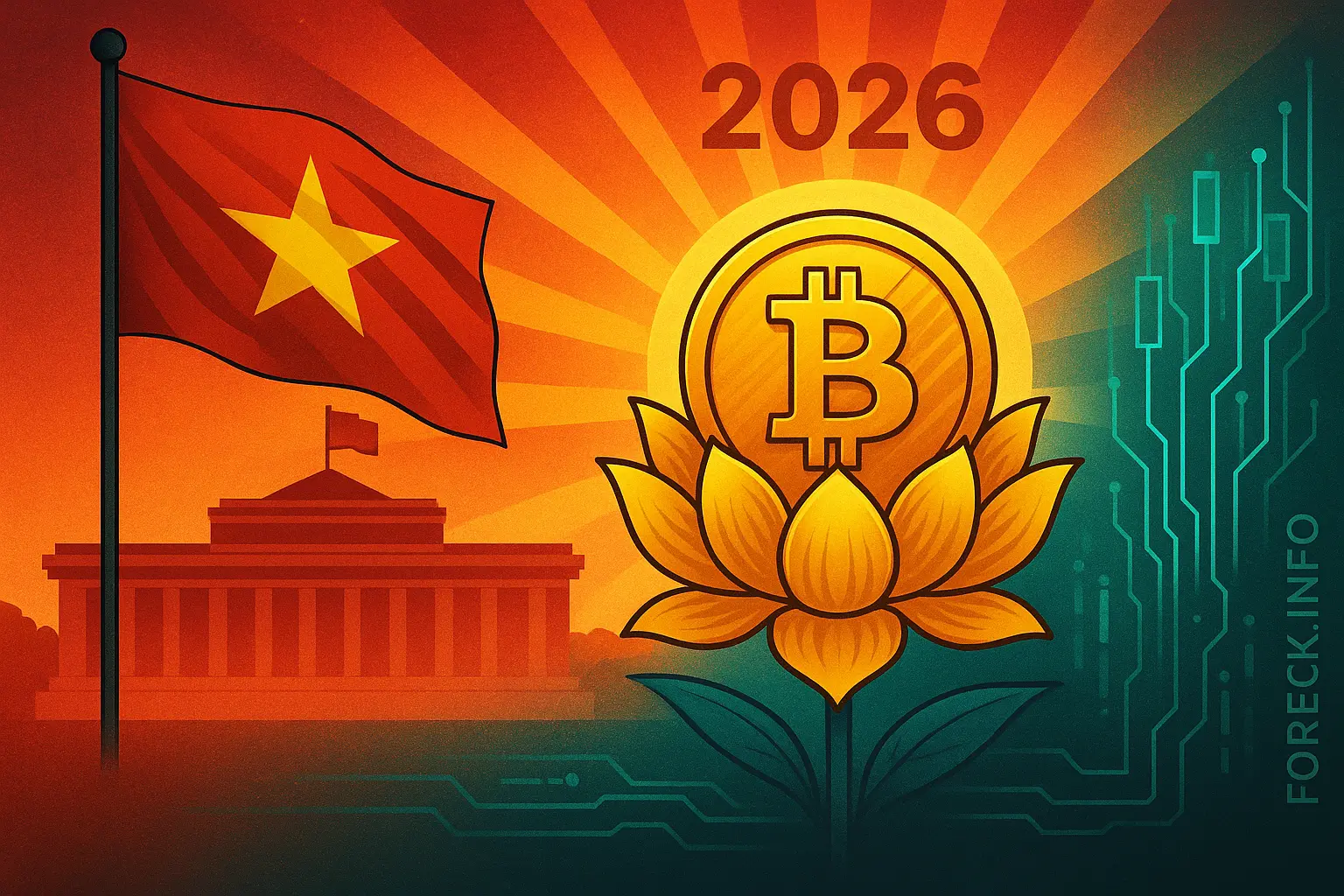
Vietnam’s National Assembly has enacted the landmark Law on Digital Technology Industries, officially legalizing digital assets nationwide. Local media reports confirm that the legislation will come into force on January 1, 2026, positioning Vietnam for a technological breakthrough and a potential exit from the FATF “grey list.”
 By John Isige
IBM has unveiled its updated quantum computing roadmap, announcing a landmark development: the world’s first fault-tolerant quantum computer, dubbed Quantum Starling. Slated for launch in 2029, Starling could mark a turning point for the cryptography securing Bitcoin and the broader blockchain industry, sparking fresh debate about the urgency of quantum threats to digital assets.


For crypto, the framework is similar to traditional financial markets but comes with its own twist. Here, price action turns on liquidity, adoption, regulation, and flows from institutions alongside retail sentiment. Network health—hash rate, staking, active wallets—adds another layer. Macro still matters too: rates, dollar strength, and risk appetite shape inflows and outflows. Then, as with any market, you use the chart—trend, support and resistance, momentum, and volume—to spot setups and manage risk.