
Top Pick

- Fully licensed and regulated US exchange
- Strong focus on security and compliance
- User-friendly interface for beginners

The cryptocurrency market strengthened earlier this week but came under sharp selling pressure on Thursday, erasing much of its previous gains. In the latest market snapshot, Bitcoin (BTC) is trading near 81600.00 (+0.9%), Ethereum (ETH) at 2400.00 (+2.1%), Tether (USDT) at 0.9991 (–0.01%), BNB at 744.00 (+5.1%) and XRP at 1.3250 (+4.8%). Total cryptocurrency market capitalization has declined to approximately $2.73 trillion, while Bitcoin dominance has increased to 60.0%. From October 19 to 22, US spot Bitcoin ETFs recorded net inflows of $439.1 million, while Ethereum ETFs saw outflows of $225.1 million. The market remains volatile despite the recovery attempt discussed in our previous crypto weekly review.

 By John Isige
 South Korean authorities are investigating a major incident involving crypto exchange Upbit. During an unauthorized early-morning operation at approximately 4:42 a.m., cryptocurrencies worth 44.5 billion won (around $30.6 million) were transferred to an unknown wallet.
 By John Isige
 Bitwise has submitted an updated application to the U.S. Securities and Exchange Commission (SEC) to launch a spot Avalanche ETF, placing a strong emphasis on staking and yield generation. The filing uses the ticker BAVA, and the fund’s structure allows up to 70% of its AVAX holdings to be deployed in staking.
 By John Isige
 Cathie Wood said that the current “liquidity squeeze,” which is weighing on both the artificial intelligence sector and crypto markets, could begin to reverse in the coming weeks.

 By Andrew Bennett
 Ripple has announced that its US dollar-backed stablecoin, RLUSD, has been officially granted the status of an Accepted Fiat-Referenced Token within the Abu Dhabi Global Market (ADGM). The approval was issued by the Financial Services Regulatory Authority (FSRA), allowing licensed market participants to use RLUSD for regulated activities in full compliance with local requirements. This decision adds fresh momentum to Ripple’s strategy of expanding its stablecoin footprint across the Middle East.
 By John Isige
 This week, the SOL/USD pair is correcting toward a medium-term downtrend, trading around 142.96 (the middle Bollinger Band, 23.6% Fibonacci retracement) amid expectations of changes to the U.S. Federal Reserve’s interest rate policy.
 By John Isige
 BitMine, an Ethereum-focused company founded by Tom Lee, has acquired 70,000 ETH worth around 20 million USD. However, the well-known “Ethereum bull” is now facing a serious problem.
 By John Isige
 The recent Bitcoin correction has thrown many investors into panic. Here’s what really caused the crypto crash – and why the BTC price could still fall further.
 By John Isige
 The ETH/USD pair continues to form a medium-term downtrend, correcting toward the long-term upward trend.
 By John Isige
 Following last week’s massive sell-off, Bitcoin continues to recover at the start of the new week. Investors are hoping for a trend reversal.
 By John Isige
 Last week, the BTC/USD pair tested the 81,250.00 level (Murray level [1/8]), but over the weekend it managed to recover part of its losses and returned to the 87,500.00 area (Murray level [2/8]).
 By John Isige
 Over the past few months, Bitcoin and the entire crypto market have been behaving in a strange way: there has been a drop, there has been volatility, and there has been plenty of panic — but the kind of strong, confident rebound everyone was used to in previous cycles never really happened. The reason is not only about Fed rates or “market fatigue.” Something far more significant has been happening under the surface — related to DAT companies and a decision by the index provider MSCI.
 By Sagar Dua
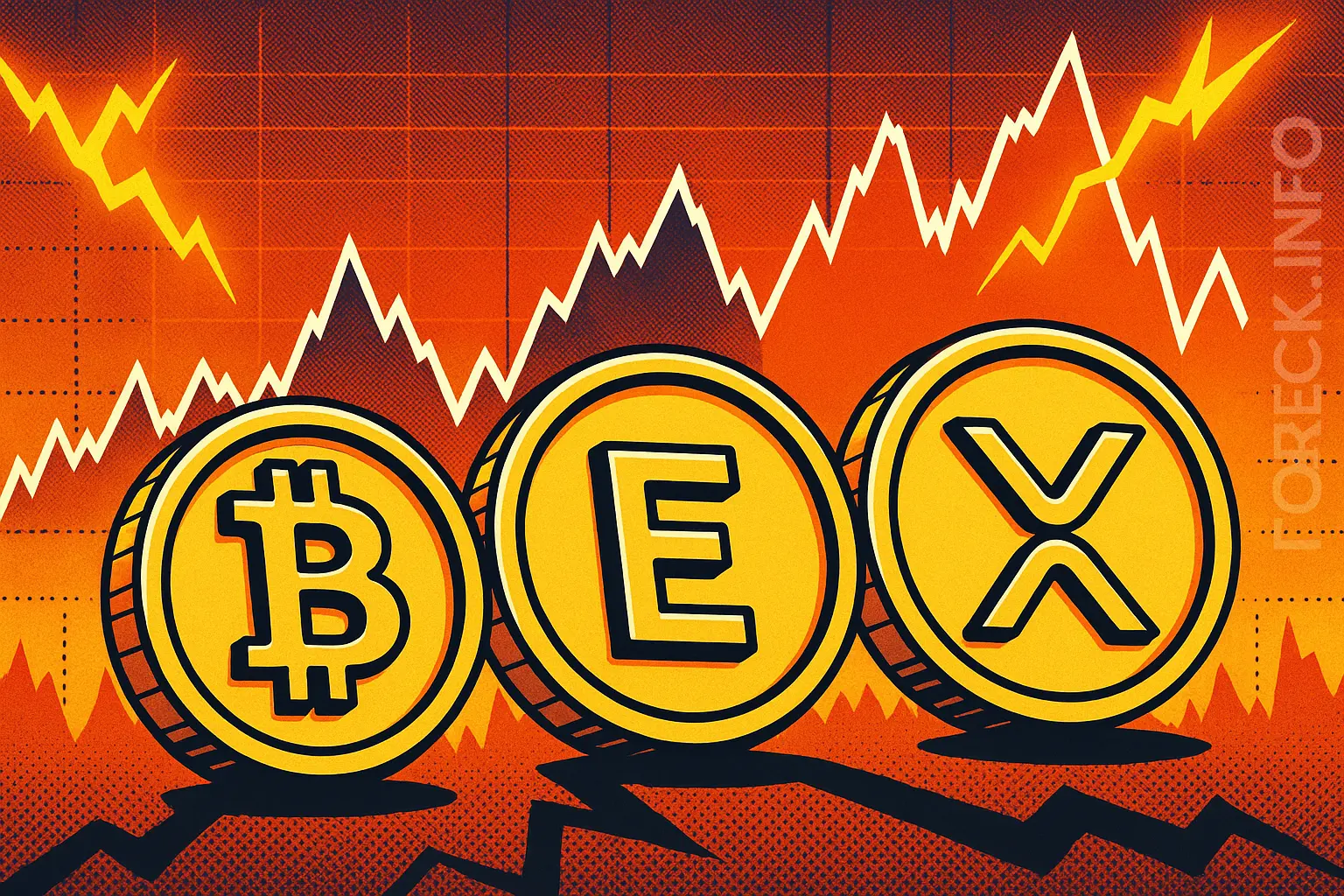
 This week, leading digital assets are approaching multi-month lows: BTC is trading around 85,500.00 (–8.6%), ETH near 2,780.00 (–9.7%), USDT around 1.0005 (–0.07%), XRP at 1.9600 (–10.6%), and BNB at 850.00 (–7.1%). Total market capitalization has declined to $2.93 trillion, while BTC’s dominance has dropped to 58.2%. At the same time, Bitcoin ETF balances have decreased by $1.4552 billion and Ethereum ETFs by $555.9 million.


For crypto, the framework is similar to traditional financial markets but comes with its own twist. Here, price action turns on liquidity, adoption, regulation, and flows from institutions alongside retail sentiment. Network health—hash rate, staking, active wallets—adds another layer. Macro still matters too: rates, dollar strength, and risk appetite shape inflows and outflows. Then, as with any market, you use the chart—trend, support and resistance, momentum, and volume—to spot setups and manage risk.