
Top Pick

- Fully licensed and regulated US exchange
- Strong focus on security and compliance
- User-friendly interface for beginners

The cryptocurrency market strengthened earlier this week but came under sharp selling pressure on Thursday, erasing much of its previous gains. In the latest market snapshot, Bitcoin (BTC) is trading near 81600.00 (+0.9%), Ethereum (ETH) at 2400.00 (+2.1%), Tether (USDT) at 0.9991 (–0.01%), BNB at 744.00 (+5.1%) and XRP at 1.3250 (+4.8%). Total cryptocurrency market capitalization has declined to approximately $2.73 trillion, while Bitcoin dominance has increased to 60.0%. From October 19 to 22, US spot Bitcoin ETFs recorded net inflows of $439.1 million, while Ethereum ETFs saw outflows of $225.1 million. The market remains volatile despite the recovery attempt discussed in our previous crypto weekly review.

 By John Isige
 Last week, the BTC/USD pair resumed its strong upward movement, setting new all-time highs near 125,700.00 over the weekend. Bitcoin’s total market capitalization briefly surpassed 2.5 trillion dollars for the first time, driven by both political and monetary developments.
 By John Isige
 New Morgan Stanley Guidelines: How Much Crypto Should You Hold?
 By John Isige
 Bitcoin Breaks Records — But BNB Hits a New All-Time High Too

 By Andrew Bennett
 Bitcoin’s Uptober Frenzy: Are New Highs Just Days Away? Bitcoin is on fire again — up more than 14% this week and now hovering near its record high of $124,500. The leading cryptocurrency is trading around $122,555, showing strong bullish momentum after breaking key resistance levels. Analysts say October’s famous “Uptober” trend could once again push the market to new highs.
 By John Isige
 Bitcoin made history once again, breaking its previous August 2025 high of $125,000. The leading cryptocurrency gained several percent in the past 24 hours, reinforcing its position as the market leader and confirming the seasonal pattern known as “Uptober” — a traditionally strong month for BTC.
 By Andrew Bennett
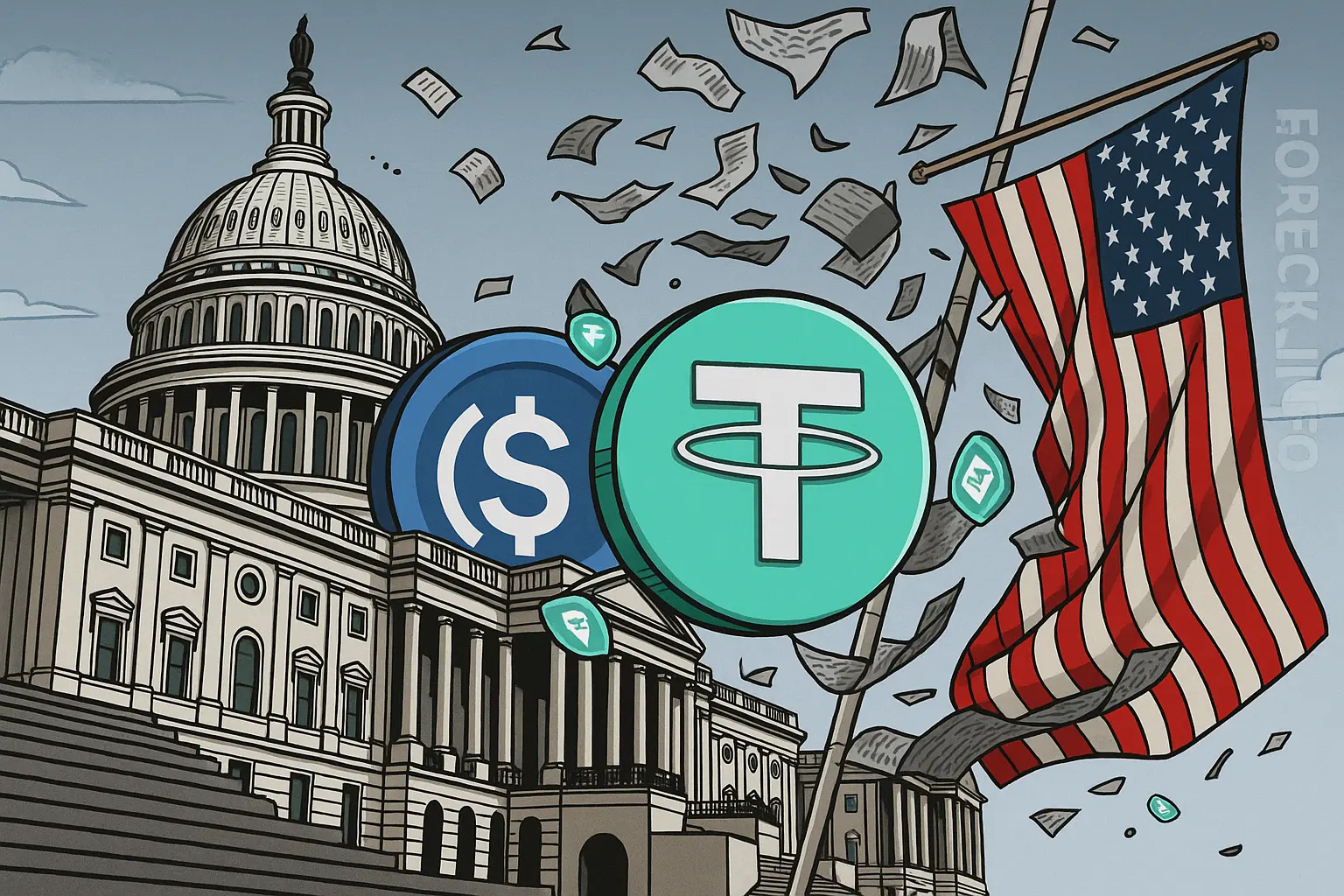
 Stablecoins have become a cornerstone of the crypto economy. Their combined market cap now exceeds $301 billion, and the biggest tokens have cemented their place among the top 10 digital assets. For many users, “stable” coins are a convenient way to store funds, bypass restrictions, and make cross-border payments.
 By John Isige
 U.S. Government Shutdown and Its Ripple Effect on Crypto The ongoing shutdown is shaking up markets, stalling the release of crucial economic data like the Non-Farm Payrolls (NFP) report.
 By John Isige
 This week, the cryptocurrency market regained ground lost in the second half of last month: Bitcoin is trading around 120,000.00 (+8.3%), ETH at 4,500.00 (+11.1%), while XRP climbed to third place by market capitalization, pushing stablecoin USDT to fourth, with quotes at 3.0200 (+6.1%) and 1.0005 (+0.01%) respectively. BNB is trading near 1,087.00 (+9.8%). Overall market capitalization rose to $4.12 trillion, with Bitcoin’s dominance at 58.0%. Bitcoin ETFs added $2.25 trillion in assets, while Ethereum ETFs saw inflows of $1.79 trillion.
 By Andrew Bennett
 Canary Capital’s spot Litecoin ETF has hit a roadblock after the SEC blew past its October 2nd deadline. The timing couldn’t be worse: a partial government shutdown has left investors in the dark, with no clarity on when approvals will move forward or how the new listing rules will shape the dozens of crypto ETF applications piling up. The launch still looks possible — but not anytime soon.
 By Andrew Bennett
 Crypto Market Update: Ethereum Tops $4,500, BNB Hits Records. Bitcoin holds steady above $120,000 as altcoins surge, fueling speculation that the long-awaited crypto bull run has begun.
 By John Isige
 The altcoin market is once again approaching its 2021 levels: is it ready for a breakout? Altcoin capitalization has come close to the historic marks last seen in 2021, fueling expectations across the crypto community. The market is currently valued at $1.66 trillion, just below the $1.71 trillion record, a level many analysts view as the starting point for a new growth phase.
 By John Isige
 The SOL/USD pair continues to move within a long-term uptrend, forming a corresponding ascending channel. Last week, the price corrected to five-week lows around 190.95, after which it resumed growth and is currently testing the middle Bollinger Band line at 224.70. A breakout above this level could pave the way toward 250.00 (Murray level [8/8]) and 265.62 (Murray level [+1/8], the upper boundary of the ascending channel). However, consolidation below 203.12 (Murray level [5/8], 61.8% Fibonacci retracement) may lead to a decline toward 183.80 (50.0% Fibonacci retracement) and 171.88 (Murray level [3/8]), potentially signaling an exit from the channel.


For crypto, the framework is similar to traditional financial markets but comes with its own twist. Here, price action turns on liquidity, adoption, regulation, and flows from institutions alongside retail sentiment. Network health—hash rate, staking, active wallets—adds another layer. Macro still matters too: rates, dollar strength, and risk appetite shape inflows and outflows. Then, as with any market, you use the chart—trend, support and resistance, momentum, and volume—to spot setups and manage risk.