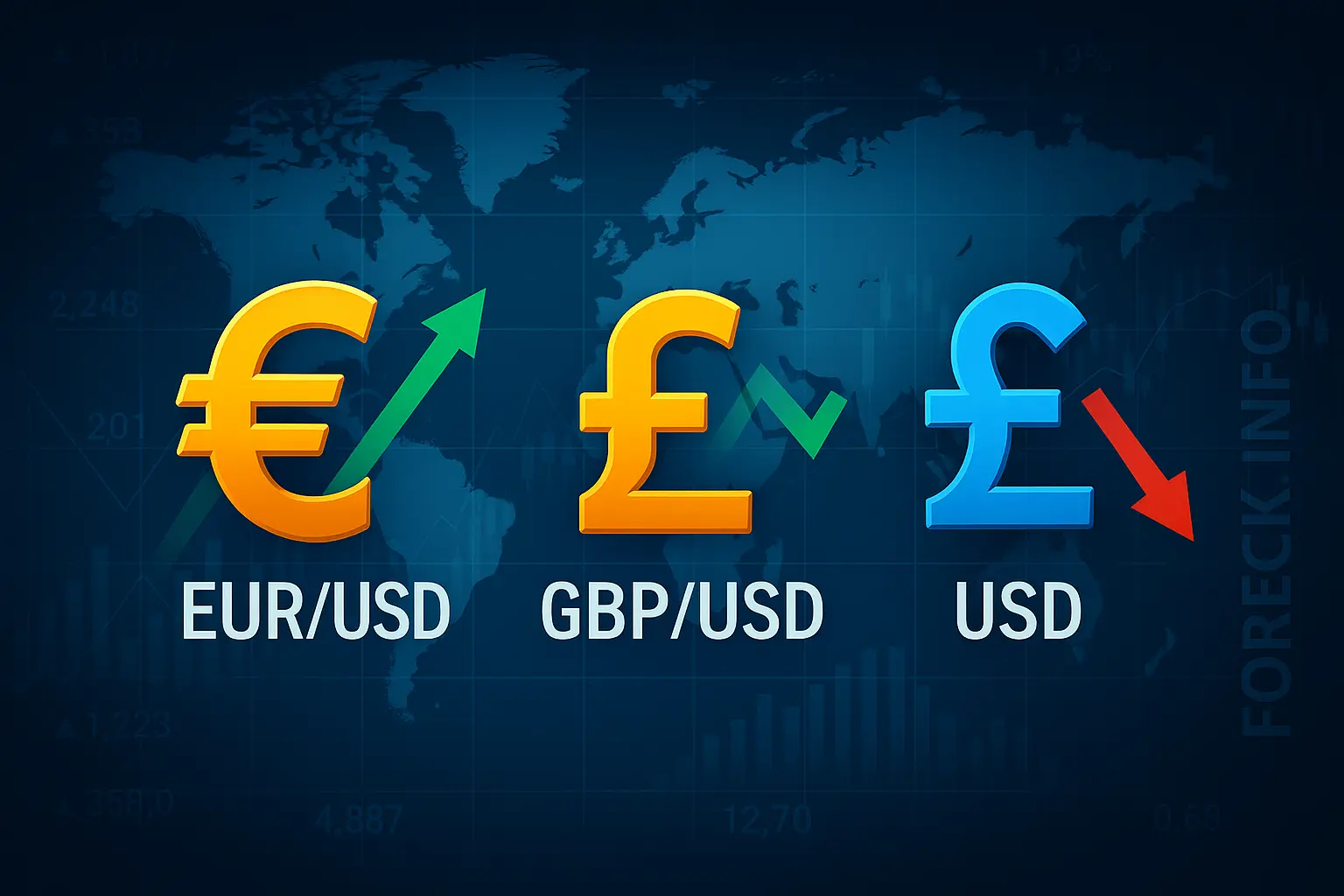
The US dollar strengthened against the euro, sterling and yen ahead of Kevin Warsh’s Jackson Hole speech on August 28. The Australian dollar outperformed its major peers, while oil slipped as traders weighed Washington’s shift towards economic pressure on Iran.
During the Asian session, USD/JPY is consolidating around 147.82 as traders digest the latest Bank of Japan (BoJ) meeting outcome. The BoJ left its key policy rate unchanged at 0.50%, reiterating its commitment to a hawkish stance if economic growth and inflation projections are met. Officials highlighted that wage indexation remains a critical factor for achieving the 2.0% inflation target. BoJ Governor Kazuo Ueda also noted that the recent US-Japan trade agreement, particularly the revision of import tariffs on Japanese autos, has reduced uncertainty for Japan’s export-driven economy and alleviated some of the constraints on future policy tightening. Following the BoJ meeting, the quarterly “Outlook for Economic Activity and Prices” report raised the core CPI growth forecast for the 2025 fiscal year from 2.2% to 2.7%.
United States. The US dollar is losing ground against the euro, yen, and pound as forex participants digest weaker-than-expected July labor data. Unemployment rose from 4.1% to 4.2%, nonfarm payrolls reached just 77,000 (versus a 106,000 forecast), and the prior month’s figure was sharply revised down from 147,000 to 14,000. Healthcare led hiring (+55,000), while government jobs dropped by 12,000. Average hourly earnings met expectations at 0.3% m/m, and rose 3.9% y/y (vs. 3.8% expected). Amid cooling labor momentum, the Fed faces a trade-off between curbing inflation and avoiding recession. Meanwhile, President Trump raised tariffs for Canada (35%), Taiwan (20%), and India (25%), with more duties on other trading partners taking effect today.
GBP/USD continues to extend its decline, with the pair posting fresh three-month lows this week. Currently, price is attempting to establish a long-term bearish trend, trading below 1.3184 (Murray [0/8], 38.2% Fibonacci retracement). Sustained downside could open the way to further losses toward the 1.2975 (50% Fib) and 1.2785 (61.8% Fib) zones.
The USD/CAD pair continues its rally for the seventh straight session, now approaching key resistance at 1.3860. This advance marks the strongest weekly US dollar surge (+2.57%) since 2022, driven by hawkish Fed policy, resilient labor data, and a dovish turn from the Bank of Canada.
The EUR/USD pair has been under intense downward pressure this week, sliding to the 1.1400 zone as a combination of trade and monetary factors erode support for the euro.
Edwards: “Everything Bubble” Near Breaking Point. Prominent US market analyst Albert Edwards, known for prescient warnings ahead of the Dotcom collapse and the 2008 financial crisis, is once again sounding the alarm on Wall Street. In his latest note, the Société Générale strategist highlights what he describes as an “Everything Bubble” threatening both equities and real estate across the United States.
JPMorgan Downgrades PG as Consumer Headwinds Weigh. Shares of The Procter & Gamble Co. (PG), a global leader in consumer staples, are trading near $158.00 after JPMorgan Chase & Co. lowered its rating from "Overweight" to "Neutral." The downgrade reflects concerns over weakening consumer demand, which analysts expect may erode further toward year-end as a result of the US’s tougher trade stance with international partners.
US Dollar Strengthens on Major Trade Developments. The US dollar is strengthening against the euro, pound, and yen as markets react to the newly announced US–EU trade agreement.
Recent Analysis on Forex, Gold, Oil & Global Markets
Latest Forex and commodity market news, analysis, and trends from FORECK.INFO. Markets are driven by macro data, central bank decisions, earnings, and supply-demand factors. Technical analysis helps identify trends, key levels, and potential trading opportunities while managing risk.