

Then came Justin Sun's marketing stunts — the Warren Buffett lunch, the acquisition of BitTorrent, later the million-dollar banana. For years, Tron looked like a project that ran on attention rather than real utility. Today, however, Tron is one of the most important stablecoin rails in crypto. More than $80 billion in USDT circulates on the chain — at times more than on Ethereum itself. And TRX, the native token, is one of the few altcoins trading near its all-time high. So what is the success formula behind this controversial project?
Tron Is Not Cheap — It Is Convenient
Tron is not the cheapest chain. A USDT transfer can cost regular users around $2 to $4. Ethereum mainnet is actually cheaper during calm periods, and Layer 2s and Solana are cheaper still. Yet Tron remains the default for millions of users. The reason lies in the fee model.
Unlike Ethereum, where users pay gas in ETH, Tron splits its fee structure into two components: Bandwidth and Energy. Bandwidth covers the data footprint of a transaction and is often sufficient for simple TRX transfers. Smart contract execution, however, requires Energy — and since USDT runs on Tron as a TRC-20 token, every USDT transfer is a smart contract interaction. Users who hold no Energy pay indirectly in TRX, which is subsequently burned.
Power users can stake TRX or rent Energy from third-party providers, significantly reducing costs. Casual users typically do neither. They click send, accept the wallet fee, and pay full price. Tron, in effect, monetizes user convenience and lack of technical knowledge. Those who understand the system optimize. Those who simply want to send USDT pay. For users, that is relatively expensive. For the network, it is highly profitable.
The Difference From Ethereum
Tron's fee model directly links stablecoin usage to TRX demand. When users hold no Energy, TRX is burned. With millions of transactions per day, this creates a permanent value transfer in favor of TRX holders. That distinguishes Justin Sun's network from most other chains. Ethereum introduced its own burn mechanism with EIP-1559, but a significant portion of activity has since migrated to Layer 2s — which makes strategic sense for Ethereum's scaling roadmap but reduces fee revenue on the mainnet.
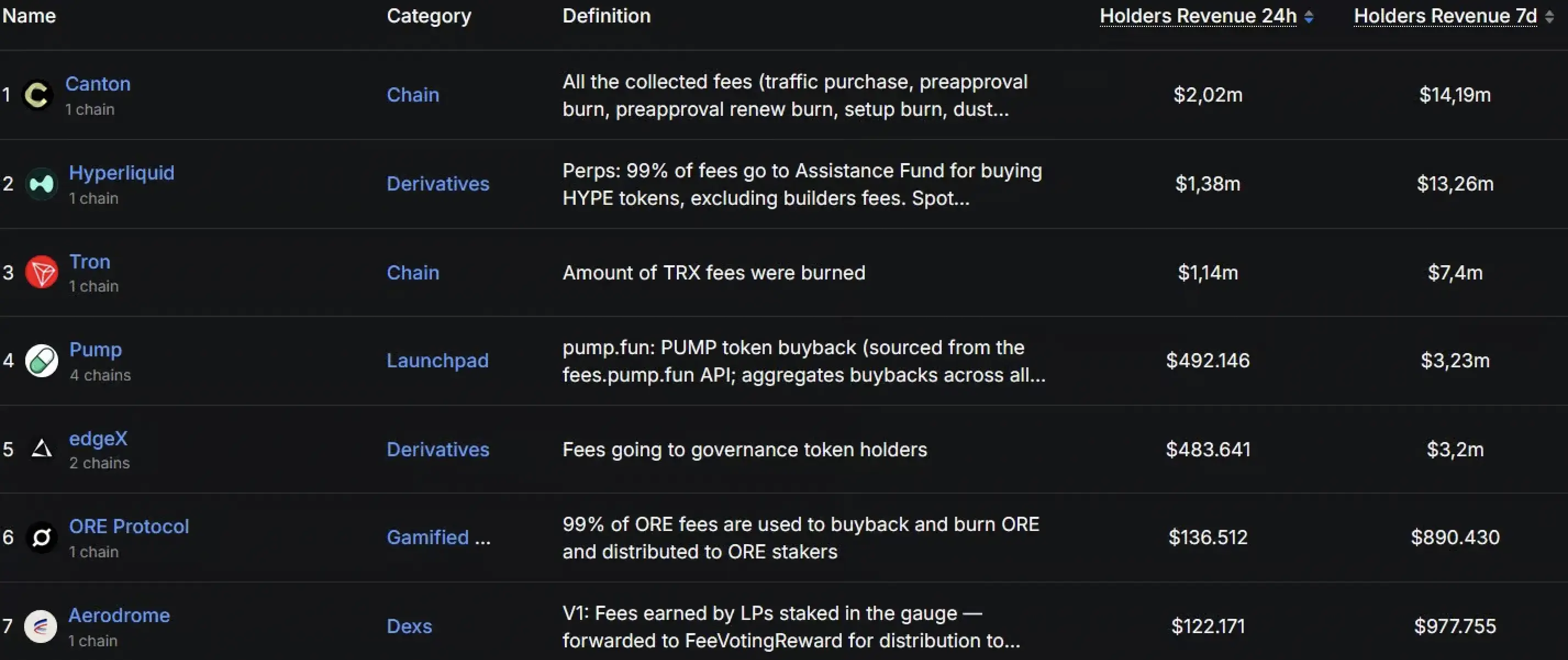
Tron keeps USDT flow on its own chain. This is why Tron consistently appears at the top of revenue rankings. Estimates put the fees generated by the network in 2025 alone at several billion US dollars.
Tron's Success Formula
The project has also built powerful network effects. Millions of users across Asia, Latin America, Africa, and parts of Europe know USDT on Tron as the default standard. The formula that explains Justin Sun's unlikely success can be summarized as follows: TRX is a component of a fee machine. Every unoptimized USDT transfer consumes TRX. Every new stablecoin user increases the value of the existing payment infrastructure. Every exchange and every wallet that adds TRC-20 support deepens the lock-in.
What began as an Ethereum copy has become a centralized, frequently criticized, but enormously profitable stablecoin rail. Ethereum built ideologically clean infrastructure for the crypto future. Tron occupied the payments of the present with pragmatism. In the current crypto market, it is the latter that is being rewarded — though some analysts suggest that the unusually poor sentiment surrounding Ethereum today may itself be a bottom signal for ETH.
