

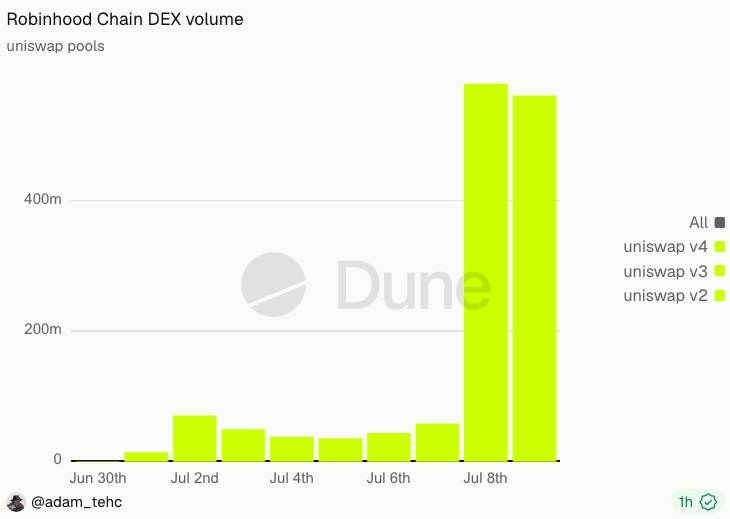
According to Dune data compiled by @adam_tehc, Robinhood Chain — a layer-2 network built using Arbitrum Orbit technology — recorded more than $540 million in trading volume on July 8, followed by another $350 million the next day. As a result, cumulative trading volume across Robinhood Chain’s decentralized exchanges surpassed $1 billion in just two days. During its first week of operation, the amount of stablecoins on the network also quickly exceeded $260 million.
Under a partnership agreement shared on X by Offchain Labs co-founder Steven Goldfeder, 10% of Robinhood Chain’s net protocol revenue will be allocated back to the Arbitrum ecosystem. Of this amount, 8% will be directed to the Arbitrum DAO treasury, while 2% will go to the Developer Guild to support ecosystem development.
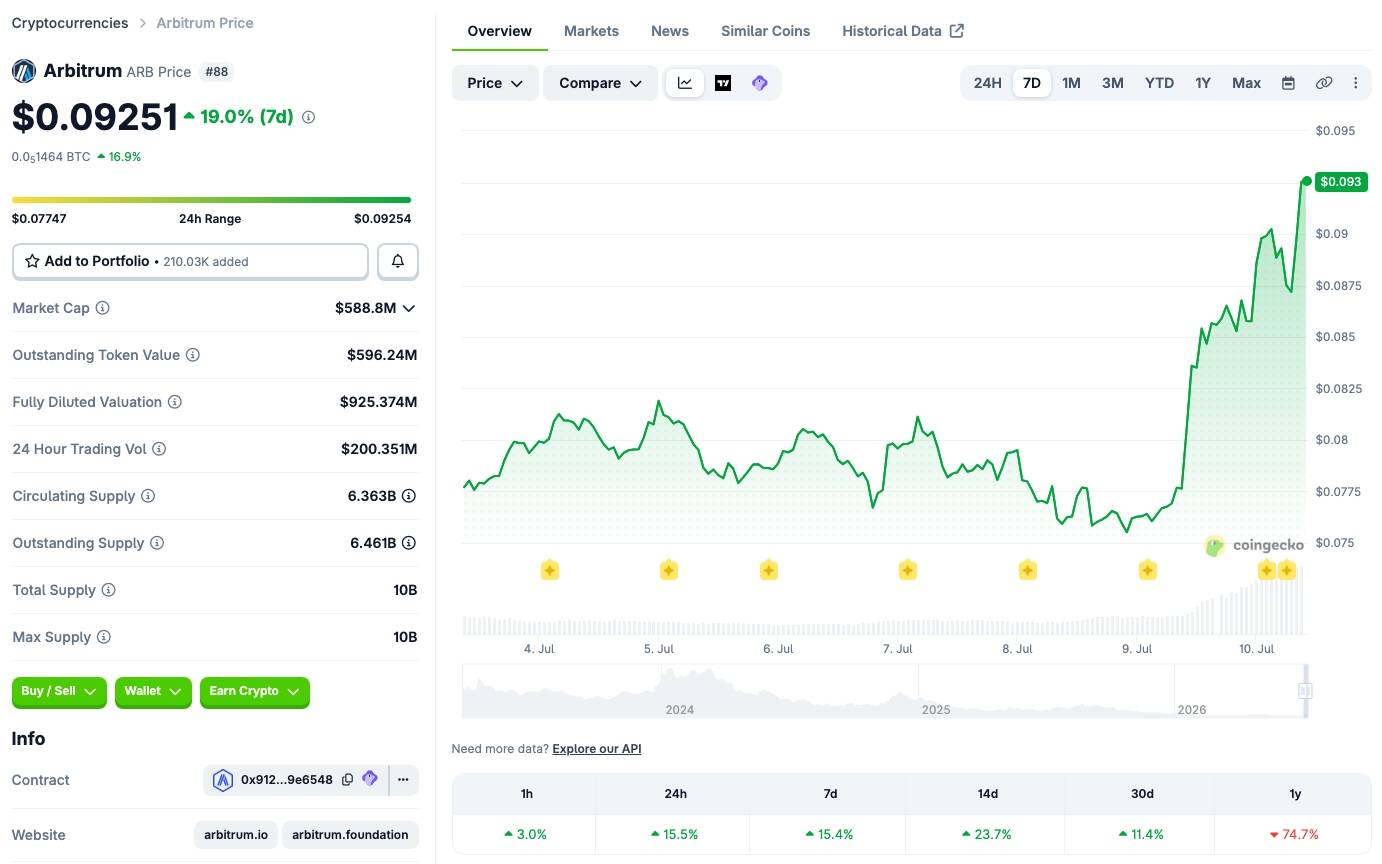
The price of Arbitrum’s ARB token has risen by nearly 20% over the past 24 hours, making it the strongest-performing asset among the 100 largest cryptocurrencies by market capitalization. By comparison, Bitcoin gained only 3%, while Ethereum increased by a modest 2.6%.
Arbitrum now has an additional revenue stream from enterprise blockchains built using the Orbit technology stack, creating a business model that increasingly resembles that of an infrastructure provider.
Robinhood Chain’s growth is also significantly exceeding expectations. In April, FalconX estimated that the blockchain would generate only around $1.1 million in transaction fees during its first six months. However, according to Brendan Ma, Head of Investment Strategy at the Arbitrum Foundation, if the network maintains its current pace, Robinhood Chain is already operating at an annualized revenue rate of more than $12.5 million.
However, most of the current activity is still concentrated around memecoin trading. The most notable example is CASHCAT. During its first 24 hours, the memecoin surged by as much as 1,500%, pushing its market capitalization above $140 million and quickly becoming the most actively traded token on Robinhood’s new network.
Robinhood first unveiled Robinhood Chain at an event in London, presenting it as a central part of the company’s digital asset expansion strategy. However, the blockchain is only one component of a much broader plan.
At the same time, the company announced an expansion of tokenized US stock trading for customers in more than 120 countries, launched a DeFi savings product through the Morpho protocol, and revealed plans to develop AI-powered trading services, tokenized real-world assets, or RWAs, and additional categories of digital assets.
FalconX projects that Robinhood Chain’s annual transaction fee revenue could reach approximately $60 million by 2030 as users expand beyond tokenized stock trading into DeFi applications and other on-chain services. Arbitrum would also benefit directly from the revenue-sharing mechanism and the resulting increase in activity across the broader ecosystem.
This trend is unfolding alongside BlackRock’s continued expansion of its tokenized BUIDL fund, Coinbase’s growth of the Base ecosystem and launch of fully backed 1:1 tokenized stocks with dividend support, and Kraken’s development of on-chain trading products.
Meanwhile, global banks such as JPMorgan and Standard Chartered continue to expand their blockchain initiatives focused on payments and digital assets.
conclusion: Robinhood Chain’s early performance demonstrates how enterprise-focused layer-2 networks can generate meaningful activity and recurring infrastructure revenue. However, the network’s long-term success will depend on whether activity expands beyond speculative memecoin trading into tokenized equities, DeFi and real-world assets.
