

The project is no longer a laboratory experiment, as it has already processed real funds between Hyundai subsidiaries. Justin Kim, APAC Director at Ava Labs, confirmed that the initiative is a genuine corporate treasury management use case.
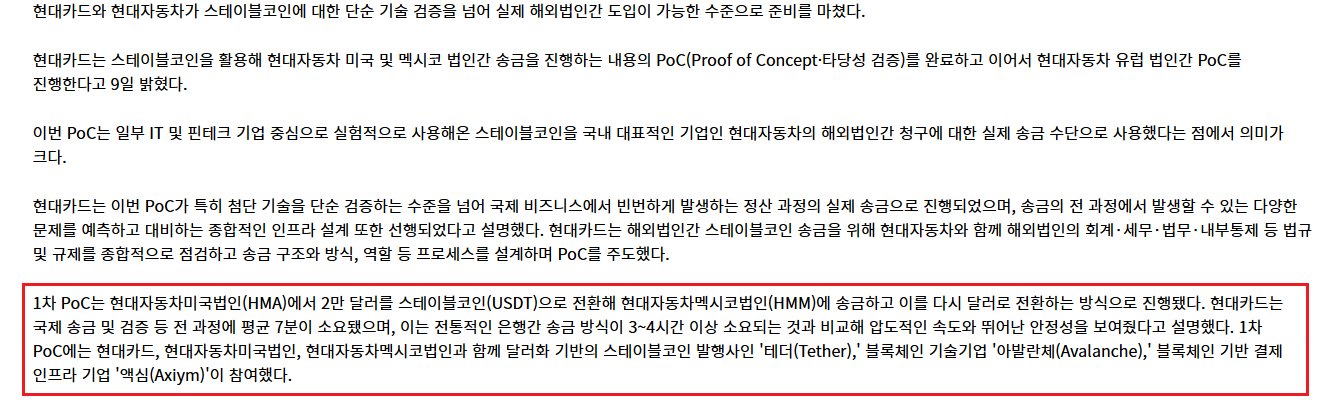
During the initial phase, Hyundai Motor America transferred 20,000 USD to Hyundai Motor Mexico by converting US dollars into Tether’s USDT, sending the assets through the Avalanche network and converting them back into US dollars at the receiving end. The entire process took an average of around seven minutes, while traditional international bank transfers usually require between three and four hours to complete.
The project is being led by Hyundai Card, the group’s financial services subsidiary. In addition to Avalanche and Tether, the pilot also involves Axiym, a company providing blockchain payment infrastructure. Hyundai Card was responsible for the full legal and tax assessment, internal controls and payment process design to ensure that the system meets the operational requirements of a global corporation.
According to the company’s plans, the project will soon be expanded to additional international payment corridors and will support more local currencies alongside the US dollar. Later this month, Hyundai will launch a second pilot between its European subsidiaries with the participation of Circle, the issuer of USDC, and Visa. The new phase will evaluate multicurrency transfers and opportunities to reduce foreign exchange costs.
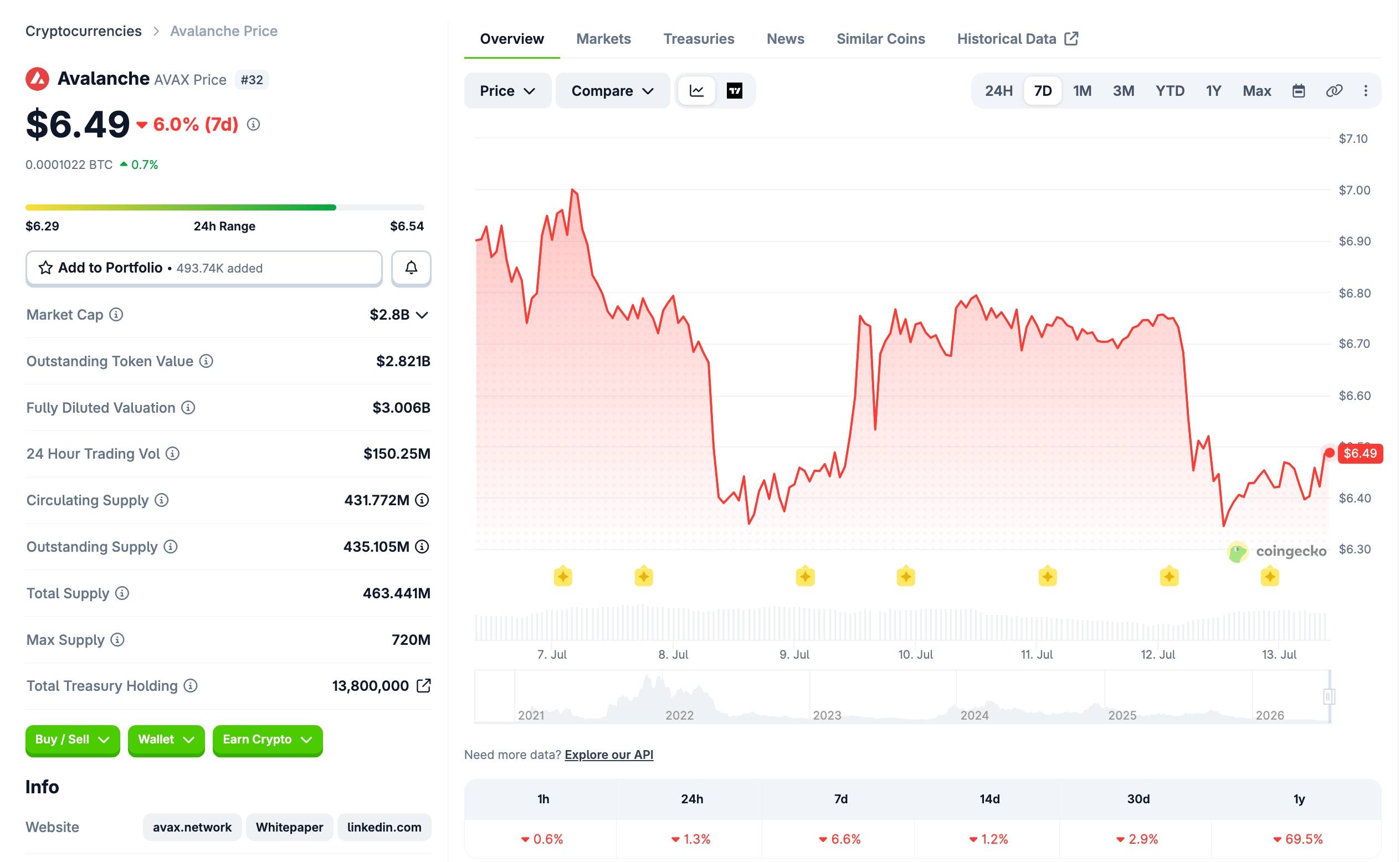
Hyundai’s initiative has not yet produced a positive effect on the Avalanche ecosystem. Following the announcement, the AVAX price remained under pressure from the broader correction in the cryptocurrency market. AVAX is currently trading near 6.4 USD, down 6% over the past week, with a market capitalisation of approximately 2.8 billion USD.
Over the past year, stablecoins have gradually moved beyond the cryptocurrency market and into corporate finance. Visa has been one of the leading companies in this trend. In April, the US payments company reported that its stablecoin settlement programme had reached an annualised processing volume equivalent to 7 billion USD. Visa also expanded support to nine blockchains to meet growing demand from banks and businesses.
Сonclusion: Hyundai’s use of stablecoins shows that blockchain payments are moving into real corporate treasury operations. Faster settlement and lower foreign exchange costs could encourage more global companies to adopt similar systems.
