
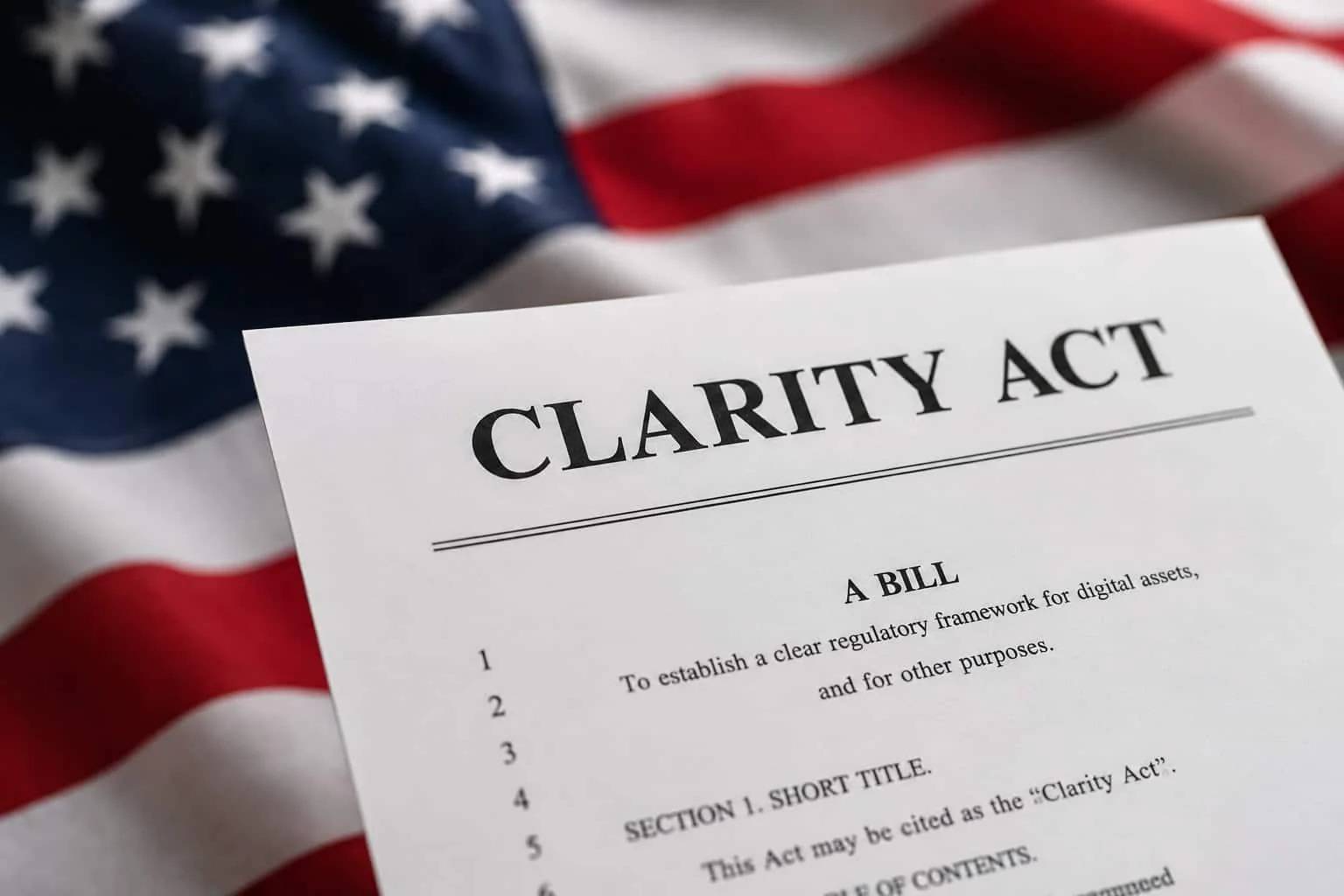
CLARITY Act Will Have to Wait Until September
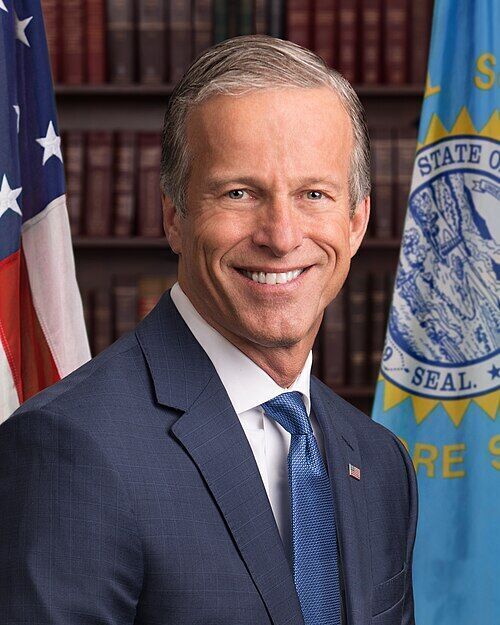
Senate Majority Leader John Thune confirmed late on August 6 that the chamber would not hold a CLARITY Act vote before leaving Washington. He said the legislation would be placed near the front of the agenda when senators return in September. The Senate’s scheduled state work period runs from August 10 through September 11, with lawmakers due back in Washington on September 14. That leaves supporters of the bill several weeks to resolve disputes that proved impossible to settle before the break. One procedural question is whether Thune files a cloture motion before senators leave. Doing so could allow the first procedural vote as early as September 15. If leadership waits until the Senate returns, the earliest vote would likely slip to September 16 under normal Senate timing rules.
There is still no guarantee that the legislation will reach a final vote immediately. September is already crowded with government funding, nominations and other major bills, while the November midterm elections are rapidly approaching.
The Real Problem Is the Vote Count
The delay is no longer mainly about drafting technical crypto rules. Much of the market-structure work has already moved through Senate committees, but leadership still does not appear to have enough support to bring the legislation comfortably across the finish line. The Senate Banking Committee advanced its version of the CLARITY Act in May by a bipartisan 15–9 vote. Earlier in the year, the Senate Agriculture Committee approved the Digital Commodity Intermediaries Act, a companion market-structure bill that builds on the House-passed CLARITY framework and would expand the Commodity Futures Trading Commission’s authority over digital commodity spot markets.
Those measures still need to be reconciled into legislation that can survive the Senate floor.
The much-discussed 60-vote threshold refers to cloture — the procedure normally required to end debate and overcome a filibuster. Final passage can occur by a simple majority once that procedural hurdle has been cleared. In practice, however, the bill needs meaningful support from both parties because Republicans do not have 60 seats on their own. As the Senate headed toward recess, it was unclear whether CLARITY could even command 50 votes in its current form. Some Republicans have raised objections of their own, while Democrats continue to demand tougher ethics and enforcement provisions.
Trump’s Crypto Business Has Become the Hardest Political Issue
The biggest remaining dispute is no longer an obscure question about token classification. It is President Donald Trump’s personal connection to the crypto industry.
Trump reported more than $1.4 billion in income from family-linked cryptocurrency ventures in 2025, according to his latest financial disclosures. That figure has intensified Democratic demands for rules preventing senior government officials from benefiting financially from digital-asset businesses while shaping crypto policy. A Senate Republican draft released in July already added substantial crypto ethics restrictions, including provisions aimed at preventing federal officials, employees and their spouses from issuing or sponsoring digital assets.
For several Democrats, that still does not go far enough.
Senators Ruben Gallego and Thom Tillis developed a separate compromise proposal and sent it to the White House at the end of July. The full language has not been released publicly. According to reporting by Bloomberg and Reuters, the proposal includes a requirement that the president divest from crypto-related businesses.
The White House had not publicly accepted or rejected that proposal as of August 7. The issue is especially sensitive because some Democratic votes considered essential to advancing CLARITY are tied to stronger conflict-of-interest protections.
Stablecoin Rewards Are Still Not Completely Settled
Ethics is the most visible obstacle, but it is not the only one. Lawmakers are also still discussing provisions covering illicit finance, law-enforcement powers and stablecoin rewards.
The stablecoin issue has been hanging over negotiations for months. Banks have argued that platforms offering yield or rewards on stablecoin balances could pull deposits away from the traditional banking system. Crypto companies counter that broad restrictions would protect banks from competition and limit the usefulness of digital dollars.
Earlier attempts to find a stablecoin compromise moved the negotiations forward, but the issue has not disappeared entirely from the Senate talks.
This is also where CLARITY intersects with the GENIUS Act. The stablecoin law created a federal framework for payment stablecoins, but broader questions about trading platforms, token classification and digital commodity markets still require separate legislation.
September Is a Much Smaller Window Than It Looks
On paper, delaying the vote by a month gives negotiators more time. In practice, the Senate calendar becomes increasingly difficult after the recess. Lawmakers return on September 14, but another state work period begins in early October and runs through the midterm election. That gives leadership only a limited stretch of floor time to resolve the ethics dispute, secure enough votes and complete the procedural steps needed to advance the bill.
If the Senate ultimately adopts legislation that differs from the version passed by the House in July 2025, the two chambers must still agree on identical language before the bill can be sent to President Trump for signature.
The House approved its version of the CLARITY Act by 294–134, giving the legislation a strong bipartisan starting point. The Senate process has proved considerably more complicated because lawmakers are now attempting to settle not only the division of authority between the SEC and CFTC, but also questions that were less prominent when the House voted last year.
Crypto Industry Is Frustrated, but the Bill Is Not Dead
The postponement drew a mixed response across the crypto industry. Some participants see another missed deadline after more than a year of lobbying and negotiations. Others argue that forcing a vote without the necessary support would be worse than spending August looking for a workable compromise. Digital Chamber CEO Cody Carbone said the outcome was not what the industry had hoped for, but stressed that negotiations would continue during the recess. The priority now is to find the final areas of bipartisan agreement needed for a successful vote in September.
That distinction matters. Thune has not abandoned the legislation; he has publicly said he wants it queued up when senators return. But the delay demonstrates how far CLARITY has moved from being a purely technical crypto bill.
Questions over the SEC, CFTC, token classification and exchange registration remain important, but the final battle is increasingly being shaped by presidential ethics, banking interests and the politics of an election year.
Why CLARITY Still Matters for the US Crypto Market
The central purpose of the legislation remains unchanged: Congress wants to establish statutory rules determining how digital assets and trading platforms are regulated and where responsibility should sit between the Securities and Exchange Commission and the Commodity Futures Trading Commission. Without market-structure legislation, the US crypto industry is not completely unregulated. Exchanges, brokers, issuers and other businesses remain subject to existing securities, commodities, banking, anti-money-laundering and consumer-protection laws.
What remains missing is a single federal framework designed specifically for digital-asset spot markets. As long as Congress leaves that gap unresolved, a larger share of policy will continue to depend on agency rulemaking, interpretation and enforcement decisions that can change more easily between administrations.
For companies planning long-term investment in the United States, that uncertainty matters. It also explains why the industry has treated CLARITY as a much more consequential piece of legislation than a typical crypto bill.
