
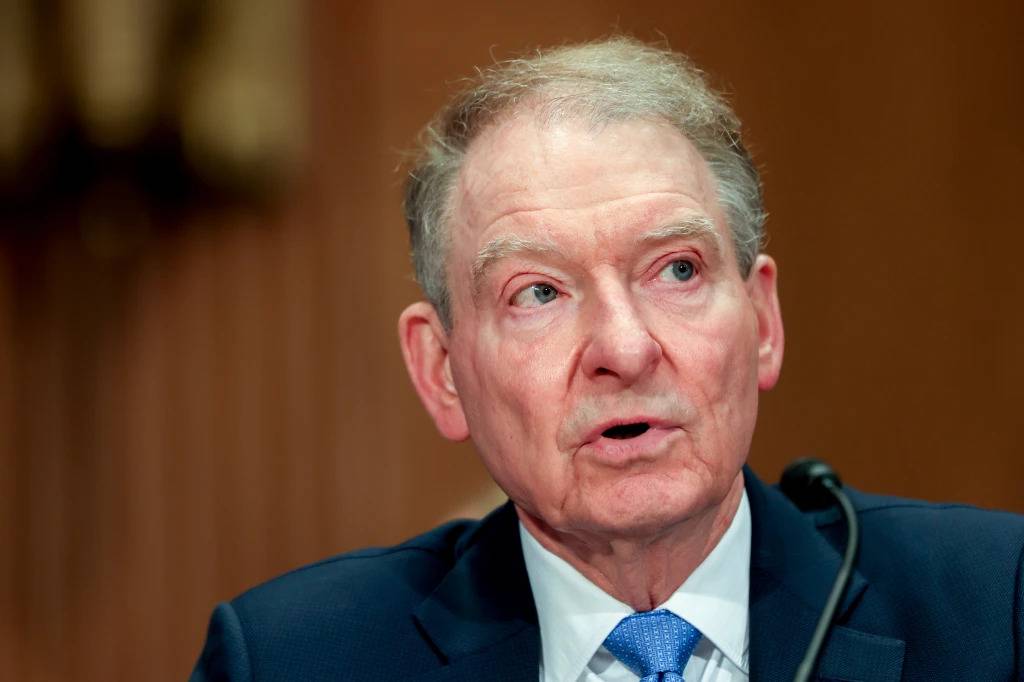
Speaking to CNBC, Atkins described the SEC as “ready, willing and able” to issue rules covering many of the areas addressed by the CLARITY Act. However, he said congressional legislation remains the preferred outcome because a statute would provide the crypto industry with greater long-term certainty.
Atkins argued that legislation is the most reliable way to create a framework capable of surviving future changes in US administrations, rather than leaving the market exposed to major policy reversals.
The House of Representatives passed the CLARITY Act by a vote of 294–134 in July 2025. The bill later advanced through the Senate Banking Committee by a 15–9 vote in May 2026 but has not yet been considered by the full Senate, where it would need at least 60 votes to overcome the legislative threshold.
One of the main obstacles involves ethics provisions governing the crypto activities of senior government officials. President Donald Trump later backed several new restrictions intended to help break the deadlock. Under the revised language, the president, vice president, members of Congress, federal officials and their spouses would be prohibited from issuing or sponsoring digital assets for profit. Crypto exchanges would also be barred from listing assets issued or sponsored by those individuals.
The restrictions are expected to remain in effect until January 20, 2029. The changes represent a significant concession as lawmakers seek to move the legislation closer to a Senate vote. A previous FORECK.INFO report examined how the revised CLARITY Act introduced new crypto ethics restrictions for federal officials.
Crypto-related activities involving the Trump family have remained at the centre of the conflict-of-interest debate. However, the revised provisions have not fully resolved Democratic concerns. They would not require Trump to divest his existing crypto investments, while the children of public officials would not be covered by the same restrictions. Lawmakers also remain divided over whether stablecoin providers and crypto platforms should be allowed to offer yield or rewards to token holders. Senate Majority Leader John Thune has also signalled that the CLARITY Act is unlikely to pass before the August recess. The delay increases the likelihood that the SEC may rely on its existing regulatory authority to maintain momentum in the reform of US crypto oversight.
The CLARITY Act is designed to establish a clearer division of responsibilities between the SEC and the Commodity Futures Trading Commission. Under the proposed framework, the CFTC would receive primary authority over spot markets for digital assets classified as digital commodities, significantly narrowing the range of crypto assets subject to direct SEC oversight.
Even if the bill remains delayed, the SEC under Atkins has already developed much of its alternative regulatory approach through Project Crypto. The initiative focuses on creating clearer rules for token offerings, custody and digital asset trading. The agency is also considering registration exemptions for certain token distributions and potential safe-harbour mechanisms for projects that reach a sufficient level of decentralisation. In March 2026, the SEC and CFTC issued a joint interpretation dividing crypto assets into several categories, including digital commodities, digital collectibles, digital tools, stablecoins and digital securities. Under this framework, a crypto asset is not necessarily a security by itself, although its offer or sale may form part of an investment contract depending on how it is issued, marketed and traded.
The interpretation also recognises that an investment contract may eventually come to an end. Once a project has completed the essential managerial and development commitments on which investors relied, the underlying crypto asset may no longer remain subject to federal securities laws in the same way. As part of its 2026 regulatory agenda, the SEC is pursuing additional rules intended to bring digital assets and tokenised financial products into the US regulatory framework. The proposals aim to clarify how companies may raise capital through crypto assets and how market participants can custody and trade securities issued in tokenised form on blockchain networks.
The SEC’s willingness to proceed independently gives the crypto industry a potential regulatory path even if Congress remains divided. However, agency rules can be revised by future administrations, meaning the CLARITY Act would still provide a more durable and predictable foundation for the US digital asset market.
