
Top Pick

- Fully licensed and regulated US exchange
- Strong focus on security and compliance
- User-friendly interface for beginners

The cryptocurrency market strengthened earlier this week but came under sharp selling pressure on Thursday, erasing much of its previous gains. In the latest market snapshot, Bitcoin (BTC) is trading near 81600.00 (+0.9%), Ethereum (ETH) at 2400.00 (+2.1%), Tether (USDT) at 0.9991 (–0.01%), BNB at 744.00 (+5.1%) and XRP at 1.3250 (+4.8%). Total cryptocurrency market capitalization has declined to approximately $2.73 trillion, while Bitcoin dominance has increased to 60.0%. From October 19 to 22, US spot Bitcoin ETFs recorded net inflows of $439.1 million, while Ethereum ETFs saw outflows of $225.1 million. The market remains volatile despite the recovery attempt discussed in our previous crypto weekly review.

 By Andrew Bennett
 Uniswap on Thursday rolled out its new Continuous Clearing Auctions (CCA) system — a fresh way to shape early on-chain token markets. The multichain exchange integrated the mechanism into Uniswap v4, aiming to make price discovery cleaner and liquidity stronger from day one. The launch came together with Aztec, which helped build the system and will host the very first auction.
 By Andrew Bennett
 “How low does it have to go before you finally admit I was right?” — Schiff taunts Bitcoin maxis

 By John Isige
 This week, most major cryptocurrencies are back in decline after a short-lived correction. Bitcoin is trading around 97,000.00 (–7.2%), Ethereum sits near 3,200.00 (–9.6%), USDT holds at 1.0001 (+0.02%), XRP trades at 2.2800 (–2.5%), and BNB has slipped to 920.00 (–6.7%). Total market capitalization has fallen to $3.28 trillion, with Bitcoin’s dominance easing to 59.0%. At the same time, Bitcoin ETFs saw $619.6 million in outflows, while Ethereum ETFs recorded withdrawals of $290.1 million.
 By John Isige
 Amid sharp declines in the S&P 500, Nasdaq and other major U.S. indices, heavy whale selling, and growing uncertainty around the Federal Reserve’s next policy move, Bitcoin continues to slide lower.
 By Andrew Bennett
 The SOL/USD pair has exited its long-term upward channel, forming a new downward trend for the third month in a row.
 By John Isige
 A new Digital Asset Treasury backed by high-profile investors is making a bold bet on one of the most talked-about privacy coins in the market. What does the involvement of the Gemini founders mean for the future price of ZEC?
 By John Isige
 The American crypto exchange Coinbase is changing its official legal domicile, moving from Delaware to Texas. The decision follows similar moves by Tesla and SpaceX and reflects a broader shift among major U.S. tech companies away from Delaware as the traditional corporate hub.
 By Andrew Bennett
 The U.S. government is back open — and the market is breathing again. XRP is climbing faster than Bitcoin. Could this be the beginning of a new bullish wave?
 By Andrew Bennett
 Visa has started testing a new cross-border payment system using USD Coin (USDC), enabling near-instant payouts to workers, content creators, and freelancers around the world. The company announced the program at the Singapore Fintech Festival 2025, calling it one of its boldest steps yet in merging traditional finance with blockchain technology.
 By John Isige
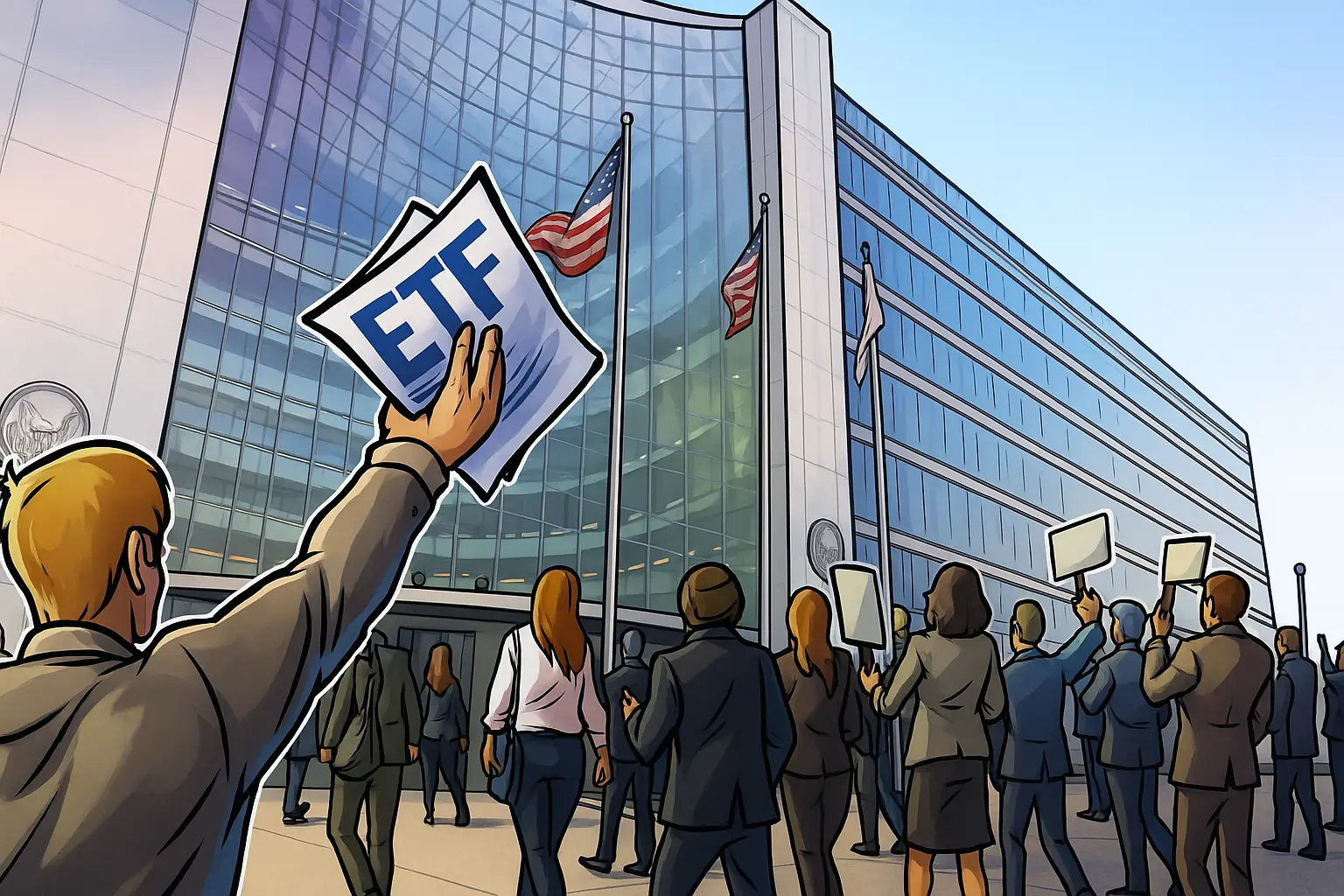
 Already tomorrow, November 12, 2025, XRP could get its first fully fledged spot ETF. According to Bloomberg ETF expert Eric Balchunas, the asset manager Canary Funds is only waiting for the official listing certification. Once Nasdaq confirms the listing, the fund will go live at 5:30 p.m. ET.
 By John Isige
 The XRP/USD pair shows mixed trading dynamics. After reports that Democrats and Republicans reached an agreement to fund the U.S. government through the end of January 2026 — effectively ending the longest shutdown in U.S. history — the price tested the 2.5391 level (Murray [3/8]) but failed to break lower, rebounding back to initial positions.

 By Sagar Dua
 JPMorgan Chase & Co. has started rolling out its blockchain-based deposit token, JPM Coin, for institutional clients. The move marks a major milestone in expanding traditional banking into the world of digital assets. The token represents U.S. dollar deposits held at the world’s largest bank and enables instant money transfers through Coinbase’s Base JPMorgan.


For crypto, the framework is similar to traditional financial markets but comes with its own twist. Here, price action turns on liquidity, adoption, regulation, and flows from institutions alongside retail sentiment. Network health—hash rate, staking, active wallets—adds another layer. Macro still matters too: rates, dollar strength, and risk appetite shape inflows and outflows. Then, as with any market, you use the chart—trend, support and resistance, momentum, and volume—to spot setups and manage risk.