

Top Pick

- Fully licensed and regulated US exchange
- Strong focus on security and compliance
- User-friendly interface for beginners

The cryptocurrency market strengthened earlier this week but came under sharp selling pressure on Thursday, erasing much of its previous gains. In the latest market snapshot, Bitcoin (BTC) is trading near 81600.00 (+0.9%), Ethereum (ETH) at 2400.00 (+2.1%), Tether (USDT) at 0.9991 (–0.01%), BNB at 744.00 (+5.1%) and XRP at 1.3250 (+4.8%). Total cryptocurrency market capitalization has declined to approximately $2.73 trillion, while Bitcoin dominance has increased to 60.0%. From October 19 to 22, US spot Bitcoin ETFs recorded net inflows of $439.1 million, while Ethereum ETFs saw outflows of $225.1 million. The market remains volatile despite the recovery attempt discussed in our previous crypto weekly review.

 By John Isige
The memecoin launchpad Pump.fun has recently emerged as one of the crypto market’s top performers, showing resilience despite weak sentiment across the sector
 By John Isige
After recent stagnation in the crypto market, gold — Bitcoin’s traditional analog counterpart — has set a new all-time high, providing a strong bullish signal
 By John Isige
Michael Saylor’s Bitcoin-treasury company could soon celebrate a major milestone and, in the process, secure massive inflows. Strategy has officially qualified for potential inclusion in the S&P 500. The reason: it posted one of the strongest quarters in its history. In Q2 2025, the company reported operating income of $14 billion and net income of $10 billion, equivalent to diluted EPS of $32.6.
 By John Isige
Ethereum’s current correction could turn out to be a major “bear trap” that sets the stage for a sharp rally in October or November, according to trader Johnny Wu.
 By John Isige
By now, Bitcoin’s price could have already reached $150,000 if it weren’t for the influence of two major holders, according to Bitcoin Magazine CEO David Bailey.
 By John Isige
By the end of U.S. President Donald Trump’s second term, USD1 will become the leading stablecoin, surpassing USDT and USDC in market capitalization. This forecast was shared with Decrypt by Blockstreet co-founder Kyle Klemmer.
 By John Isige
Mass adoption of Ethereum by institutional players will drive ETH’s price up 100-fold, according to ConsenSys founder Joseph Lubin.
 By John Isige
Since mid-August, the BTC/USD pair has been correcting lower, reaching 108000.00 after the release of U.S. inflation data. In July, the core PCE price index, a key metric for the Federal Reserve, accelerated from 2.8% to 2.9% y/y, reinforcing expectations of prolonged high interest rates. As a result, Bitcoin lost 3.7% in value. Additionally, on Friday, Bitcoin ETFs saw outflows of $126.7 million, though net weekly inflows totaled $440.8 million. The “fear and greed” index shifted to “fear,” currently at 46.0, while investors await Friday’s U.S. labor market report at 14:30 (GMT+2). If August data confirm continued cooling in the labor sector, a rebound in BTC is possible; otherwise, negative momentum may persist.
 By John Isige
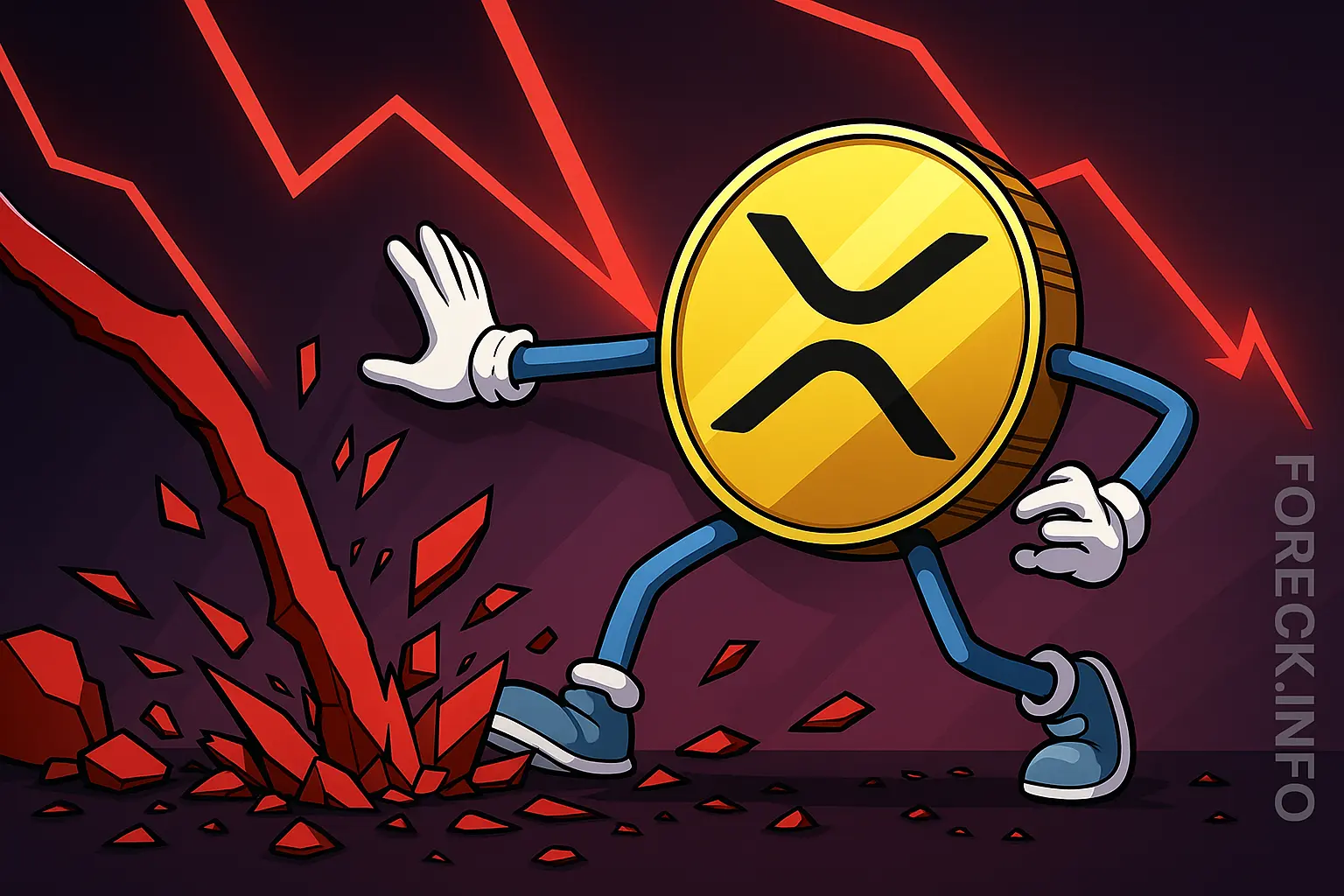
XRP Spot ETFs could spell the beginning of the end for the cryptocurrency, warns analyst Adriano Feria. Few events have been anticipated by the XRP community as much as the launch of U.S. Spot ETFs. Yet Feria believes that once these products go live, it will become clear that XRP cannot attract significant institutional interest.
 By John Isige
Through his company Strategy (MSTR), Michael Saylor continues to buy Bitcoin on a weekly basis, spending hundreds of millions of dollars. His latest bold prediction gives a striking outlook for BTC’s long-term price trajectory.
 By John Isige
After a weak weekend, Bitcoin recovered the $108,300 level. But Anthony Scaramucci, founder of SkyBridge Capital, warns investors that volatility will remain high in the coming months and years.
 By John Isige
The government of El Salvador has redistributed its National Strategic Bitcoin Reserve of 6,284 BTC (~$680 million) across 14 new addresses due to a potential risk from quantum computing.


For crypto, the framework is similar to traditional financial markets but comes with its own twist. Here, price action turns on liquidity, adoption, regulation, and flows from institutions alongside retail sentiment. Network health—hash rate, staking, active wallets—adds another layer. Macro still matters too: rates, dollar strength, and risk appetite shape inflows and outflows. Then, as with any market, you use the chart—trend, support and resistance, momentum, and volume—to spot setups and manage risk.