
Top Pick

- Fully licensed and regulated US exchange
- Strong focus on security and compliance
- User-friendly interface for beginners

The cryptocurrency market strengthened earlier this week but came under sharp selling pressure on Thursday, erasing much of its previous gains. In the latest market snapshot, Bitcoin (BTC) is trading near 81600.00 (+0.9%), Ethereum (ETH) at 2400.00 (+2.1%), Tether (USDT) at 0.9991 (–0.01%), BNB at 744.00 (+5.1%) and XRP at 1.3250 (+4.8%). Total cryptocurrency market capitalization has declined to approximately $2.73 trillion, while Bitcoin dominance has increased to 60.0%. From October 19 to 22, US spot Bitcoin ETFs recorded net inflows of $439.1 million, while Ethereum ETFs saw outflows of $225.1 million. The market remains volatile despite the recovery attempt discussed in our previous crypto weekly review.

 By John Isige
 The Ethereum Foundation has temporarily stopped accepting new applications for grants under its Ecosystem Support Program (ESP). The pause is part of a broader rethink of how the foundation nurtures the ecosystem and sets priorities.
 By Andrew Bennett
 On the daily chart of the leading cryptocurrency, two bullish “megaphone” patterns have formed, potentially signaling preparation for new all-time highs, Cointelegraph reports
 By Andrew Bennett
 Closing the week above $114,000 would be a “big step” for Bitcoin, supporting positive sentiment. This was stated by trader Sam Price.
 By John Isige
 Some of the leading altcoins are about to leave the “waiting room.” This could potentially extend the crypto rally into Q1 2026, wrote former Goldman Sachs executive Raoul Pal.
 By John Isige
 On August 29, voting on the proposal to cut TRON network fees by 60% was completed. The majority of community members supported the initiative, Justin Sun wrote

 By Sagar Dua
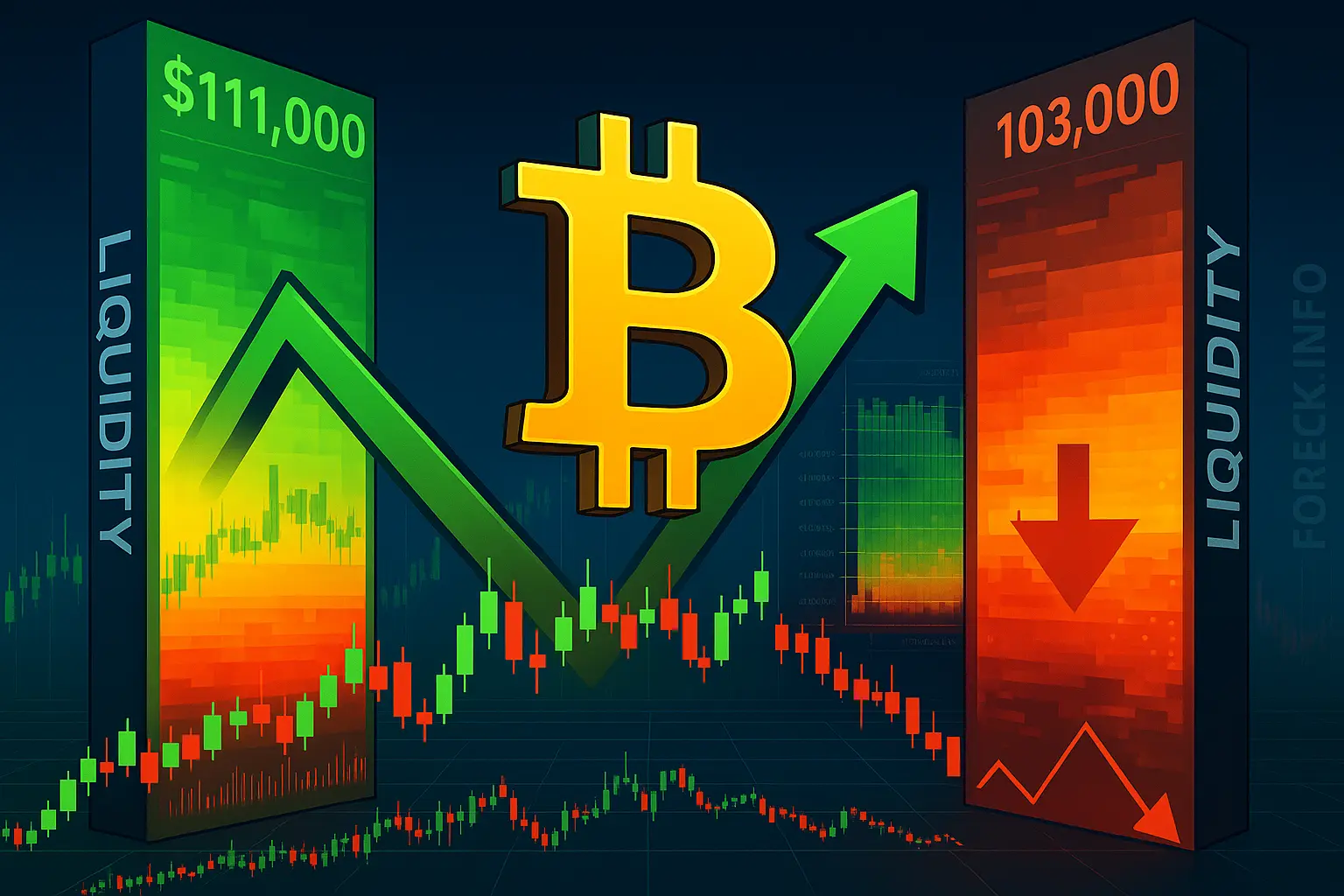
 This week, the cryptocurrency market remained in a downward correction: BTC is trading around 111,000.00 (–1.5%), ETH is at 4,450.00 (–6.9%), XRP at 2.9000 (–4.2%), stablecoin USDT at 1.0006 (+0.04%), and BNB around 868.00 (–1.0%). The total market capitalization reached $3.85 trillion, with BTC dominance at 57.5%. Meanwhile, investment flows into digital exchange-traded funds have recovered, amounting to $567.5 million for Bitcoin ETFs and $1.245 billion for Ethereum ETFs
 By Andrew Bennett
 The decentralized crypto exchange is one of the winners of the current bull market. Price forecasts sometimes border on the fantastical – how high can HYPE really go?
 By Andrew Bennett
 Ethereum has managed to recover in recent days. Whether the bulls can initiate a new move toward all-time highs depends on several factors. After briefly climbing to a fresh all-time high at $4,958, ETH consolidated at the start of the week back to the 20-day EMA20 around $4,400. From there, the price recovered to the resistance at $4,605, but has so far failed to reclaim it on a closing basis. Despite new inflows into Ethereum spot ETFs, bulls have been unable to retake last week’s closing levels. This analysis outlines the chart levels that could determine the next short- and medium-term trend
 By John Isige
 Cryptocurrency exchange Binance has rolled out a new feature for personalized two-factor authentication (2FA) and shared recommendations on using passkeys to strengthen account security. The update was announced in the company’s official blog.
 By John Isige
 Tether has announced the addition of USDT support on RGB — a protocol for issuing digital assets on the Bitcoin network.
 By John Isige
 The SOL/USD pair is trading within a medium-term upward channel.
 By Andrew Bennett
 Bitcoin corrects 12 percent, and investors fear the end of the bull market. But analysis shows the bull market is intact — and could soon lead to new all-time highs.


For crypto, the framework is similar to traditional financial markets but comes with its own twist. Here, price action turns on liquidity, adoption, regulation, and flows from institutions alongside retail sentiment. Network health—hash rate, staking, active wallets—adds another layer. Macro still matters too: rates, dollar strength, and risk appetite shape inflows and outflows. Then, as with any market, you use the chart—trend, support and resistance, momentum, and volume—to spot setups and manage risk.