
Binance to Delist Viction and Five Other Tokens
On August 3, Binance announced that it would delist Viction (VIC), Across Protocol (ACX), Hashflow (HFT), PIVX (PIVX), Vulcan Forged PYR (PYR) and Vanar (VANRY). All spot trading pairs involving the six tokens will be removed at 03:00 UTC on August 17, 2026. Existing spot orders will be cancelled automatically after trading ends, while Binance Trading Bots connected to the affected pairs will also stop operating at the same time.
Binance advised users to close or adjust positions in related products before the applicable deadlines. Spot Copy Trading will remove the affected pairs at 03:00 UTC on August 10. Remaining assets may be sold at market prices or transferred to users’ spot accounts if they cannot be sold.
Binance Futures will stop users from opening new positions at 08:30 UTC on August 7. All remaining futures positions will be closed and settled automatically at 09:00 UTC. Binance Pool and Binance Pay will end support at 03:00 UTC on August 7. VIP Loan and Flexible Loan positions will be closed at 07:00 UTC, while Cross and Isolated Margin support will end at 10:00 UTC on the same day. Margin borrowing will be suspended earlier, at 06:00 UTC on August 4. Simple Earn will remove the tokens after 07:00 UTC on August 10. Flexible and Locked Product positions that have not been redeemed manually will be automatically redeemed and transferred to users’ spot accounts together with accrued rewards.
Deposits made after 03:00 UTC on August 18 will no longer be credited. Withdrawals will remain available until 03:00 UTC on October 17, although Binance said it may keep withdrawals open in cases where converting the remaining tokens is not technically possible.
Binance Cites Its Regular Asset Review
Binance said the decision followed its regular review of listed digital assets. The exchange periodically assesses whether tokens continue to meet its internal standards and broader industry requirements.
The review considers factors including the development team’s commitment, the quality of project activity, trading volume and liquidity, network stability, communication with the community, transparency and responsiveness to Binance’s due-diligence requests. Other considerations include evidence of fraudulent or unethical conduct, regulatory changes, material increases in token supply, modifications to tokenomics and changes in project ownership or the core development team.
Binance did not identify a specific violation or individual reason for removing VIC. Its announcement presented the delisting as the result of the exchange’s broader internal review.
Viction Says the Network Will Continue Operating
Viction Foundation issued a statement shortly after the Binance announcement, saying the delisting did not reflect any change in the project’s technology, operations or underlying fundamentals.
The foundation said Viction’s mainnet remains fully operational after eight years, while the development team continues to work on planned network upgrades. The project’s roadmap has not changed as a result of Binance’s decision. Viction also argued that centralized exchanges are distribution and trading channels rather than the entities that determine whether a blockchain continues to exist or has technological value.
To reduce the impact of the delisting, the foundation said it is maintaining contact with existing exchange partners and seeking additional listings. The goal is to strengthen liquidity across multiple platforms and reduce reliance on any single exchange.
Users looking for alternative trading platforms can compare fees, liquidity, supported assets, security and regulation in FORECK.INFO’s ranking of cryptocurrency exchanges.
What Is Viction?
Viction is the current name of TomoChain, a blockchain project that originated in 2017 and launched its mainnet in 2018. The project adopted the Viction identity in 2023 as part of a broader strategic and branding update. It operates as an EVM-compatible layer-1 blockchain designed to support decentralized applications with low transaction fees and short confirmation times. The network uses a Proof-of-Stake Voting consensus system and is secured by a group of masternodes.
The rebrand did not change the token’s supply or underlying smart-contract structure. The former TOMO ticker was replaced with VIC as part of the project’s new identity.
VIC Falls More Than 25% After the Announcement
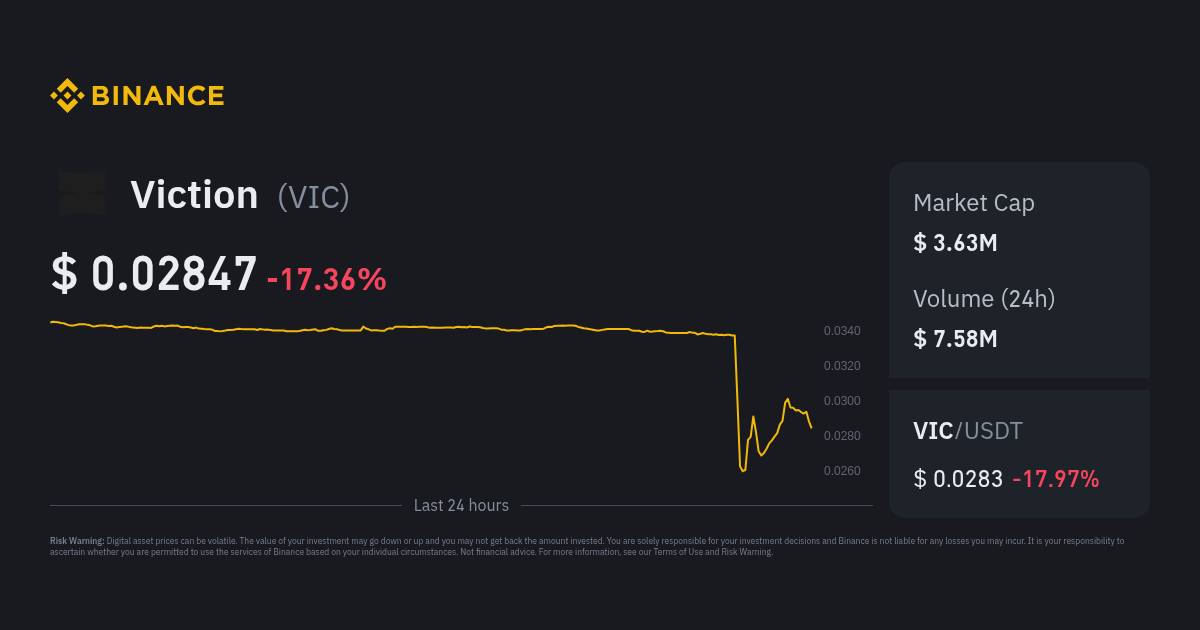
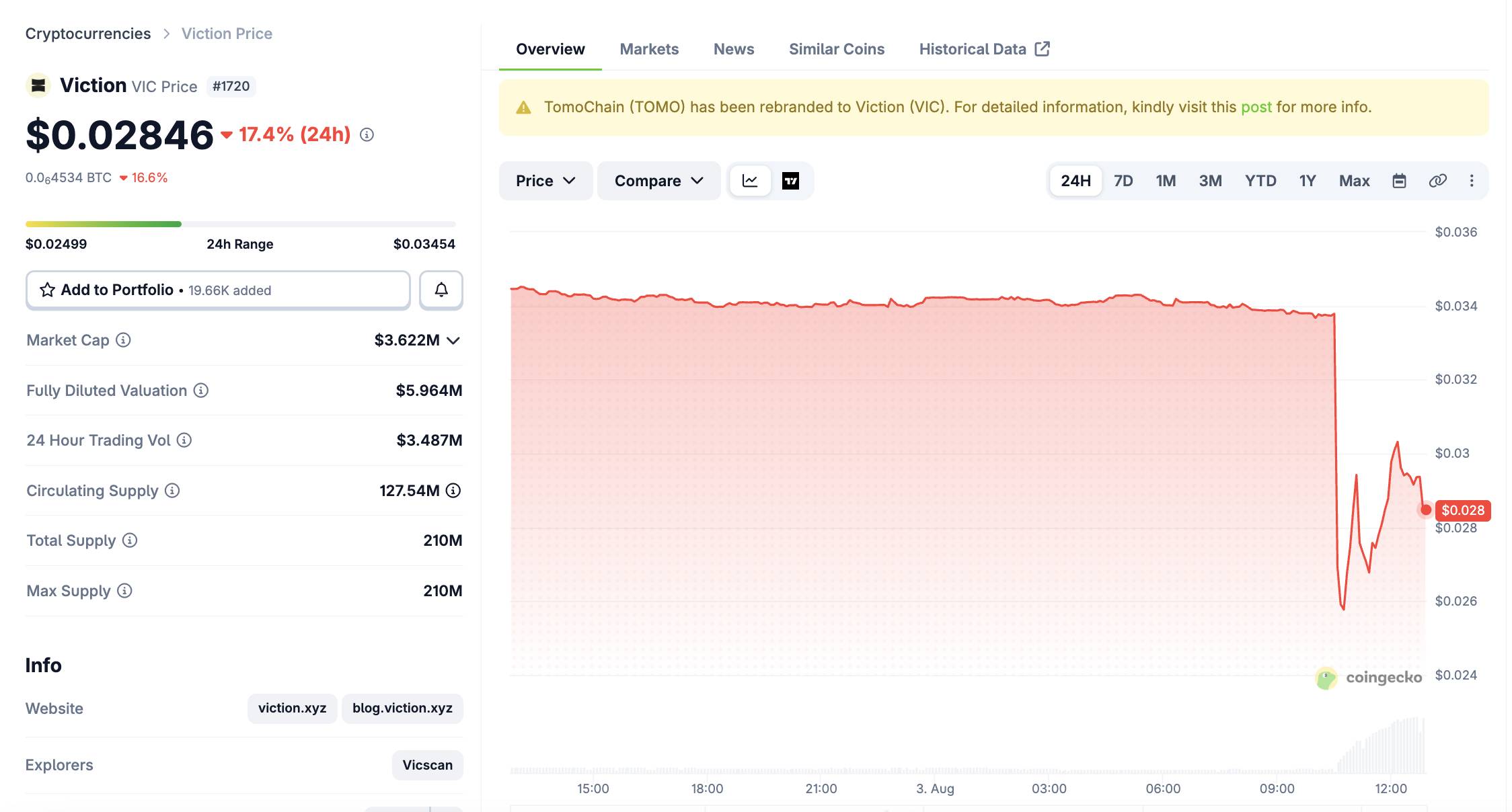
The market reacted negatively to the Binance decision. VIC fell from levels near $0.039 and briefly reached an all-time low of approximately $0.02577, representing a decline of more than 25%.
The token subsequently recovered part of its losses. CoinGecko showed VIC trading near $0.031 during August 3, although its price remained highly volatile as traders adjusted positions ahead of the delisting. The decline illustrates how the loss of a major trading venue can affect tokens with relatively limited liquidity. Removing a Binance market may reduce trading volume, widen spreads and make price discovery more dependent on smaller exchanges.
However, an exchange delisting does not automatically mean that the underlying blockchain has stopped operating. Viction users can continue to hold VIC in self-custody and interact with the network, although Binance customers must manage their positions before the platform’s deadlines.
FORECK.INFO previously examined how declining liquidity and repeated exchange delistings can affect a blockchain project in its report on the closure of Loopring DEX after nearly eight years of operation.
What Happens Next?
Viction’s immediate challenge will be maintaining sufficient liquidity after Binance removes VIC trading pairs. The project plans to work with its remaining exchange partners and expand token availability across additional platforms. Binance users holding VIC should review the deadlines for spot trading, derivatives, loans, margin products, deposits and withdrawals. Moving tokens to a self-custody wallet or another supporting exchange may require additional time, particularly if network activity increases close to the withdrawal deadline.
The delisting does not change Viction’s blockchain or development roadmap, but it removes one of the token’s most important sources of liquidity. The longer-term impact will depend on whether the foundation can secure new exchange support and maintain activity across the network.
