
MegaETH Closes Mega Mafia After Multiple Projects Leave the Ecosystem
On July 16, Shuyao Kong, a core team member at Layer-2 network MegaETH, announced on X that the project would discontinue the Mega Mafia startup incubator after two years of operation. The development team acknowledged that the model was no longer effective because most successful startups had moved away from MegaETH instead of continuing to build within its ecosystem.
“We Created Significant Value, but Very Little Returned to MegaETH”
Mega Mafia was launched to support developers building OMEGA Apps — applications designed to operate specifically on MegaETH’s infrastructure. The programme incubated around 20 startups and helped participating projects raise more than $80 million across funding rounds ranging from pre-seed to Series A.
The MegaETH team also became directly involved in product development, team restructuring and investor introductions. In addition, it reportedly spent millions of dollars on liquidity, market making, lending, audits and other technical resources intended to support startup growth.
Despite these investments, MegaETH received little corresponding value. Kong said:
“Mega Mafia was one of the most successful incubator programmes of this cycle. However, almost none of the value we created returned to MegaETH. In reality, most successful applications eventually left the ecosystem.”
The problem partly originated from the project’s original philosophy. MegaETH did not take equity, governance rights or any other economic interest in startups joining Mega Mafia, expecting founders to remain voluntarily committed to the ecosystem.
However, after reaching a more mature stage, many projects chose to develop on other blockchains or pursue independent strategies. As a result, MegaETH received almost no proportional benefit from the resources it had committed.
One notable example is Global Token Exchange (GTE), once considered a flagship project within the MegaETH ecosystem. After completing the incubator programme and raising more than $25 million, GTE decided to build its own blockchain.
Meanwhile, social attention trading platform Noise moved to Base after completing a $7.1 million seed round led by Paradigm, while HelloTrade selected Monad as its development infrastructure.
Other projects, including Avon and Valhalla, are believed to have ceased operations. Cap, a stablecoin project launched on MegaETH earlier this year, is also pursuing a multichain strategy.
MegaETH Shifts Towards Building Its Own Applications
Following the closure of Mega Mafia, MegaETH said it would continue supporting existing projects, but the ecosystem’s main focus would shift towards internally developed applications.
The team will direct its resources towards products built and operated by MegaETH itself, with a stronger focus on mainstream users.
According to Shuyao Kong, the new strategy will give MegaETH greater control over product development and user relationships. It should also allow the team to update products more quickly in response to real demand while ensuring that the value created remains within the Layer-2 ecosystem.
Community Divided Over MegaETH’s Decision
The decision to discontinue Mega Mafia quickly generated mixed reactions across the community.
Some users supported the move, arguing that applications developed directly by MegaETH could create more sustainable value for the ecosystem.
Others said Mega Mafia’s failure exposed weaknesses in MegaETH’s operating model. Prioritising a selected group of startups made it difficult for external developers to compete, while the absence of equity or other economic rights left MegaETH with no effective mechanism to retain projects once they became large enough to operate independently.
Criticism has also focused on MegaETH’s handling of some Mega Mafia projects, particularly recent controversy involving the Cap stablecoin project.
Some community members argued that MegaETH raised more than $100 million with promises of driving a major transformation on Ethereum, but most of the resulting value went to startup teams and founders, while retail investors received less than expected.
MegaETH previously attracted significant attention when its ICO received more than $1 billion in commitments within three days. However, users then waited more than four months after the mainnet launch for the project to meet its first key performance target and proceed with the token generation event.
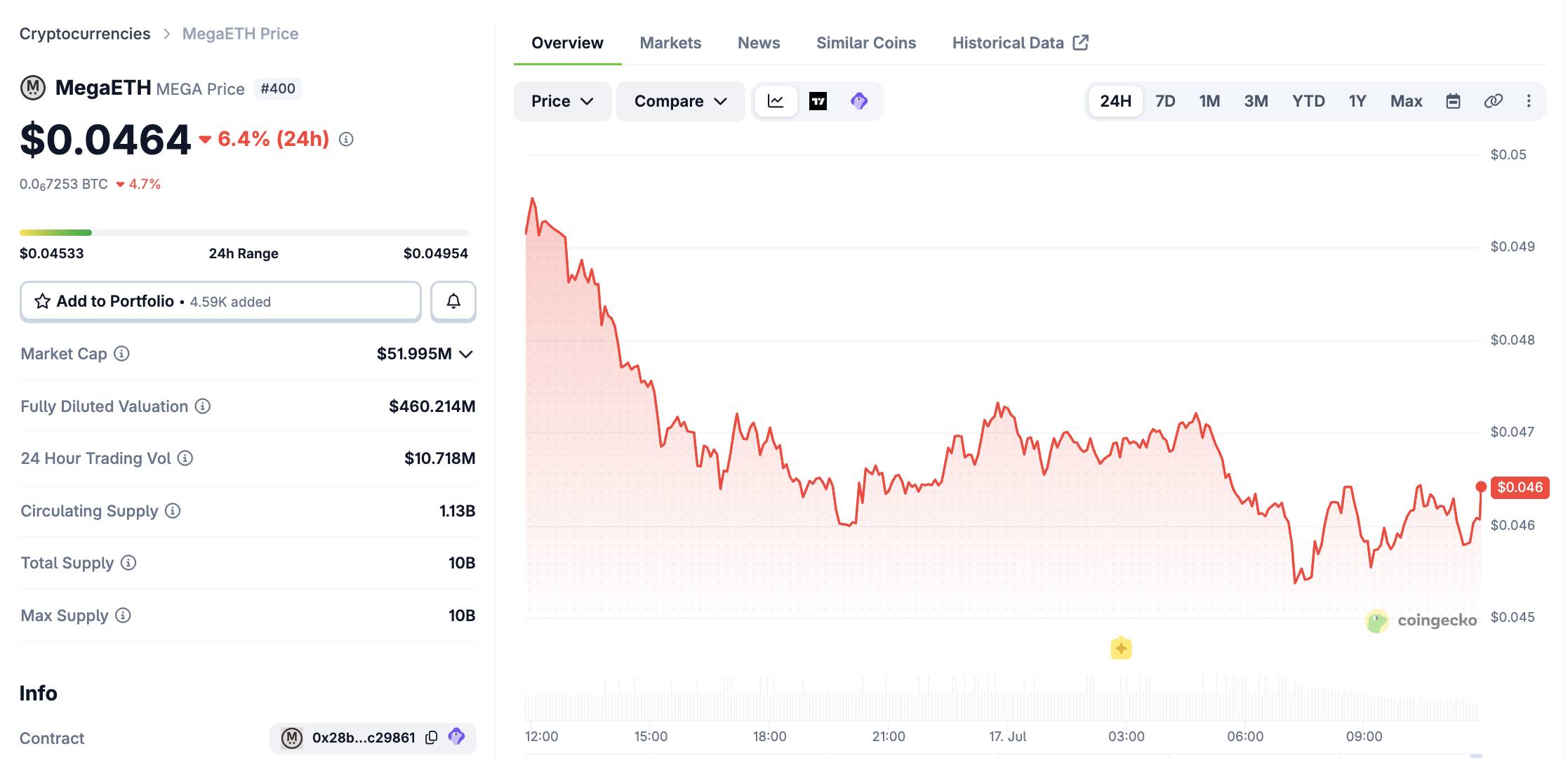
The MEGA token launch ultimately failed to meet market expectations. Its price fell by more than 78.7% in just over two months of trading, declining from $0.20 to approximately $0.04.
Сonclusion: Closing Mega Mafia gives MegaETH greater control over product development and the value created within its ecosystem. However, restoring market confidence will depend on the success of its in-house applications and the project’s ability to reverse the sharp decline in MEGA.
