

The crypto market is temporarily brushing aside geopolitical concerns and showing early signs of recovery on Friday morning.
Bitcoin rebounded from yesterday’s low of $65,600, gaining 1.4% and moving toward the psychologically important $70,000 level. At the same time, Ethereum and Solana prices are also stabilizing.
The rebound attempt is directly linked to renewed progress around the CLARITY Act, a comprehensive U.S. legislative package on digital assets. The legislative process had been stalled since late January due to fundamental disagreements between representatives of the crypto industry and the traditional banking sector over the issue of stablecoin yields.
Yesterday, the White House brought both sides back to the negotiating table for the third time in the past two weeks, seeking a pragmatic compromise. According to multiple reports, an agreement may now be close. The crypto lobby has shown increased flexibility. “Earning yield on idle balances—one of the crypto industry’s key objectives—is effectively off the table,” Fox News reporter Eleanor Terrett wrote on X.

As part of the compromise, the White House is allowing for certain workarounds: some incentive programs may remain in the next draft of the bill. Coinbase CEO Brian Armstrong confirmed later in the evening that premium users could eventually earn Bitcoin yields on their USDC deposits.
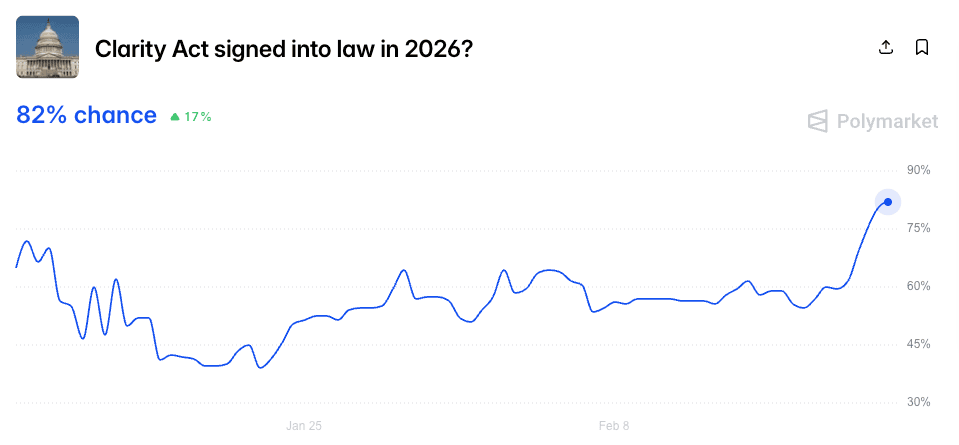
Against this backdrop, several stablecoin-related projects such as RAIN and STABLE posted gains of 3.4% and 7.8%, respectively. At the same time, a renewed wave of interest in the AI agent economy pushed newcomer KITE into the top 100 crypto assets.
The sustainability of the current market recovery will largely depend on further progress in advancing U.S. crypto legislation. The White House has set a hard deadline of March 1 to resolve the dispute over stablecoin incentives and to resume the legislative process for the CLARITY Act.
Meanwhile, investors continue to closely monitor geopolitical tensions in the Middle East. Observers consider a military operation by the Trump administration against Iran immediately after the close of U.S. stock markets to be a realistic scenario.
Since the crypto market remains the only fully liquid market trading around the clock over the weekend, such a development could expose Bitcoin and altcoins to another period of extreme volatility—something that has occurred repeatedly in recent months.
In the near term, however, today’s trading dynamics are likely to be driven by the release of U.S. PCE inflation data and GDP figures. A potential Supreme Court decision regarding Donald Trump’s trade tariffs could also influence market sentiment.