

Bitcoin falls below $75,000 again
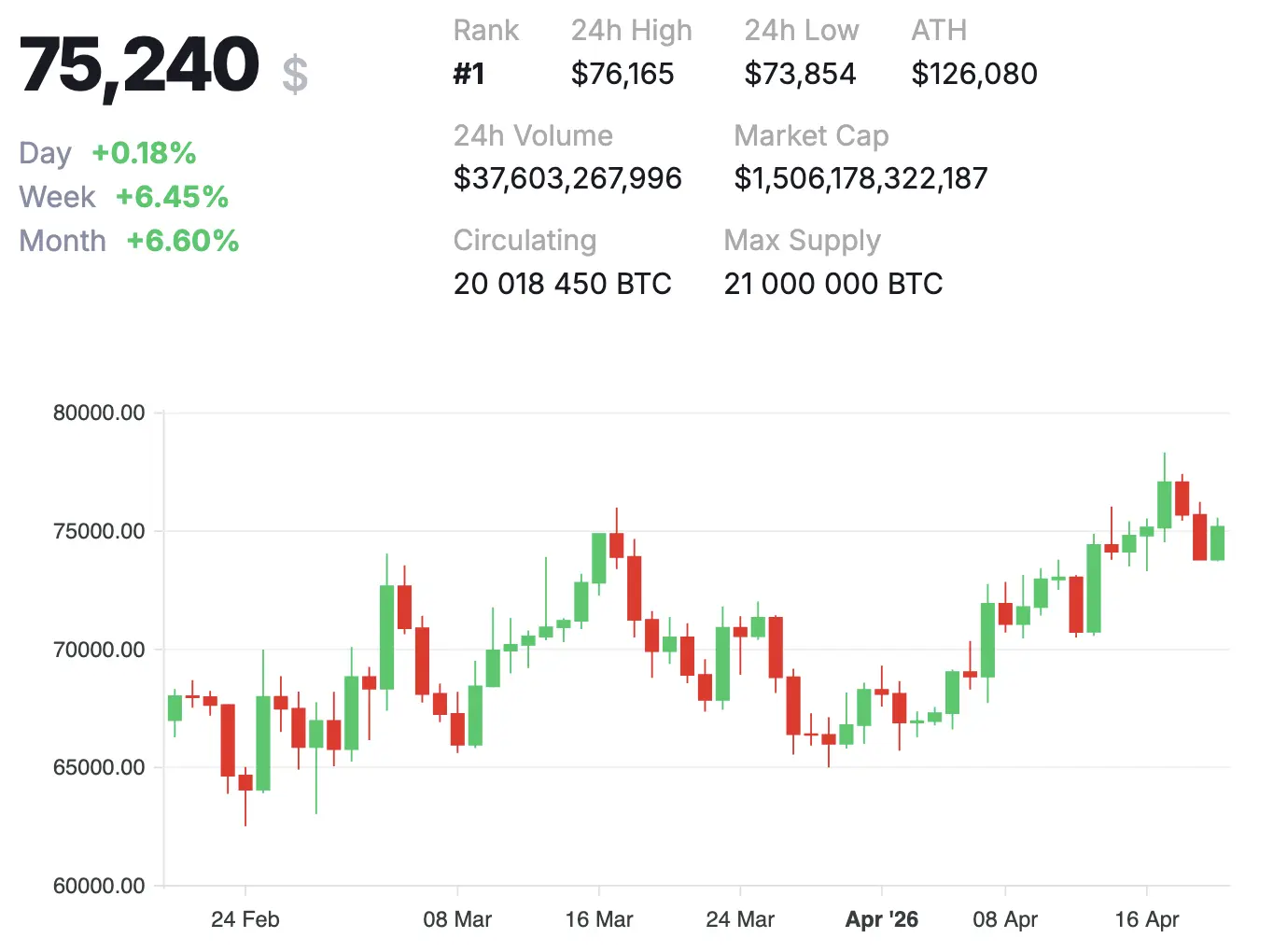
Over the past 24 hours, Bitcoin has declined by around 2% and is trading near $74,000. After rising on the back of easing geopolitical tensions around Iran, the market failed to hold above the $76,000 level. Even so, Bitcoin is still up around 5% on a weekly basis.
Ethereum loses ground as pressure grows after the rsETH ecosystem attack
Ethereum is trading just below $2,300, down roughly 3% over the last 24 hours. Additional pressure came from the attack on the Kelp / rsETH ecosystem, where around $290 million was stolen.
The incident became one of the largest DeFi hacks of the year and added further pressure to the decentralized finance segment, which remains vulnerable amid broader market instability.
The market is still factoring in geopolitical risks
One of the key external drivers remains the situation around Iran and the Strait of Hormuz region. Recent signals of de-escalation had a moderately positive effect on the market, but no new confirming developments have emerged so far.
Market participants are also focused on the upcoming Federal Reserve meeting at the end of April. At this stage, most analysts expect interest rates to remain unchanged, but the uncertainty itself continues to limit risk appetite.
Capital is concentrating in larger assets
Bitcoin’s market dominance remains near 57%, pointing to an ongoing concentration of capital in the largest crypto assets. This suggests that in uncertain conditions, investors continue to favor more liquid and resilient assets.
Against this backdrop, some midcap projects such as REQ and DeXe are posting short-term gains, but overall it is the DeFi sector that remains under the strongest pressure.
Technical picture: the market is trapped between liquidity zones
From a technical perspective, Bitcoin remains stuck between major liquidity zones. Significant liquidation clusters are positioned both below and above the current price, which could trigger increased volatility in the short term.
An additional signal is coming from the derivatives market, where funding rates remain mostly negative. This points to strong demand for short positions and continued pressure from traders betting on further downside.
Market sentiment remains cautious
Overall market sentiment remains restrained. The Fear & Greed Index is currently in the fear zone, showing that despite relative price stability, most market participants are still taking a wait-and-see approach.
Conclusion
The crypto market started the week with moderate losses, remaining under pressure from several factors at once: the aftermath of the year’s biggest DeFi hack, uncertainty around Iran, expectations surrounding the Fed’s next rate decision, and weak overall market sentiment. Bitcoin is still holding above key levels, but the lack of a confident move above $76,000 and the cautious positioning of investors suggest that the market remains vulnerable to fresh spikes in volatility.
