


Top Pick

- Fully licensed and regulated US exchange
- Strong focus on security and compliance
- User-friendly interface for beginners
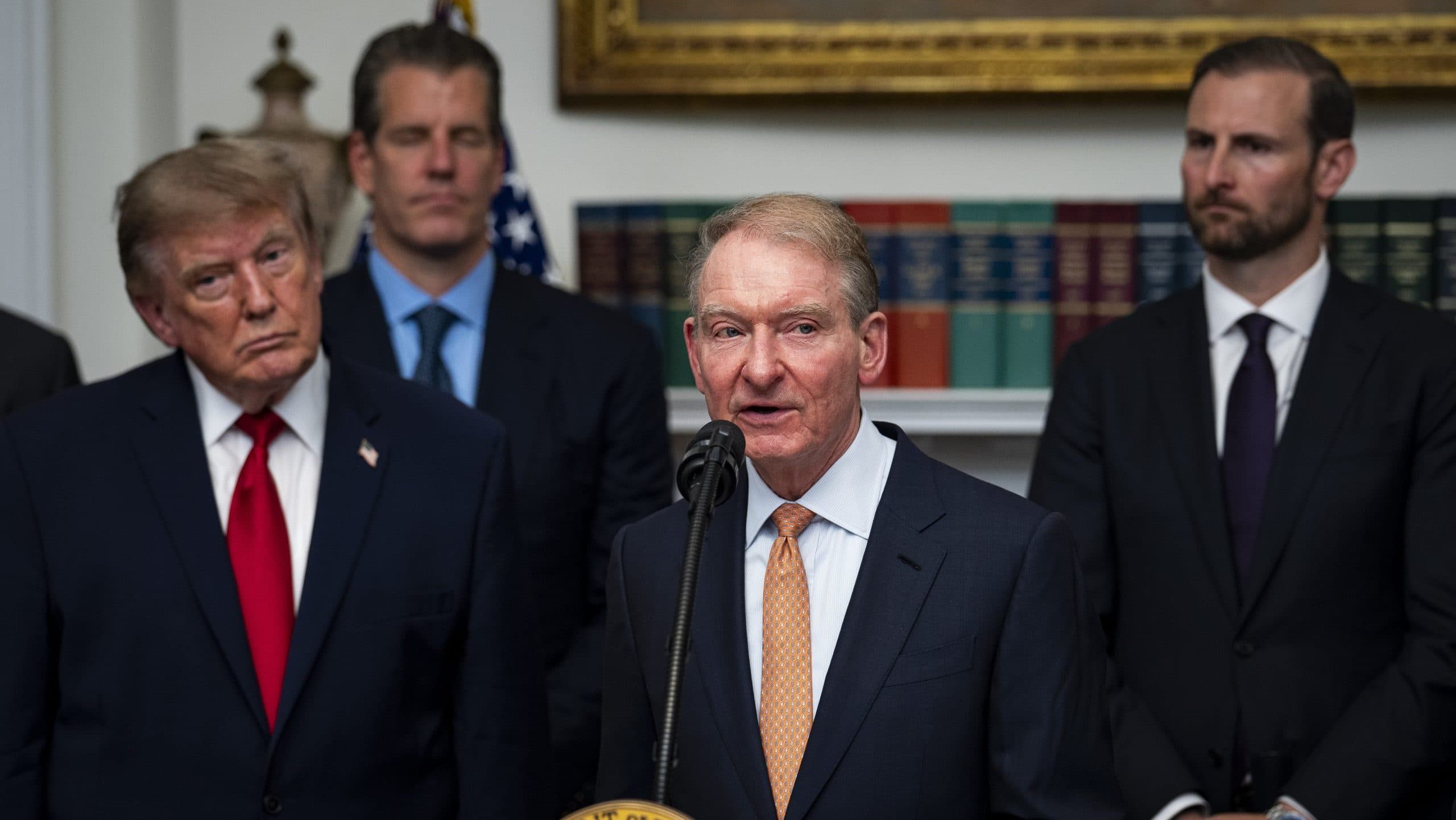
Six major blockchain organizations are calling on the US Securities and Exchange Commission (SEC) to make its classification of digital commodities part of binding crypto regulations. The proposal could affect how exchanges and investors handle tokens such as LINK, ADA, HBAR, APT, AVAX and XLM, particularly when these assets are traded on secondary markets.

 By John Isige
 BlackRock has expanded its tokenisation strategy with two blockchain-based money market products designed for institutional investors and potential use as reserve assets by regulated US stablecoin issuers.
 By John Isige
 Last week, BTC/USD resumed its decline and is currently testing the lower Bollinger Band at 62500.00, which corresponds to the Murrey [4/8] level.

 By Andrew Bennett
 Binance will delist Viction (VIC) and five other cryptocurrencies on August 17, prompting VIC to fall by more than 25% shortly after the announcement. Viction Foundation said the exchange’s decision does not affect the blockchain’s operations or development roadmap.
 By John Isige
 Coinkite has urged users of affected COLDCARD hardware wallets to move their Bitcoin to newly generated wallets after researchers discovered a serious flaw in the devices’ random-number generation. The vulnerability does not directly reveal a seed phrase, but it can make some wallet seeds predictable enough for attackers to reconstruct the corresponding private keys.
 By Andrew Bennett
 The cryptocurrency market has shown mixed performance this week. At the time of writing, Bitcoin (BTC) is trading near $63,700, Ethereum (ETH) is around $1,625, Tether (USDT) is close to $0.9987, BNB is holding near $591, and USD Coin (USDC) is trading at approximately $0.9997. Total cryptocurrency market capitalisation stands at around $2.2 trillion, while Bitcoin dominance is estimated at roughly 58%–59%, depending on the data provider.
 By John Isige
 More than $1.1 billion worth of cliff token unlocks are scheduled for August 2026, with Rain, Audiera, ADI Chain, Succinct and Kaito accounting for most of the estimated value.
 By John Isige
 Strategy, the world’s largest publicly traded Bitcoin holder, reported a net loss of $8.22 billion for the second quarter of 2026, largely because of the sharp decline in Bitcoin’s market value.
 By Andrew Bennett
 Aave is considering one of the largest market cleanups in its history, with a governance proposal recommending the removal of dozens of low-adoption assets and the complete wind-down of deployments on Sonic, Scroll, zkSync, Metis, Soneium and Aptos.
 By John Isige
 Since the beginning of the month, SOL/USD has remained under pressure, trading near 71.88, the Murrey [3/8] level. The chart configuration resembles a symmetrical triangle that may break in either direction. A sustained move below 71.88, which also coincides with the lower Bollinger Band, could push the pair toward 65.62, the Murrey [1/8] level, and 62.50, the Murrey [0/8] level. Meanwhile, a breakout above 78.12, the Murrey [5/8] level, would breach the upper boundary of the pattern and strengthen bullish momentum, opening the way toward 87.50, the Murrey [8/8] level, and 93.75, the Murrey [+2/8] level.
 By Andrew Bennett
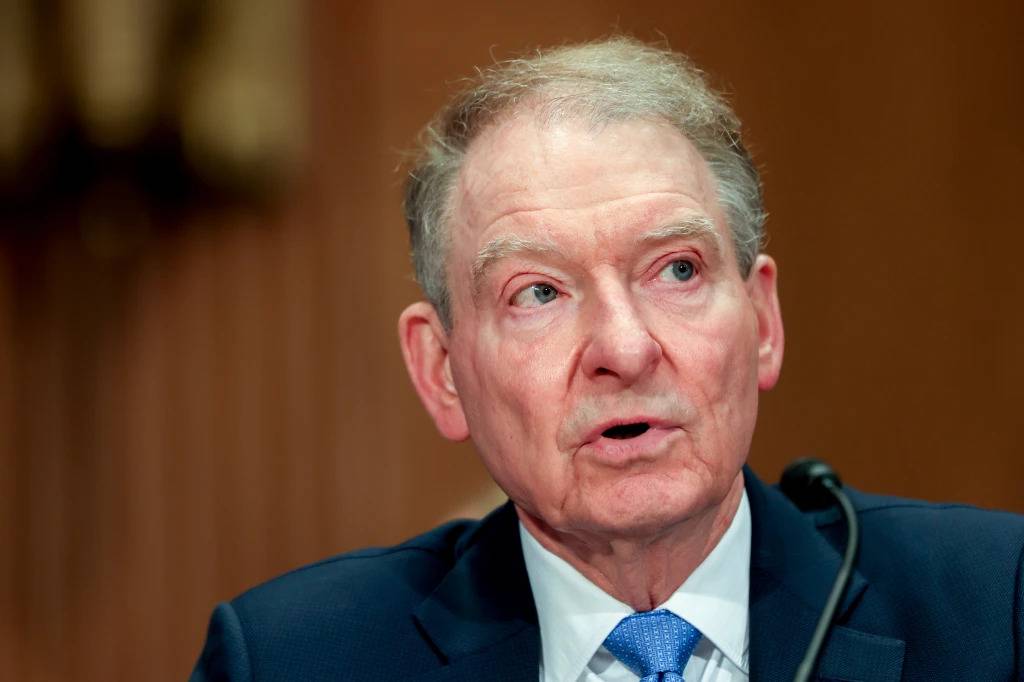
 US Securities and Exchange Commission Chair Paul Atkins said the agency is prepared to develop its own regulatory framework for the cryptocurrency market if Congress fails to pass the CLARITY Act. The bill remains stalled in the Senate and is increasingly unlikely to reach a floor vote before lawmakers leave for their August recess.
 By John Isige
 Morgan Stanley has officially launched two exchange-traded products providing investors with indirect exposure to Ethereum and Solana while also incorporating staking rewards.
 By John Isige
 Since the end of last month, the ETH/USD pair has been attempting to enter a correction against the long-term downward trend. On Monday, the price reached a two-week high of 1,978.60 but subsequently gave up part of those gains.


For crypto, the framework is similar to traditional financial markets but comes with its own twist. Here, price action turns on liquidity, adoption, regulation, and flows from institutions alongside retail sentiment. Network health—hash rate, staking, active wallets—adds another layer. Macro still matters too: rates, dollar strength, and risk appetite shape inflows and outflows. Then, as with any market, you use the chart—trend, support and resistance, momentum, and volume—to spot setups and manage risk.