
The recovery has pushed parity out of the immediate picture. The focus now is on whether EUR/USD can hold above 1.1600 and continue higher during the second half of the year. That will largely depend on how the Federal Reserve responds to tariff-driven inflation, whether the European Central Bank is close to ending its easing cycle and how prolonged trade tensions affect both economies.
1. The Growth Gap Is No Longer as Clear-Cut
Growth, inflation and trade policy remain the main forces behind EUR/USD, but the economic backdrop is no longer as supportive of the dollar as it was at the end of 2024.
The US economy is still growing faster than the eurozone, although the pace has slowed. In its June projections, the Federal Reserve lowered its forecast for US GDP growth in 2025 to 1.4%, compared with 1.7% in March. It also raised its unemployment estimate to 4.5%, while noting that uncertainty around the outlook remained unusually high.
Europe continues to struggle with weak manufacturing, softer external demand and the threat of new US trade restrictions. Even so, the ECB expects the eurozone economy to expand by 0.9% this year. Higher real incomes, cheaper borrowing and additional public investment should provide some support, while Germany’s planned spending on infrastructure and defence may help later on.
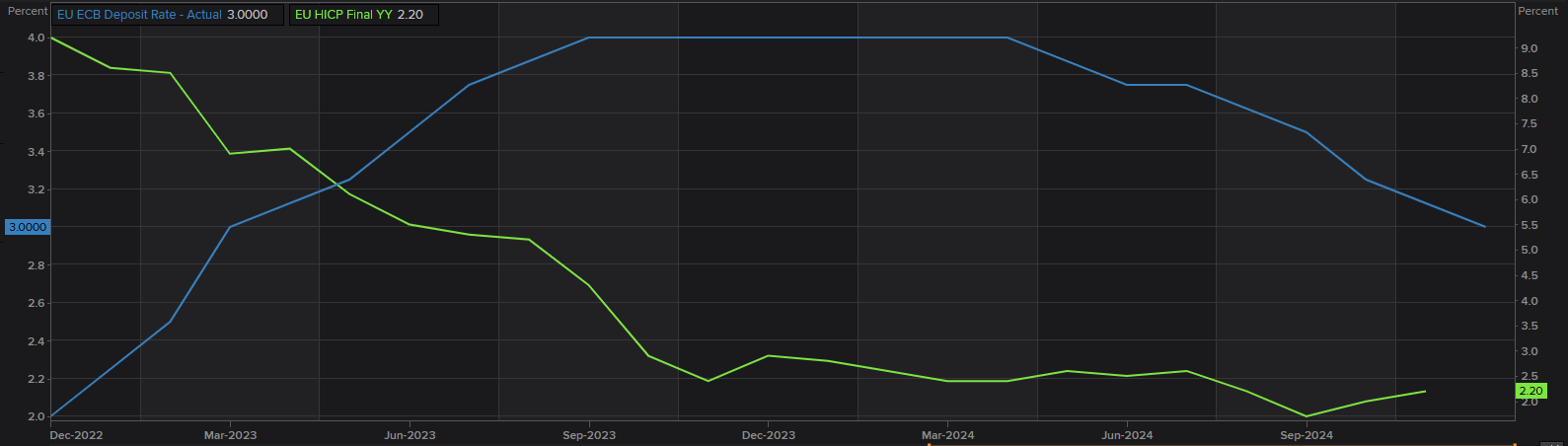
Inflation is also moving differently on the two sides of the Atlantic. Price growth in the eurozone has returned close to the ECB’s 2% target, while the Fed expects US inflation to remain elevated as higher import tariffs gradually reach consumers. That shift has weakened the argument for another sustained period of dollar appreciation.
2. The Fed and ECB Enter a New Stage
Federal Reserve: No Rush to Cut Rates
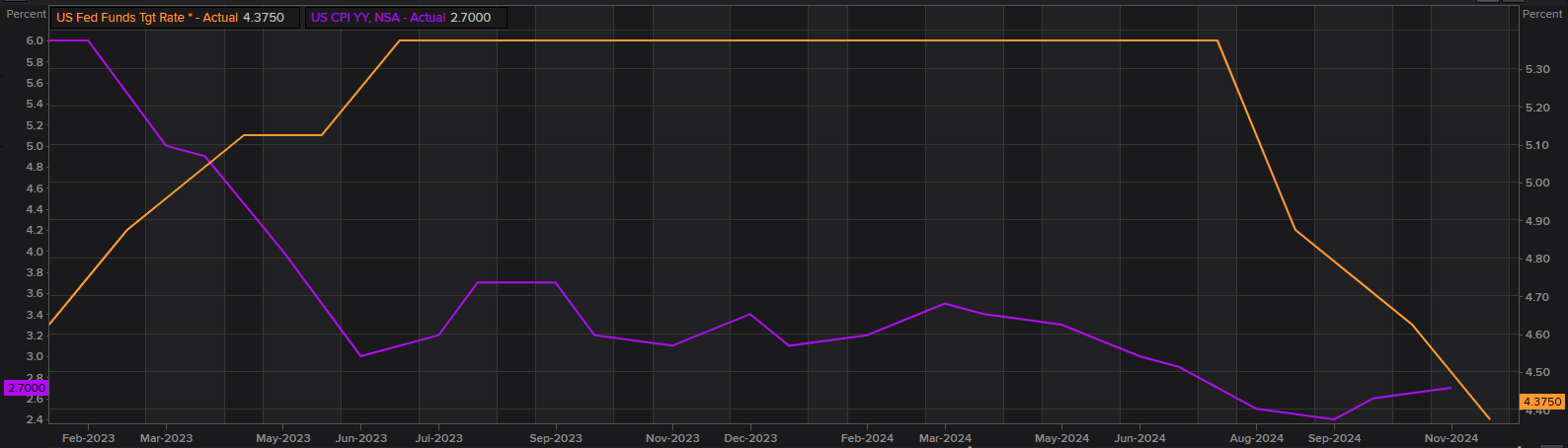
The Federal Reserve left the federal funds target range unchanged at 4.25%–4.50% in June. Officials are trying to balance weaker growth against the risk that tariffs will keep inflation above target for longer.
The latest projections showed a median policy rate of 3.9% at the end of 2025. That still points to roughly two quarter-point cuts before the end of the year, although the timing will depend heavily on inflation and labour-market data.
The Fed also raised its 2025 forecast for headline PCE inflation to 3.0% and core PCE inflation to 3.1%. The revisions underline the central bank’s concern that tariffs may push prices higher even as the economy loses speed. That combination would leave policymakers with little room for error.
European Central Bank: Rates Reach 2%
The ECB continued cutting rates in June, lowering all three key benchmarks by 25 basis points. From June 11, the deposit facility rate stood at 2.00%, the main refinancing rate at 2.15% and the marginal lending rate at 2.40%.
The decision followed a sustained decline in inflation and further evidence that earlier rate increases were working their way through the economy. The ECB expects headline inflation to average 2.0% in 2025, while eurozone GDP is projected to grow by 0.9%.
Another cut later in the year remains possible, but much of the expected easing has already been priced in. The euro is also finding support from renewed capital flows into Europe, expectations of higher German spending and growing concerns over the US fiscal and trade outlook.
3. Tariffs Have Become the Main Political Risk
The Trump administration’s trade policy is now one of the biggest sources of volatility for both the dollar and the euro. Higher tariffs may initially support the dollar by lifting inflation expectations and keeping US rates elevated. Over time, however, they could also slow growth, increase costs for American businesses and weaken confidence in US assets.
This leaves the market caught between two opposing forces. Persistent inflation may persuade the Fed to delay rate cuts, which would support the dollar. On the other hand, slower growth and concern over the US budget deficit may encourage investors to reduce their exposure to the currency.
Europe is particularly vulnerable to new tariffs because exports remain an important part of the region’s economy. Germany and other manufacturing-heavy countries would be among the most exposed to weaker global trade. Higher spending on infrastructure and defence could soften the impact, but probably not remove it entirely.
Political uncertainty in France and Germany also remains a concern. Still, investors are now paying more attention to fiscal support, capital inflows and the possibility that the eurozone may avoid a more serious downturn.
4. Technical Analysis: EUR/USD Challenges the 1.1600 Area
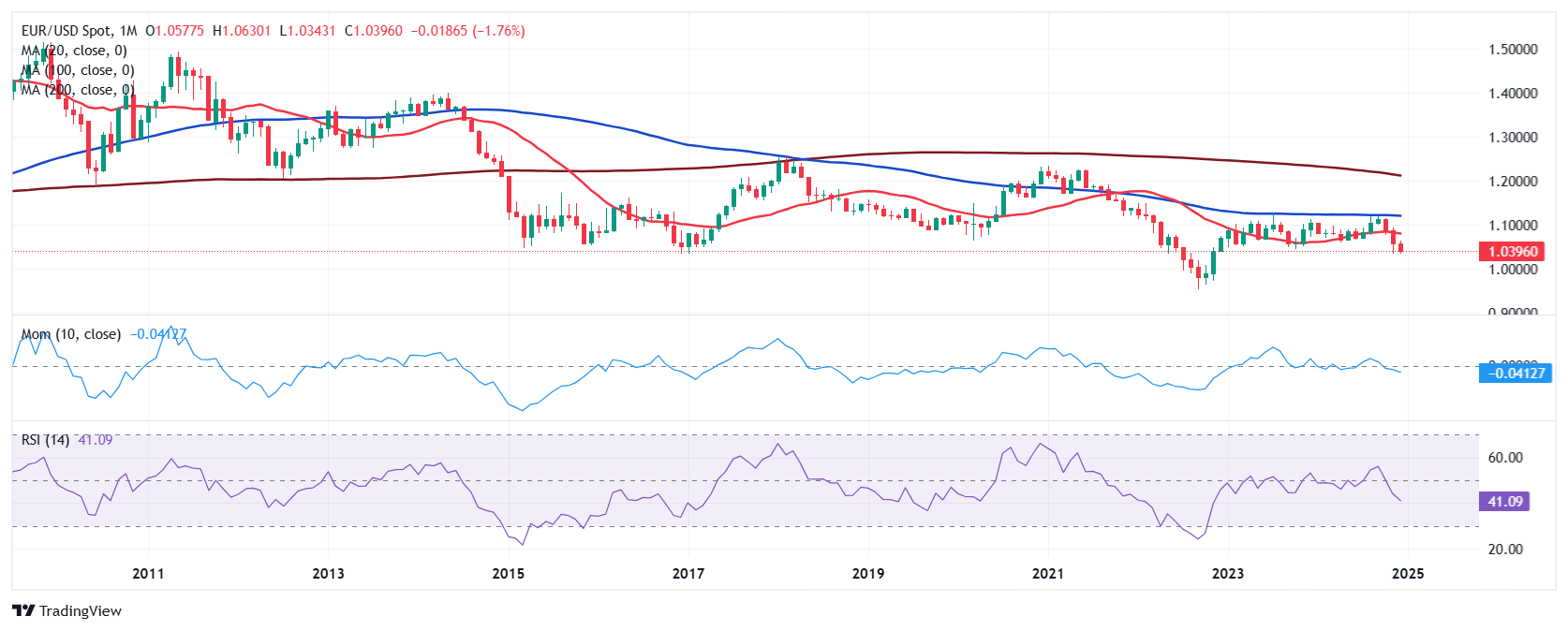
The technical picture has improved considerably since the beginning of the year. EUR/USD has been forming higher highs and higher lows, leaving the broader trend firmly on the bullish side. On June 24, the pair was trading near 1.1608 and testing resistance between 1.1600 and 1.1630.
A clear break above this zone could open the way toward 1.1670 and then 1.1700. If buyers manage to hold the pair above 1.1700, the next medium-term target would come into view around 1.1800.
At the same time, the rally is beginning to look stretched. Initial support is located near 1.1540–1.1550. A drop below this area could trigger a deeper pullback toward 1.1500, followed by the stronger 1.1420–1.1450 zone.
Technical indicators: The wider trend remains positive, although momentum readings are approaching overbought levels. EUR/USD may therefore need a period of consolidation before making another sustained move higher.
Key resistance levels: 1.1600–1.1630, 1.1670, 1.1700 and 1.1800.
Key support levels: 1.1540, 1.1500 and 1.1420–1.1450.
5. Main Scenarios for the Second Half of 2025
- Further euro gains: EUR/USD could extend its advance toward 1.1700–1.1800 if US data weakens, the Fed moves closer to cutting rates or investors continue trimming dollar exposure.
- Short-term pullback: Stronger US inflation or a recovery in the dollar could send the pair back toward 1.1500 or the 1.1420–1.1450 support area.
- Federal Reserve policy: Faster rate cuts would probably weigh on the dollar, while tariff-driven inflation could delay easing and offer the currency temporary support.
- ECB policy: One additional rate cut is unlikely to reverse the euro’s trend on its own, although a more aggressive easing cycle could limit further gains.
- Trade talks: A fresh escalation in US-EU tariffs would increase volatility and weaken the eurozone outlook. A negotiated agreement would improve risk appetite and could support the euro.
- Geopolitical risk: A major risk-off event could still drive demand for the dollar because of its liquidity and traditional safe-haven role.
6. Conclusion: Parity Is No Longer the Main Scenario
The outlook for EUR/USD has changed dramatically since the beginning of 2025. The pair has risen from around 1.02 in January to roughly 1.16 in June, pushing expectations of an imminent move to parity into the background.
The euro is benefiting from weaker demand for the dollar, expectations of greater European fiscal support and signs that the ECB may be approaching the end of its easing cycle. The dollar, meanwhile, is under pressure from slower growth, tariff uncertainty and concern over the US fiscal outlook.
The short-term structure remains bullish, although resistance at 1.1600–1.1630 may lead to a pause or temporary pullback. A confirmed breakout would bring 1.1700 and 1.1800 into focus, while a move below 1.1540 would raise the risk of a return toward 1.1450.
For the second half of the year, the most likely outcome is not a fall toward parity but continued volatility at higher levels. Inflation figures, trade negotiations and decisions from the Fed and ECB will remain the main catalysts.
A later market update looks at how inflation, US tariffs and shifting central bank expectations changed the EUR/USD outlook in July 2025.
