

Solana network activity surges as competitors fall behind
Despite the tense market environment, the Solana price rose nearly 8% over the week, making it one of the strongest performers among major cryptocurrencies. While many investors were reducing risk exposure, significant changes were taking place within the network.
The Solana network recorded a sharp increase in activity. According to Dune Analytics data, daily transactions surged in January 2026 and at times reached around 175 million per day — levels not seen since the summer of 2025. By mid-February, the number declined to approximately 108.8 million daily transactions, yet activity still remained significantly higher than that of competing blockchains.
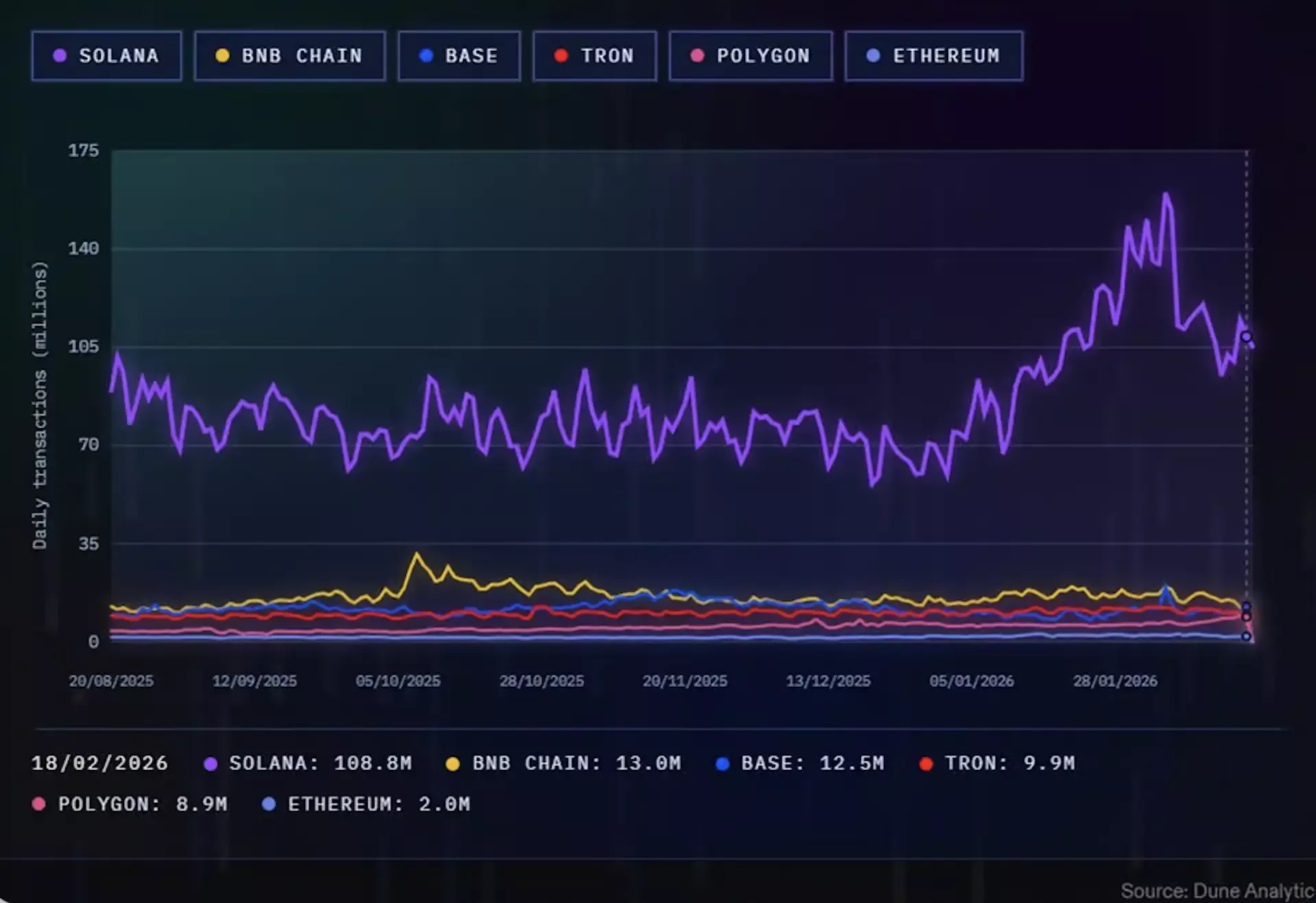
For comparison, BNB Chain and Base recorded around 13 million and 12.5 million daily transactions respectively during the same period. Solana therefore remained the clear leader by this metric. The temporary decline in transaction numbers is attributed to ongoing market uncertainty and geopolitical risks. However, in February the total monthly transaction volume reached its highest level in seven months despite volatility across financial markets.
Stablecoin boom as a hidden growth driver
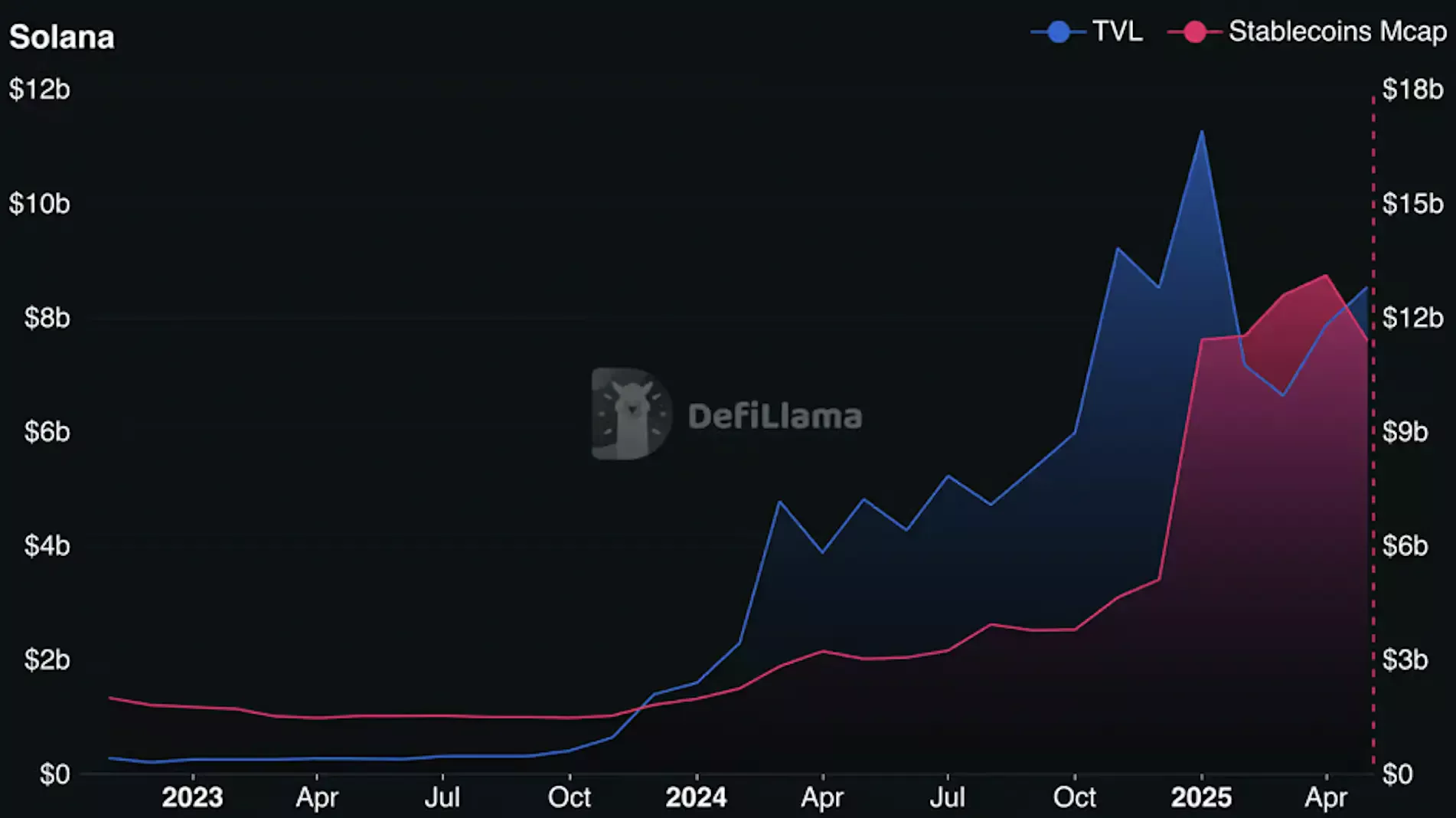
Another sign of real network usage beyond short-term speculation can be seen in the development of stablecoins and the Total Value Locked (TVL) indicator. The market capitalization of stablecoins on the Solana network increased to approximately $15.423 billion, reaching a new all-time high. At the same time, the network’s TVL stood at around $6.51 billion.
These figures indicate that users are increasingly utilizing the network not only for memecoins or short-term hype but also for transfers and DeFi applications. Low transaction fees and high processing speed remain Solana’s key competitive advantages.
However, there are also some negative factors. Net capital inflows into the Solana ecosystem have nearly halved since September. This suggests that amid rising macroeconomic and geopolitical uncertainty, part of the capital has been withdrawn from the network.
Some investors may have shifted funds into more defensive assets such as gold. This dynamic reflects the broader risk-off sentiment currently dominating global markets. However, transaction growth remains strong, suggesting organic network expansion rather than short-term activity driven by large holders.
Solana price: preparing for a move toward $100?
After dropping to around $78 at the end of February, volatility in SOL has noticeably declined. Price movements have become more stable, which is often interpreted as a consolidation phase.
Prediction markets such as Polymarket indicate that some participants expect a recovery toward the $90–$100 range. However, for this scenario to materialize, the support zone near $75 must remain intact.
Order flow data also points to a less optimistic aspect. Trading volume in the derivatives market currently significantly exceeds spot market volume. This means that a large portion of the recent price increase has been driven by futures traders rather than direct demand in the spot market. As a result, the rally is partly based on speculative positioning.
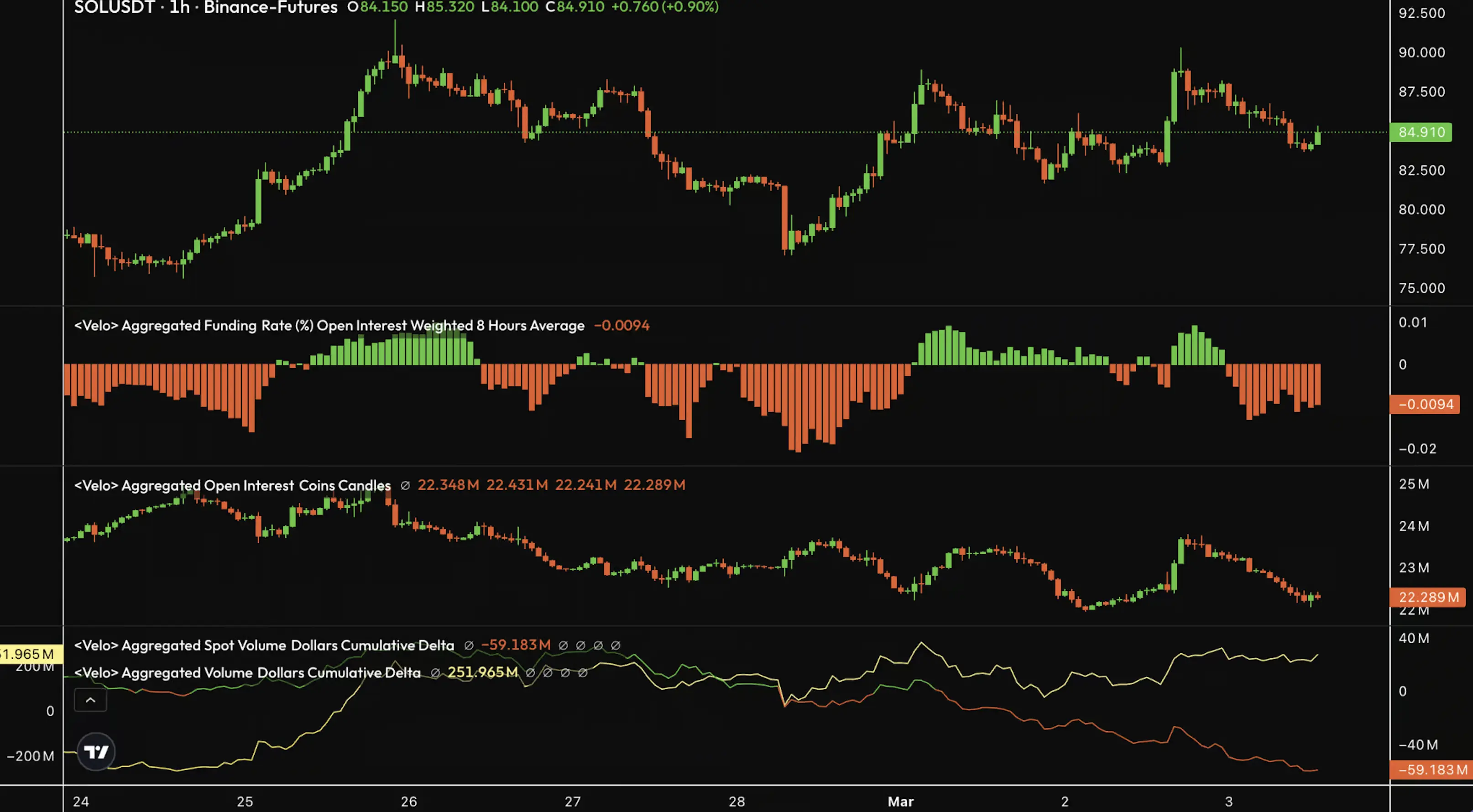
At the same time, the market does not appear overheated. The funding rate remains in neutral territory and has even been negative for an extended period. This indicates that the balance between long and short positions is relatively even and that excessive leverage is not currently present in the market.
Overall, the situation remains mixed: strong fundamental network indicators on one side and a significant influence of derivatives trading on price dynamics on the other, yet without signs of market overheating.
Conclusion
Overall, the outlook for Solana remains complex but interesting. The price remains below the $100 level and continues to feel pressure from geopolitical factors. At the same time, network indicators point to strong activity and structural strength within the ecosystem. Whether this will translate into a sustainable recovery or whether uncertainty will once again dominate will largely depend on macroeconomic conditions and further geopolitical developments.