
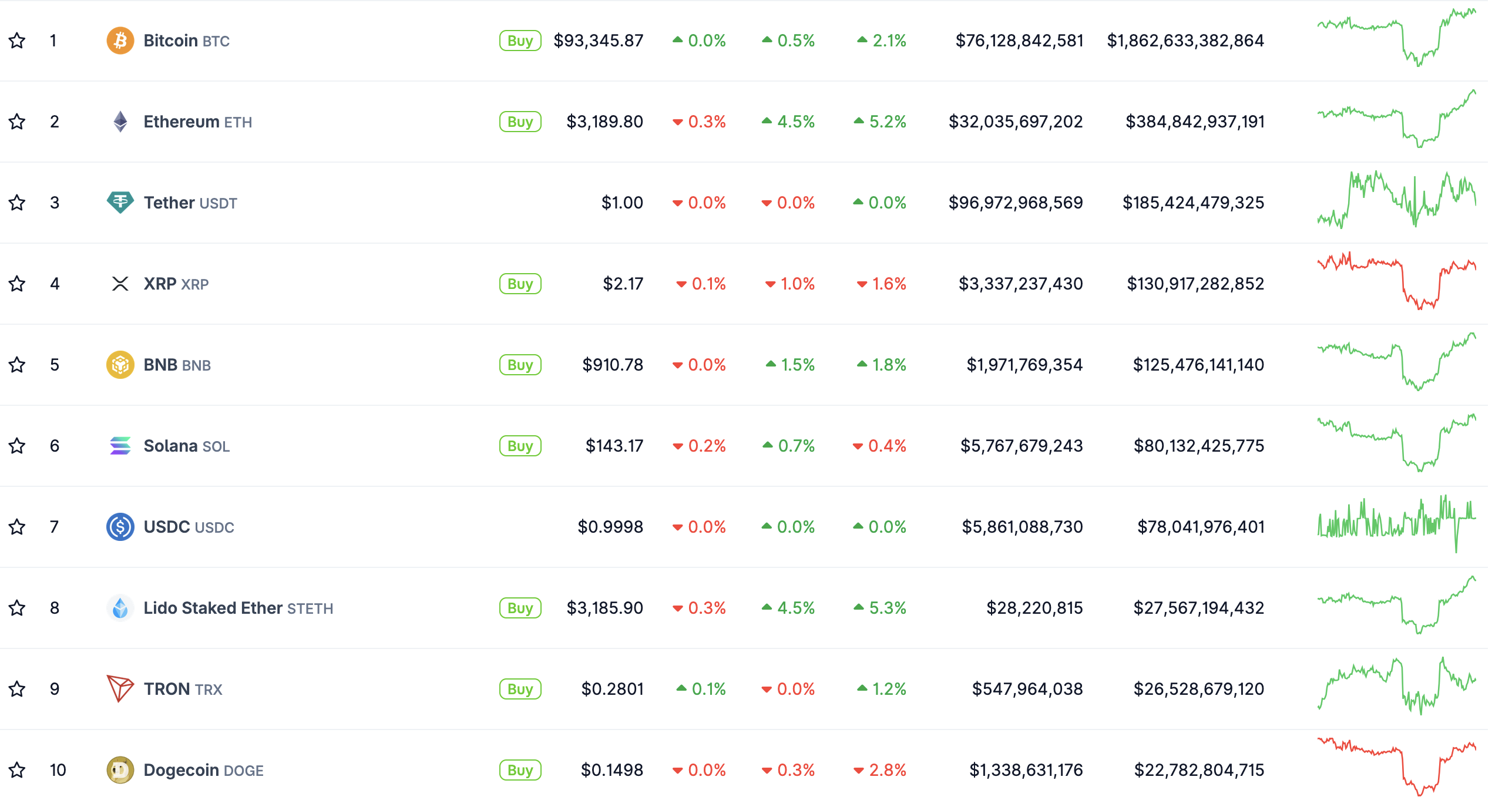
On Thursday, Bitcoin is hovering around $93,000, essentially moving sideways. Against this rather flat backdrop, Ethereum clearly stands out: thanks to the successful Fusaka upgrade, ETH has added almost 5% in the last 24 hours and is trading close to $3,200. Zcash is also clawing back losses after a violent correction, gaining about 8% to roughly $358.
In the background, however, the macro picture is getting more tense. The Bank of Japan is signalling with roughly an 80% probability that it could hike rates on 19 December. A move like that — as already seen in August 2024 — risks triggering the unwinding of massive yen carry trades and pulling capital out of risk assets worldwide, including crypto.
On the other side of the globe, markets are almost certain the US Federal Reserve will cut rates on 9–10 December: the probability is priced in at close to 87%. But for now this doesn’t translate into a meaningful “risk-on” mood. The message from the tape is simple: fear of Japanese tightening is stronger than hope for Fed easing.
Uncertainty is also coming from MicroStrategy. In a recent interview, CEO Phong Le admitted that the company could sell part of its Bitcoin stack if mNAV drops below 1.0x. With the metric currently near 0.95x, that line in the sand is uncomfortably close. Some analysts are already speculating about a possible quiet sale of around 170,000 BTC — even though there is no official confirmation.
At the same time, capital is steadily drifting into classic safe havens. Gold is printing fresh all-time highs, silver is following the move, while major tech indices are sliding. Because Bitcoin remains tightly correlated with the Nasdaq, equity market selling pressure is spilling over into digital assets almost one-to-one.
The Fear & Greed Index sits in the 23–26 range, deep in “Extreme Fear” territory. Historically, such readings have often marked areas of cyclical or local bottoms — phases when sentiment looks worst, but the market tends to attempt a rebound within the following weeks. Whether this pattern repeats this time will depend on how the Fed, the Bank of Japan and large institutional players act over the rest of December.